
Trustreviewsx may earn a commission when you buy through links on this page, at no extra cost to you. This does not affect our ratings.
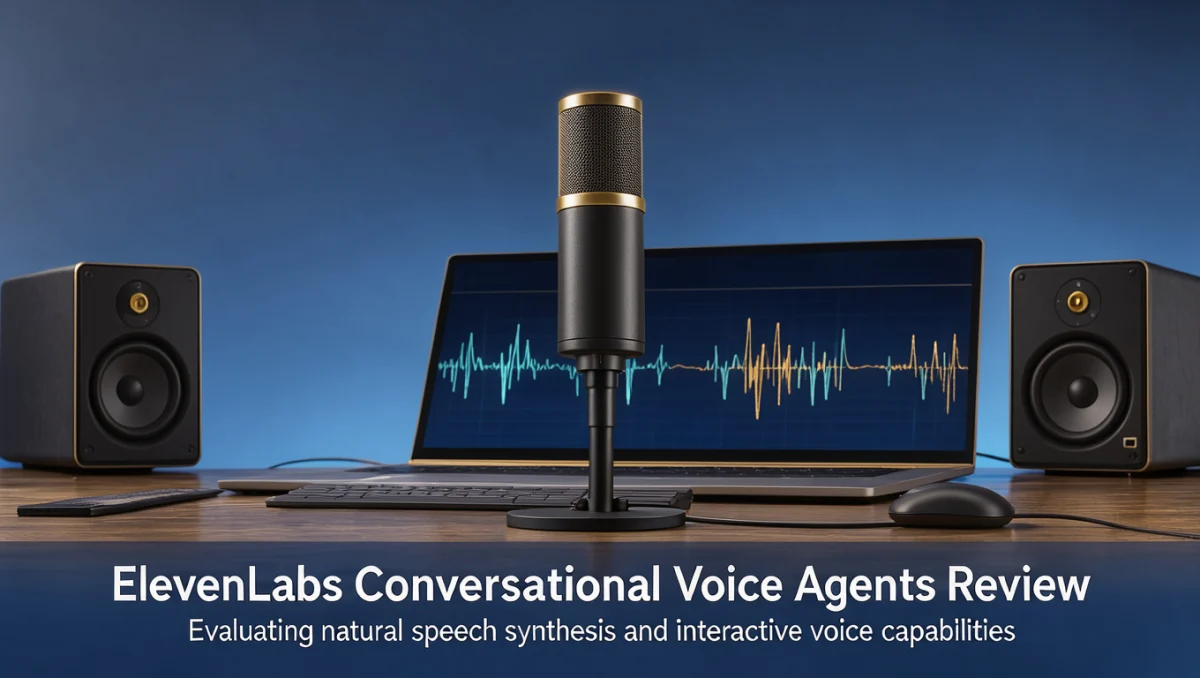
Modern teams are turning to synthetic voices that can hold a live spoken exchange. ElevenLabs conversational voice agents combine speech synthesis, response generation and spoken comprehension so callers can get answers without a human picking up every call. At Review Craft X, we look beyond polished demos and focus on workflow fit, reliability and the practical hurdles of going live.
Interactive voice has moved well past rigid prerecorded menus. Choosing a conversational voice tool now means checking how quickly it responds, how easily dialogue logic is maintained and what the operating costs look like as call volume grows.
Quick verdict: With a Trustreviewsx score of 7.9/10, this platform suits organizations that want natural-sounding speech and interactive dialogue flows. It is less suitable for teams that need offline processing or that cannot confirm usage-based charges on the official website before launch.
| Metric | Details |
|---|---|
| Trustreviewsx score | 7.9/10 |
| Best for | Teams that prioritize natural synthetic speech in interactive conversations |
| Not ideal for | Operations requiring on-premise execution or teams wanting predictable flat monthly fees |
| Key strengths | Natural voice generation and configurable dialogue turns |
| Check before buying | Official billing metrics, expected response latency and workspace user limits |
1. How Trustreviewsx Reviewed ElevenLabs Conversational Voice Agents
This review examines what the platform is built to do, who it serves and how it compares with similar tools. We applied seven Trustreviewsx criteria: features, ease of use, pricing and value, integrations, audience fit, support and competitive position. Plans, prices and limits change frequently, so we highlight what to verify on the official website before purchasing. This article was researched and drafted with AI assistance, then reviewed and edited by the Trustreviewsx Editorial Team.
2. What ElevenLabs Conversational Voice Agents Are and Who They Serve
These agents hold spoken, two-way conversations with people. They take in voice input, work out what the caller wants, compose a relevant reply and speak it back in synthetic speech. Unlike basic text-to-speech tools that output static audio clips, conversational systems participate actively in live exchanges.
The capability is aimed at automated phone representatives, voice assistants and interactive training simulations. Companies use it to replace robotic phone trees with natural back-and-forth dialogue that answers routine questions while keeping a human-sounding cadence.
Buyers should understand that conversational voice involves more moving parts than audio generation alone. Beyond vocal clarity, these systems depend on prompt design, handling of interruptions and latency management across different network conditions.
3. Core Features of ElevenLabs Conversational Voice Agents

Conversational voice systems rely on several foundational capabilities to complete spontaneous spoken exchanges. Understanding these areas helps teams decide what to test before committing resources.
Spoken Dialogue Handling and Turn-Taking
Live voice interaction requires responsive turn-taking. The system detects pauses that signal a caller has finished speaking before it starts talking, and it handles interruptions by stopping its own output when the user speaks over it.
Teams should judge whether pacing feels natural during complex exchanges. Conversational platforms can show brief delays while transcribing input, generating a reply and synthesizing speech, so latency testing should be a primary part of any evaluation.
Voice Customization and Persona Configuration
Configuration covers vocal tone, stability and the character of the persona. Administrators can choose synthetic styles that match their brand, from formal support voices to more casual tones, which keeps the experience consistent across repeated calls.
Persona maintenance also means writing system instructions that shape behavior: how the agent introduces itself, how it clarifies unclear questions and when it should acknowledge that a human needs to take over.
Knowledge Grounding and Conversational Context
An agent needs accurate reference material to be useful. Grounding the persona in company policies, product details or troubleshooting steps reduces the chance of the agent inventing incorrect statements during a call.
Designers should confirm how reference documents are ingested and maintained on the official platform. Keeping that knowledge current is essential whenever policies change.
4. Ease of Use and Learning Curve
Setting up conversational agents means balancing simple interface controls against more involved dialogue engineering. A basic interaction flow can be built fairly quickly using default configurations and standard prompts: select a voice, write a short system prompt and test the dialogue in the configuration console.
The learning curve steepens when refining behavior for edge cases. Writing prompts that avoid circular conversations, handling background noise and configuring handoffs to staff all require systematic testing. Designers need time to learn how small wording changes affect timing and comprehension.
Non-technical staff can manage voice choices and update reference text without writing code. Running voice pipelines across complex call routing, however, usually requires technical colleagues who understand conversational architecture.
5. Pros and Cons of ElevenLabs Conversational Voice Agents
Evaluating these tools means weighing vocal realism against the operational constraints common to synthetic voice systems.
Advantages of the Platform
- Produces natural vocal cadence and expressive delivery during interactive turns.
- Offers configurable personas that fit a range of corporate communication styles.
- Supports automated turn-taking, including detection of interruptions.
- Uses knowledge grounding to keep answers factually consistent across repetitive support calls.
Operational Considerations and Drawbacks
- Response latency can vary with network stability and the complexity of the reply.
- Keeping dialogue boundaries sound requires ongoing prompt refinement and testing.
- Usage-based pricing can make monthly voice budgets hard to forecast without strict caps.
Teams can reduce latency risk by keeping knowledge entries concise and testing telephony paths under varied network conditions.
6. ElevenLabs Conversational Voice Agents vs Similar Tools
Several well-known alternatives address different enterprise priorities. Comparing their core positioning helps buyers find the right fit for their technical stack.
| Platform | Primary Positioning | Key Advantage | Buyer Consideration |
|---|---|---|---|
| ElevenLabs | Synthetic voice realism and expressive interactive agents | Lifelike conversational speech | Confirm usage rates and turn latency on the official site |
| Amazon Lex | Integrated cloud contact center and voice infrastructure | Fits within broader cloud suites | Voice naturalness depends on the speech synthesis components connected |
| Google Cloud Dialogflow | Enterprise language understanding and multi-channel bots | Established dialogue and intent modeling | Steeper setup for teams focused mainly on voice quality |
Amazon Lex suits enterprises already invested in a large cloud ecosystem that want integrated call center routing. Google Cloud Dialogflow fits organizations that need complex multi-turn intent structures across text and voice. ElevenLabs targets teams that place primary emphasis on expressive voice quality and human-like cadence.
7. Who Should Use ElevenLabs Conversational Voice Agents

Different roles get different value from conversational voice software. Identifying your operating model helps decide whether the platform matches your needs.
Customer Support Teams
Support departments handling high volumes of repetitive inquiries can use voice agents for routine questions about hours, account verification or basic troubleshooting. This frees human representatives for sensitive escalations.
Small Business Owners and Service Operators
Small service businesses that miss calls during peak hours can deploy a voice agent as an automated dispatcher. It answers, captures the caller's intent and scheduling preferences and logs details for follow-up. Owners should check the official pricing to confirm automated handling is cost-effective compared with standard voicemail.
Marketing and Interactive Media Teams
Agencies and marketers can build voice personas for interactive campaigns. The realistic tone lets them craft engaging conversational experiences without booking studio sessions for every script variation.
When to Consider Alternatives
Organizations working in secure offline environments, or in regions with unreliable connectivity, should avoid cloud-dependent voice systems. Teams that only need simple push-button phone menus without natural language can rely on traditional telephony routing at lower complexity.
8. How to Choose the Right Plan
Providers adjust subscription tiers, seat allowances and processing thresholds over time. Verify current terms directly on the official ElevenLabs pricing page before signing.
| What to Check on the Official Pricing Page | Why It Matters |
|---|---|
| Voice computation units and minute allowances | Conversations consume voice synthesis quickly, directly affecting monthly invoices. |
| Concurrent call and session caps | Determines how many simultaneous calls can be handled before queuing or dropped connections. |
| Team seats and administrative permissions | Affects how many designers and developers can work in the management workspace. |
| Custom voice generation limits | Influences how many distinct branded personas you can deploy. |
| Overage charges and billing alerts | Helps prevent budget spikes during unplanned surges in call volume. |
Buyers should project internal traffic before comparing tiers. Estimating daily call volume and average session length helps select a plan that avoids costly overage fees.
9. Frequently Asked Questions
How should teams prepare knowledge documentation for voice agents?
Write concise, factual question-and-answer pairs in plain conversational language. Spoken agents handle short reference passages far better than long, dense manuals. Review and test the material regularly so the agent gives current guidance during live calls.
What affects voice agent response speed during phone calls?
Timing depends on network transit, speech-to-text processing, text generation and voice synthesis. A delay at any stage becomes a noticeable pause for the caller. Keeping prompts concise and testing across the telephone networks you actually use helps reduce hesitation.
What should organizations budget for besides the subscription?
Budget for telephone connectivity, call routing, system integration work and ongoing prompt maintenance. Usage spikes can also generate overage charges beyond monthly allowances. Accounting for these costs prevents surprises during wider rollout.
How do administrators decide when to transfer a caller to a human?
Escalation rules are typically based on caller sentiment, repeated confusion or specific sensitive intents. If a caller expresses frustration or asks for a person, the agent should acknowledge the request immediately. Clear handoff rules protect customer trust when automated resolution fails.
10. Final Verdict
ElevenLabs conversational voice agents offer an advanced approach to interactive voice, with strong emphasis on vocal realism and expressive delivery. The technology moves well beyond mechanical phone menus, but organizations must manage dialogue logic carefully and confirm usage pricing on the official site before scaling production call operations.
| Criterion | Score /10 | Reason |
|---|---|---|
| Features | 8.8 | Lifelike speech synthesis paired with responsive turn-taking and interruption detection. |
| Ease of Use | 8.0 | Straightforward setup for basic dialogues, with a real learning curve for intricate prompt design. |
| Pricing and Value | 7.2 | Review current usage allowances on the official website to check cost sustainability against projected volume. |
| Integrations | 7.4 | Check official developer documentation to confirm fit with your telephony and CRM systems. |
| Audience Fit | 8.4 | Strong match for organizations that need natural voice personas in automated customer interactions. |
| Support | 7.0 | Examine available documentation, community channels and support levels before a mission-critical rollout. |
| Competitive Position | 8.2 | Keeps an expressive voice advantage while competing against large cloud infrastructure platforms. |
Overall Trustreviewsx Score: 7.9/10
Teams seeking natural, lifelike voice automation will find real value here. Confirm your expected call concurrency, review the official tier structures and run real-world latency tests before making a purchase decision.
Have questions about choosing conversational voice tools for your business? Send them to the Trustreviewsx team through our contact page or follow Trustreviewsx on LinkedIn for our latest software analyses.
See More Artificial Intelligence