
Trustreviewsx may earn a commission when you buy through links on this page, at no extra cost to you. This does not affect our ratings.
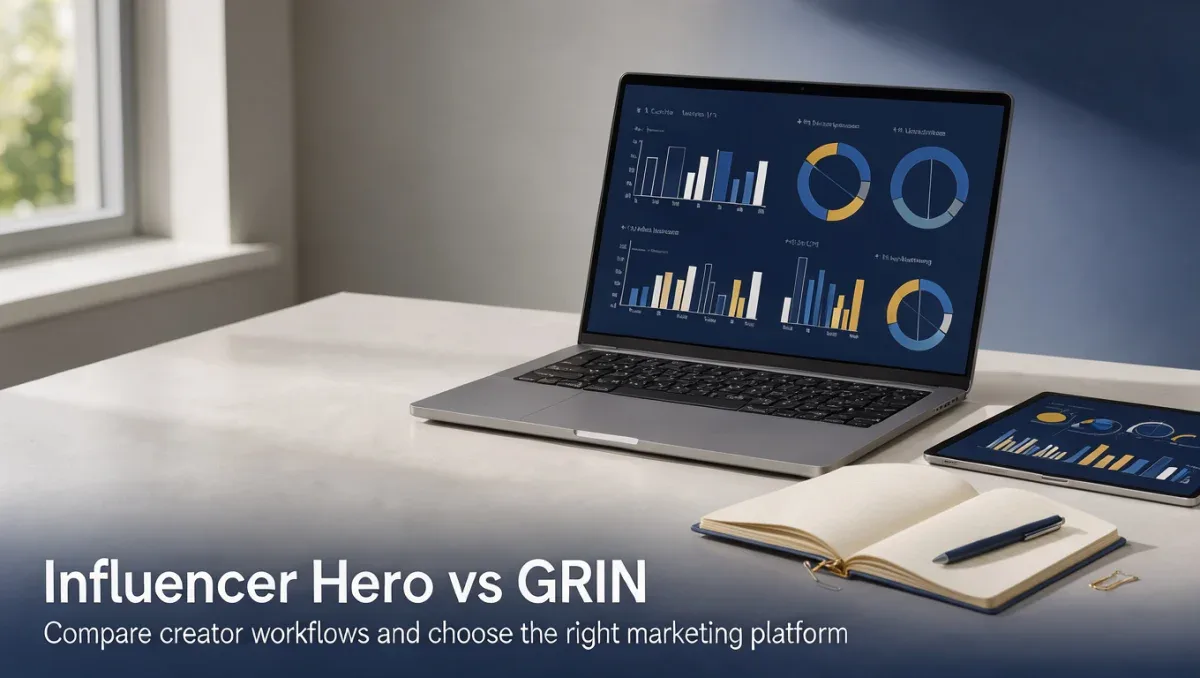
Influencer Hero vs GRIN represents a central choice for modern marketing teams organizing creator partnerships, outreach programs, and campaign tracking. Selecting between these two creator relationship platforms depends on how your team manages ambassador networks, affiliate relationships, and product seeding across multiple social channels. At Trust Reviews X, we analyze creator management software to help organizations select the system that aligns with their operational capacity.
Both platforms address relationship coordination, but they approach creator workflows from distinct operational angles. Evaluating this influencer hero vs grin decision requires looking beyond promotional claims to see how daily communication, content collection, and payout administration function across your broader Marketing ecosystem.
Short answer: Choose Influencer Hero if you want a centralized platform focused on straightforward creator outreach, affiliate tracking, and relationship workflows for growing brands (overall score 8.0/10). Choose GRIN if you need an enterprise-oriented creator relationship management system tailored for larger direct-to-consumer organizations managing extensive gifting and ambassador programs (overall score 8.2/10).
| Evaluation Metric | Influencer Hero | GRIN |
|---|---|---|
| Trustreviewsx score | 8.0/10 | 8.2/10 |
| Best for | Growing brands and agile marketing teams | Mid-market and enterprise direct-to-consumer brands |
| Core focus | Creator discovery, outreach automation, and affiliate tracking | E-commerce relationship management and creator gifting |
| Consider if | You prioritize quick deployment and unified campaign communication | Your organization requires deep e-commerce logistics and ambassador relationship depth |
1. How Trustreviewsx Compared Influencer Hero and GRIN
This comparison looks at what Influencer Hero and GRIN are built to do, who each one serves, and how to choose between them, using the seven Trustreviewsx criteria: features, ease of use, pricing and value, integrations, audience fit, support and competitive position. Plans, prices and limits change often, so we point out what to confirm on each official website before you buy. This article was researched and drafted with the help of AI tools, then reviewed and edited by the Trustreviewsx Editorial Team.
2. How Influencer Hero and GRIN Differ in Focus

Influencer Hero positions itself as an all-in-one influencer marketing platform designed to streamline creator discovery, email communication, campaign workflows, and affiliate reporting. The software emphasizes unified communication channels and structured workflow pipelines, serving brand teams that want to discover creators, coordinate outreach, and monitor partnership performance without navigating excessive operational complexity.
GRIN positions itself primarily as a creator management platform dedicated to direct-to-consumer e-commerce organizations. Its core design philosophy treats influencers as genuine brand partners, focusing heavily on creator relationship management, product seeding logistics, content rights curation, and sales attribution. GRIN concentrates on organizations where influencer partnerships operate as an integrated extension of existing digital retail operations.
3. Which One Fits Your Situation
Selecting between these two platforms requires evaluating team structure, e-commerce dependence, and campaign volume. The following comparison matrix outlines how specific organizational requirements map to each platform.
| Situation | Choose Influencer Hero if | Choose GRIN if |
|---|---|---|
| Primary campaign objective is product gifting | You want simpler shipping tracking linked to creator communication. | You need comprehensive product seeding workflows tied to warehouse inventory systems. |
| Team structure is compact and agile | You need a streamlined system that one or two marketers can manage independently. | You have dedicated influencer coordinators managing specialized workflow segments. |
| Focus is affiliate revenue and discount codes | You want integrated affiliate tracking combined with direct communication. | You want multi-tiered ambassador programs integrated across digital store systems. |
| Creator discovery is the main priority | You want built-in discovery databases to identify creators across several social networks. | You prefer discovering talent through inbound creator applications and existing customer data. |
| Content rights and asset reuse matter most | You need straightforward asset collection for basic marketing repurposing. | You require structured content rights management and high-volume media asset libraries. |
| Cross-channel campaign management | You manage creators across diverse platforms through a single outreach inbox. | You manage established brand advocates across complex multi-stage partnership lifecycles. |
4. How to Compare Them Yourself
During an evaluation period or product demonstration, your team should examine both tools across seven essential criteria without relying on vendor sales presentations.
4.1. Features
Examine how each system manages the complete creator lifecycle from initial discovery to performance attribution. Test creator search capabilities, communication sequencing, product shipping workflows, and link tracking. Verify on the official Influencer Hero website and official GRIN website which campaign tools are included in your specific software tier.
4.2. Ease of Use
Assess the learning curve for team members who will operate the platform daily. Track how many steps are required to launch an outreach campaign, record creator details, and log incoming content assets. A system with extensive configuration options may require longer onboarding periods before delivering organizational value.
4.3. Pricing and Value
Review the subscription structure on each vendor official website. Software buyers should verify whether platform fees scale with the number of creators in the database, seat licenses, or connected brand stores, as additional user tiers or volume add-ons can alter annual software commitments.
4.4. Integrations
Examine how seamlessly each platform connects with your e-commerce storefront, email service provider, and digital analytics tools. Confirm on the official Influencer Hero and GRIN websites which store platforms and communication providers connect directly with their systems.
4.5. Audience Fit
Consider whether your organization matches the intended customer profile for each vendor. Agile marketing teams often struggle with systems built for large enterprise hierarchies, while large e-commerce houses quickly outgrow systems that lack advanced partner categorization.
4.6. Support
Determine the onboarding and technical assistance model provided by each vendor. Check the official company channels to verify whether account configuration guidance, team training sessions, and technical support require dedicated service packages.
4.7. Competitive Position
Analyze how each platform differentiates its creator philosophy within the wider marketing software sector. Influencer Hero focuses on unified outreach efficiency, whereas GRIN focuses on deep creator relationship management for consumer brands.
5. Cost Checklist for Both Tools

Software subscription costs vary widely depending on business requirements. Use this checklist to evaluate cost components across both providers before finalizing agreements.
| Cost Item | Ask About Influencer Hero | Ask About GRIN |
|---|---|---|
| Base platform subscription | Confirm the contract duration and billing frequency on the official website. | Confirm annual commitment terms and invoicing schedules on the official website. |
| Creator database limits | Confirm whether active creator profiles or outreach volume affect billing. | Confirm whether the total number of tracked creators impacts subscription tiers. |
| User seat allocation | Check how many team logins are included before extra seat fees apply. | Check seat thresholds for team members and external agency collaborators. |
| E-commerce store connections | Confirm whether managing multiple online storefronts increases subscription costs. | Confirm whether multi-brand or international storefront setups require tier upgrades. |
| Onboarding and setup fees | Inquire whether initial training and technical configuration involve separate fees. | Inquire whether dedicated implementation programs are mandatory for deployment. |
6. How to Decide
- Define your primary influencer workflow: Clarify whether your team spends more time discovering new talent or managing logistics for existing brand ambassadors.
- Audit your e-commerce integration requirements: List the online store platforms, email providers, and reporting tools that must connect with your creator management software.
- Determine internal staff capacity: Assess how many hours your team can dedicate each week to platform onboarding, pipeline maintenance, and relationship management.
- Request structured demonstrations: Ask both vendors to demonstrate identical tasks, such as generating an affiliate tracking link or logging incoming creator content.
- Compare verified contract terms: Review contract lengths, user seat boundaries, and database limits on the official vendor websites before signing an agreement.
7. Frequently Asked Questions
How does transitioning between creator management platforms work?
Transitioning creator platforms requires exporting your existing creator database, active affiliate codes, and communication logs. Marketing teams should maintain spreadsheet backups of creator contact information, past campaign agreements, and shipping histories during the migration to ensure continuity across active brand partnerships.
Can marketing agencies use these platforms on behalf of brand clients?
Agencies frequently use creator management software to oversee campaigns for multiple consumer brands. When evaluating platforms for agency use, confirm on the official vendor websites how client account separation, multi-brand permissions, and client reporting access are structured across subscription tiers.
Which platform scales better as an ambassador program expands?
Scaling an ambassador program requires robust relationship tracking, automated product delivery coordination, and tiered commission structures. GRIN offers deep e-commerce relationship capabilities for high-volume retail brands, while Influencer Hero provides scalable outreach and affiliate workflows for growing businesses seeking agile expansion.
What data should teams prepare before evaluating creator software?
Teams should assemble current creator rosters, average monthly product gifting volumes, active discount codes, and required third-party software connections. Having accurate baseline figures helps sales representatives demonstrate workflows that match your actual campaign volume and operational requirements.
8. Final Verdict
| Criterion | Influencer Hero Score /10 | GRIN Score /10 | Reason |
|---|---|---|---|
| Features | 7.8 | 8.8 | GRIN provides deeper relationship and product seeding capabilities, while Influencer Hero covers core campaign discovery and outreach. |
| Ease of Use | 8.8 | 7.4 | Influencer Hero offers faster onboarding for smaller teams, whereas GRIN requires more configuration for comprehensive deployment. |
| Pricing and Value | Confirm before buying | Confirm before buying | Review official pricing pages directly as license tiers, user counts, and creator database thresholds dictate overall software expenditure. |
| Integrations | Confirm before buying | Confirm before buying | Confirm store platform and email compatibility on official vendor sites to ensure technical alignment with your existing systems. |
| Audience Fit | 8.2 | 8.4 | Influencer Hero aligns well with agile growing brands, while GRIN precisely matches established direct-to-consumer e-commerce teams. |
| Support | Confirm before buying | Confirm before buying | Check official vendor agreements regarding onboarding assistance, technical help channels, and account management policies. |
| Competitive Position | 7.2 | 8.2 | GRIN maintains a clear identity around creator relationship management, while Influencer Hero differentiates through unified campaign workflows. |
| Overall score | 8.0 | 8.2 | Overall scores reflect the average of scored criteria across features, ease of use, audience fit, and competitive positioning. |
Choose Influencer Hero if your organization values a unified platform for creator discovery, outreach automation, and affiliate monitoring with an accessible operational learning curve. Choose GRIN if your direct-to-consumer business relies heavily on seamless e-commerce gifting logistics, ambassador lifecycle management, and detailed content asset rights.
Have a question about choosing software? Send it to the Trustreviewsx team through our contact page or follow Trustreviewsx on LinkedIn for new reviews and comparisons.