
Trustreviewsx may earn a commission when you buy through links on this page, at no extra cost to you. This does not affect our ratings.
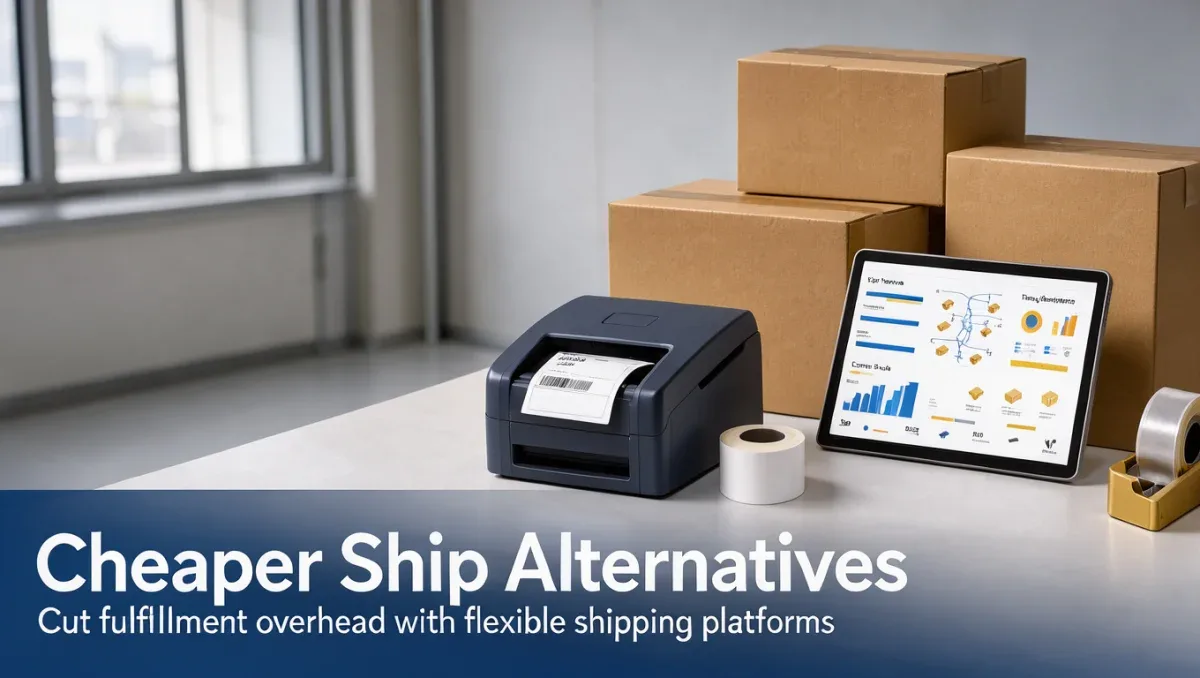
Cheaper ship alternatives become necessary when expanding fulfillment expenses begin eating into store margins. As merchants scale order volume, baseline software subscriptions and ancillary carrier fees can strain operational budgets, prompting owners to reassess fulfillment stacks with help from Trust Reviews X.
Selecting an alternate logistics tool requires balancing discounted carrier label rates against monthly platform fees and store connections. Exploring reliable cheaper ship alternatives allows lean retailers to keep shipping workflows organized while protecting daily profitability.
Quick answer: Finding budget-friendly alternatives to Ship depends on order volume and carrier requirements. Platforms like Shippo serve small shops needing simple on-demand label generation, Pirate Ship provides discounted postal rates without recurring charges, and Easyship targets cross-border logistics. Each alternative trades advanced warehouse customization for simpler, cost-effective parcel management workflows.
| Alternative | Switch to it if | Main trade-off |
|---|---|---|
| Shippo | You want flexible pay-as-you-go label printing for straightforward store setups | Less depth for complex multistep routing rules across massive warehouse facilities |
| Pirate Ship | You want discounted postal and parcel rates with no recurring monthly platform charges | Fewer built-in international courier options compared to global logistics suites |
| Easyship | You focus heavily on cross-border shipments requiring calculated import duties | Deeper customs workflows mean a steeper initial setup routine |
1. How Trustreviewsx Put This Guide Together
This guide combines what the software covered here is built to do with the Trustreviewsx buying framework, so you can make the decision that fits your business. Plans, prices and limits change often, so we point out what to confirm on the official website before you buy. This article was researched and drafted with the help of AI tools, then reviewed and edited by the Trustreviewsx Editorial Team.
2. Why people look beyond Ship

Merchants managing order fulfillment frequently re-evaluate software stacks when operational priorities shift. While centralized shipping platforms help aggregate orders from multiple storefronts, fixed overhead costs can become restrictive for smaller businesses during slower sales cycles.
Subscription fees compound quickly when stores add extra sender addresses, warehouse packing stations, or additional team members. Consequently, teams operating in competitive E-commerce niches seek platforms offering pay-as-you-go models or plans aligned strictly with parcel volume.
- Recurring monthly platform fees continue even during months with modest dispatch counts
- Unused enterprise capabilities add unnecessary operational weight to lean fulfillment lines
- Desire for straightforward, entry-level label generation without lengthy onboarding periods
3. Switching triggers
Before leaving your current shipping platform, identify the primary operational friction pushing the change. Matching your core challenge to the right platform design prevents migrating into identical software limitations.
| Reason you want to switch | Type of alternative to consider | What to check first |
|---|---|---|
| Lower monthly fixed overhead | Platforms with no base subscription or on-demand pricing models | Confirm official carrier discount tables for your primary box weights |
| Simplifying label generation | Single-carrier or entry-focused postage generators | Check marketplace synchronization frequency on the official site |
| Expanding cross-border shipping | Logistics tools built around global customs documentation | Review international duties calculation policies on vendor portals |
| Managing multiple inventory hubs | Mid-tier warehouse and multi-channel inventory managers | Verify location separation limits on the official vendor comparison sheet |
4. The alternatives
4.1. Switch from Ship to Shippo if you need straightforward multichannel label printing
Shippo positions its platform around small to mid-sized retailers seeking clean order synchronization from common shopping carts. The software excels at taking incoming customer orders, displaying real-time postage options, and generating return labels. The trade-off involves fewer deep warehouse automation scripts for high-volume pick-and-pack crews. Confirm user seat policies on the official Shippo pricing page before migrating your storefront.
4.2. Switch from Ship to Pirate Ship if you want zero monthly platform overhead
Pirate Ship focuses entirely on delivering discounted parcel rates without charging monthly access subscriptions. It suits home-based creators, boutique stores, and small teams shipping domestic packages through major standard carriers. The trade-off is narrower coverage for niche regional freight carriers and complex enterprise inventory workflows. Check destination parcel size limitations on the official Pirate Ship site before committing your catalog.
4.3. Switch from Ship to Easyship if your sales cross international borders
Easyship targets global e-commerce merchants needing automated customs forms, duty calculations, and worldwide courier choices. It helps sellers provide transparent shipping quotes to international customers right at checkout. The operational trade-off is a more detailed interface required to maintain worldwide tax compliance rules. Confirm carrier pickup policies on the official Easyship website to verify international support for your region.
5. How to switch without losing data

Migrating fulfillment software demands organized execution to avoid missed orders, duplicated labels, or untracked packages. A structured transition ensures existing orders leave on schedule while your staff learns the incoming system.
- Export existing order records, active customer addresses, and tracking archives from your current platform into standard spreadsheet files.
- Connect your sales channels to the replacement tool in test mode to ensure order data imports accurately without auto-generating live charges.
- Run both platforms simultaneously for several days, fulfilling small batches on the new tool while processing existing backorders on the legacy system.
- Print sample shipping slips and test barcode scanners against your physical packaging stations to confirm label readability.
- Disconnect old channel sync links once all open orders reach completed delivery status to avoid duplicate postage fees.
6. Frequently asked questions
6.1. When should a business stay with Ship instead of migrating?
Staying with your existing platform makes sense when your business relies heavily on intricate automation rules, custom packing slip templates, or specialized enterprise warehouse workflows. If rebuilding custom order routing rules on another platform would halt dispatch operations for several days, the labor cost of moving may outweigh monthly software savings.
6.2. How much preparation time does switching shipping platforms require?
Preparation typically spans several business days, depending on store complexity and carrier accounts. Basic setups with a single storefront can connect within hours, whereas multi-channel businesses require time to import packaging dimensions, test custom label printers, and train team members on new packing workflows.
6.3. What carrier details must merchants verify before migrating?
Merchants must verify whether the new platform allows using proprietary carrier accounts or mandates using pre-negotiated platform rates. Checking dimensional weight rounding rules and address validation policies on the official carrier pages prevents unexpected postage surcharges on domestic deliveries.
6.4. Can shipping history and tracking logs transfer between platforms?
Most fulfillment tools do not directly ingest completed tracking histories from competitor databases. Store owners should download comprehensive historical shipment reports from the departing provider before closing accounts, retaining those records locally for accounting reconciliation and customer support reference.
7. Bottom line
Choosing affordable replacements for Ship requires matching software pricing structures with actual dispatch patterns. Businesses shipping low or fluctuating package counts gain immediate financial flexibility by moving to tools with zero fixed monthly commitments or modular rate cards. Conversely, brands with significant cross-border traffic should prioritize accurate international tax calculations over the lowest base price. Review carrier rate schedules directly on each provider official page to confirm long-term fulfillment savings for your business in 2026.
Have a question about choosing software? Send it to the Trustreviewsx team through our contact page or follow Trustreviewsx on LinkedIn for new reviews and comparisons.