Trustreviewsx may earn a commission when you buy through links on this page, at no extra cost to you. This does not affect our ratings.
Managing a steady social presence takes planning, and the social bee app approaches that challenge through structured publishing queues. For marketers who need to keep multiple networks active every week, understanding how its workflows are organized reveals whether it fits daily demands. In this guide, Trustreviewsx looks at core capabilities, the audiences it serves, and the criteria to weigh when choosing software for 2026.
Picking social media software means examining publishing rhythm, asset collaboration and cross-channel consistency. Teams running multi-channel campaigns get more value from studying how a platform structures its workflow than from its marketing claims. Reviewing setup steps and content pipeline controls helps buyers spend their budget wisely.
Quick verdict: the social bee app earns an overall score of 7.9/10 from Trustreviewsx. It suits solo creators, boutique agencies and digital marketers who want organized schedule categories and recurring posting queues. It is less suited to large enterprises that need layered approval hierarchies or heavy brand monitoring.
| Evaluation Dimension | Summary Assessment |
|---|---|
| Trustreviewsx score | 7.9/10 |
| Best for | Users seeking categorized publishing queues and structured social post recycling |
| Not ideal for | Organizations needing enterprise listening suites or complex governance controls |
| Key strengths | Content category management, queue customization, and multi-network publishing organization |
| What to check before buying | Workspace seat counts, connected profile allowances, and individual network publishing requirements |
1. How Trustreviewsx Reviewed the Social Bee App
This review examines what the platform is built to do, who it serves, and how it compares with similar tools, using seven Trustreviewsx criteria: features, ease of use, pricing and value, integrations, audience fit, support and competitive position. Plans, prices and limits change often, so we point out what to confirm on the official website before buying. This article was researched and drafted with the help of AI tools, then reviewed and edited by the Trustreviewsx Editorial Team.
2. What Is the Social Bee App and Who Is It For
The social bee app is a scheduling and content management tool built around sorting posts into specialized content categories. Rather than treating every post as an isolated entry on a chronological timeline, it organizes campaigns into thematic queues. This lets marketers keep a balanced feed by alternating educational posts, company updates, promotions and curated industry news.
The platform is designed mainly for small business owners, freelance social media managers, marketing agencies and independent creators. These professionals often must maintain active accounts across several profiles without spending hours each day writing and publishing updates by hand. Scheduling assets in advance keeps a predictable presence across target channels.
Before choosing any subscription platform in modern marketing environments, buyers should define the operational scope they need. Social media software varies widely in focus: some tools emphasize graphic design, others prioritize data mining or customer care ticketing. This platform centers its capabilities on structured distribution and editorial planning.
3. Core Features of the Social Bee App

Evaluating social software means inspecting its core operational mechanics. Understanding these functional areas clarifies how daily management proceeds.
3.1. Content Category Architecture
The structural heart of the system is category-based scheduling. Rather than assigning each message to a date manually, administrators sort posts into thematic buckets. Each bucket has its own distribution time slots across designated networks.
This framework keeps an account from repeating identical message types over and over. Promotional announcements can be restricted to specific weekly slots, while informational tips publish during morning commute hours. Editorial managers gain systematic control over voice consistency.
3.2. Publishing and Re-queuing Mechanics
Content queues support both single-use posts and evergreen recycling. Evergreen queues let timeless assets cycle back through the schedule after their first run, extending content lifespan.
When using re-queuing, social media managers should check platform-specific rules on the official documentation pages. Some networks penalize repetitive posting or duplicate text, so marketers should vary wording and visuals to stay compliant.
3.3. Calendar Planning and Post Customization
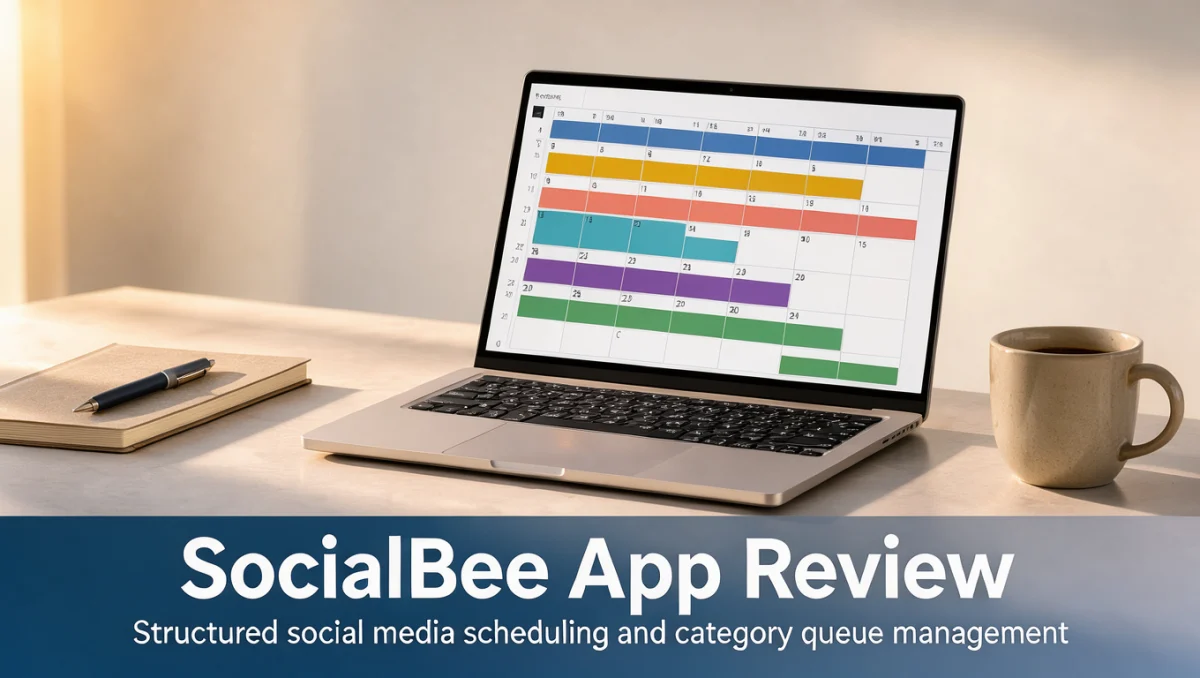
A unified calendar view shows upcoming scheduled updates across all connected profiles. Marketers can inspect publishing frequency, spot content gaps and shift slots to accommodate breaking news or product launches.
Post tailoring lets creators adapt one core message for different channels. Because audience expectations differ across professional and informal networks, adjusting post length, hashtag density and tone directly in the editor streamlines cross-platform execution.
3.4. Workspace Collaboration and Team Roles
Agencies and multi-member teams use workspace structures to separate client assets and divide responsibilities. Administrators can assign team members to specific client accounts while restricting access to administrative settings.
Approval workflows let junior staff or external copywriters draft copy that needs internal sign-off before entering active queues. Buyers should review official account specifications to confirm seat allowances and permission structures across plans.
4. Ease of Use and Learning Curve
The interface uses a category-centric layout that differs from conventional drag-and-drop calendar tools. New operators need dedicated onboarding time to learn how categories map to posting schedules.
Once users master category mechanics, daily scheduling becomes predictable. Setting up a new post follows a logical sequence: choose categories, tailor channel text, select media and approve queue slots.
Teams switching from basic social tools should expect an initial adjustment period. Spending time configuring category schedules correctly during the first week prevents scheduling collisions later.
5. Pros and Cons of the Social Bee App
Every software platform offers practical benefits alongside trade-offs. Weighing these helps determine whether the system matches your team's priorities.
5.1. Operational Advantages
- Category-based scheduling automates balanced content distribution across marketing themes.
- Evergreen queue support simplifies recycling enduring assets across relevant channels.
- Multi-channel message tailoring lets users tweak copy for each network inside one composition window.
- Workspace organization helps agencies manage distinct client accounts in separate dashboards.
5.2. Functional Considerations
- The category-driven interface has a steeper learning curve than simple calendar-only tools.
- Enterprise social listening, deep sentiment analysis and customer service helpdesk integrations sit outside the core product design.
- Users must manage re-queuing settings carefully to avoid violating individual network spam guidelines.
6. The Social Bee App vs Similar Tools

Understanding how the market divides social media software makes comparisons across popular alternatives easier.
Buffer offers straightforward, lightweight post scheduling aimed at solo entrepreneurs and small businesses that want minimal interface complexity. While Buffer concentrates on simplicity and clean calendar timelines, the social bee app provides deeper category queue mechanics for structured content recycling.
Hootsuite focuses on broad enterprise management, team collaboration across large organizations and multi-channel monitoring streams. Hootsuite serves larger corporate teams that handle inbound customer support tickets alongside marketing posts, whereas the social bee app targets content planning and queue distribution.
Later emphasizes visual-first channels, centering its interface on media libraries and grid previews. Brands with image-first strategies often gravitate toward Later, while text-heavy and multi-format creators frequently prefer category queue tools.
Agorapulse combines scheduling with a unified social inbox and customer relationship tracking. Organizations that want one inbox to answer inbound comments quickly may prefer Agorapulse, while teams focused purely on content production find specialized schedulers more cost-effective.
7. Who Should Use the Social Bee App
Choosing social software depends on team structure, content volume and business goals. Different operational profiles get varying levels of value.
7.1. Freelance Marketers and Solo Operators
Freelancers managing personal brands or handling channels for several small clients gain efficiency through automated queues. Storing categorized posts in advance keeps a continuous presence during busy client delivery periods.
Solo operators should confirm that their posting strategy truly requires structured categories. Creators who share only occasional, spontaneous updates may find a basic single-feed tool faster to run.
7.2. Small to Mid-Sized Marketing Agencies
Agencies producing content for multiple brands benefit from workspace separation. Keeping accounts apart prevents accidental cross-posting between clients, and draft approval flows protect editorial standards.
Agency leaders should check user seat policies on the official pricing page to confirm that client review seats don't trigger unexpected tier upgrades.
7.3. In-House Marketing Teams
Internal departments publishing consistent educational material, company announcements and recruitment campaigns find category queues useful for keeping messaging balanced.
However, enterprises that require advanced crisis monitoring, automated sentiment tracking or compliance archiving should look at specialized corporate suites built for regulatory oversight.
8. How to Choose the Right Plan
Subscription plans for social media software usually scale with connected accounts, team seats and advanced administrative features. Reviewing your requirements before purchasing prevents paying for unused capacity.
| What to Check | Why It Matters |
|---|---|
| Connected Social Profile Limits | Subscription tiers regulate how many brand channels can be linked, impacting multi-brand operators. |
| Team Member Seats and Permissions | Additional contributor licenses can change monthly software costs for expanding marketing departments. |
| Workspace Segregation | Agencies need separate client environments to keep creative assets, schedules and analytics isolated. |
| Content Recycling Regulations | Individual social networks set strict rules on duplicate messaging that shape how evergreen queues must run. |
Buyers evaluating the social bee app should map their current brand roster against published tier thresholds. Visiting the official website ensures you see current packaging rather than relying on outdated assumptions.
9. Frequently Asked Questions
What should I evaluate before selecting social media scheduling software?
Begin by auditing your active channels, weekly posting frequency, contributor counts and need for approval workflows. Confirm whether your priority is visual planning, content re-queuing or social listening. Comparing these requirements against each platform's category architecture clarifies which model supports your team without unnecessary overhead.
How do content categories improve social media consistency?
Categories assign distinct themes to designated calendar intervals, preventing your channels from running repetitive promotions back to back. By balancing educational guides, company updates, curated third-party articles and product highlights, your brand keeps an engaging editorial rhythm. This structure also helps creators spot which content types are running short during weekly planning sessions.
What additional expenses should teams budget for besides the base subscription?
Teams should budget for external graphic design tools, video editors, stock asset libraries and possible third-party analytics add-ons. If your team expands to include freelance copywriters or client reviewers, check the official website to see whether extra workspace user licenses require a tier upgrade or individual seat fees.
How should agencies evaluate workspace separation in social tools?
Agencies must ensure each client brand operates within an isolated environment to prevent publishing errors across accounts. Check whether client approval permissions let external stakeholders review copy without access to billing or administrative settings. Reviewing these access controls on official vendor pages protects client data boundaries.
10. Final Verdict
Selecting social management software means aligning a product's strengths with your publishing volume. The social bee app delivers focused category queue automation for businesses that want structured content distribution.
| Criterion | Score /10 | Reason |
|---|---|---|
| Features | 8.1/10 | Strong category queues, evergreen recycling and multi-channel tailoring |
| Ease of Use | 7.4/10 | Clear logic once mastered, but a steeper initial learning curve |
| Pricing and Value | 7.9/10 | Solid value for small teams; costs rise with added seats and profiles |
| Integrations | 7.6/10 | Covers core publishing needs; not built for deep third-party ecosystems |
| Audience Fit | 8.4/10 | Well matched to freelancers, small agencies and structured marketers |
| Support | 7.7/10 | Adequate documentation; verify response options on the official site |
| Competitive Position | 8.2/10 | Distinct category-first approach among scheduling tools |
Overall Trustreviewsx score: 7.9/10
Recommendation summary: Small businesses, digital marketing consultants and boutique agencies that prioritize structured editorial queues will find strong functional alignment here. Teams that prioritize deep corporate listening or real-time customer service ticketing should consider enterprise management platforms instead.
For independent software comparisons and editorial evaluations across business platforms, consult resources published by Trust Reviews X. Readers with specific software questions can send inquiries via https://trustreviewsx.com/contact/ or follow professional updates on LinkedIn at https://www.linkedin.com/company/trustreviewsx/.
See More Review Craft X