Trustreviewsx may earn a commission when you buy through links on this page, at no extra cost to you. This does not affect our ratings.
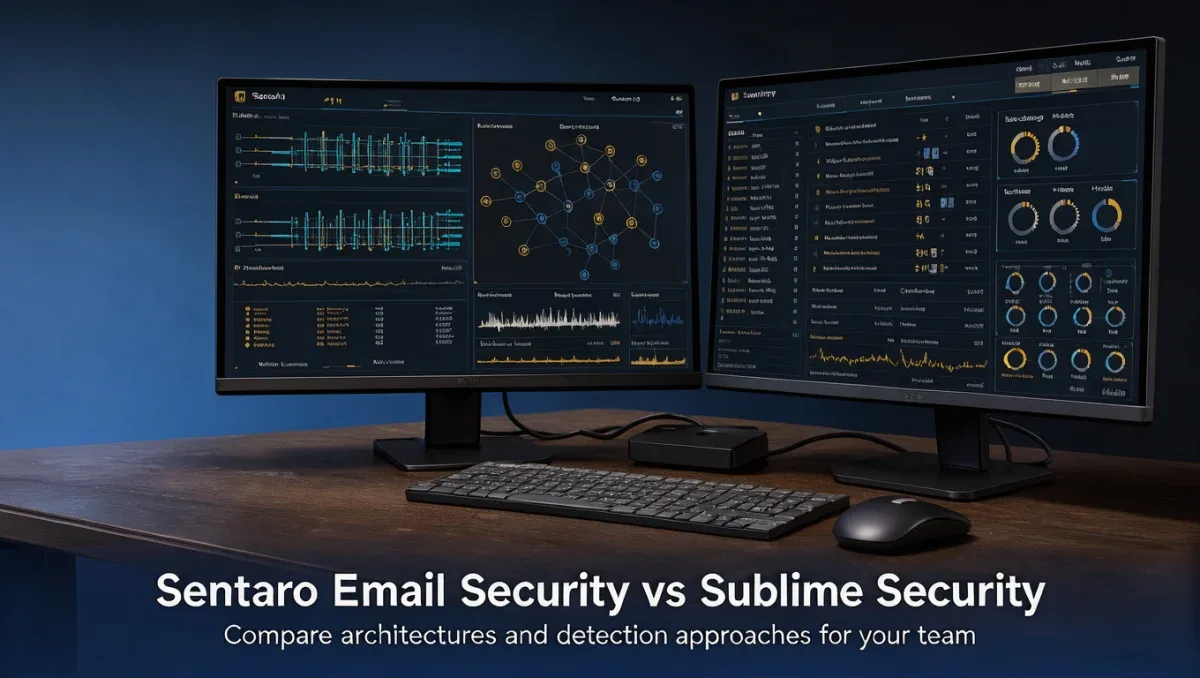
Sentaro email security vs sublime security represents an important choice for organizations upgrading their defenses against phishing, business email compromise, and suspicious message activity in 2026. Evaluating both options requires understanding how each platform handles inbound message analysis, inspection routines, and detection logic. At Trustreviewsx, we break down these two email security systems by examining operational priorities, technical workflows, and team requirements.
Modern inbox protection increasingly uses automated pattern recognition and defensive models powered by Artificial Intelligence to catch advanced impersonation attempts. Finding the right software depends heavily on whether your team prefers turnkey policy management or code-level visibility into email rule execution.
Short answer: Choose Sentaro Email Security if your organization prioritizes structured inbox filtering, guided protection rules, and streamlined administrative management with an overall score of 8.0/10. Choose Sublime Security if your security operations team requires detection-as-code flexibility, customizable inspection rules, and granular control with an overall score of 8.2/10.
| Evaluation Metric | Sentaro Email Security | Sublime Security |
|---|---|---|
| Trustreviewsx score | 8.0/10 | 8.2/10 |
| Best for | Organizations wanting direct, managed inbox protection workflows | Security teams requiring detection-as-code and customizable logic |
| Core focus | Automated email defense, message hygiene, and guided threat mitigation | Rule-based visibility, detection engineering, and deep message inspection |
| Consider if | You prefer standard policy enforcement without writing custom detection scripts | You have dedicated security engineers who want full visibility into detection syntax |
1. How Trustreviewsx Compared Sentaro Email Security and Sublime Security
This comparison looks at what Sentaro Email Security and Sublime Security are built to do, who each one serves, and how to choose between them, using the seven Trustreviewsx criteria: features, ease of use, pricing and value, integrations, audience fit, support and competitive position. Plans, prices and limits change often, so we point out what to confirm on each official website before you buy. This article was researched and drafted with the help of AI tools, then reviewed and edited by the Trustreviewsx Editorial Team.
2. How Sentaro Email Security and Sublime Security differ in focus

Sentaro Email Security centers on protecting mailboxes by analyzing inbound traffic, scanning message components, and preventing unauthorized communication patterns from reaching end recipients. The platform targets business environments that need reliable inbox hygiene, automated filtering rules, and centralized quarantine management without demanding daily rule programming from security administrators.
Sublime Security approaches email defense from a detection engineering standpoint, giving security analysts direct control over the signals and logic used to inspect messages. By focusing on customizable detection rules, Sublime Security serves technical practitioners who wish to test custom queries, inspect raw email telemetry, and adapt defensive criteria rapidly against novel social engineering patterns.
3. Which one fits your situation
Choosing the correct tool requires matching platform capabilities with your administrative bandwidth. Readers reviewing our in-depth sentaro email security vs sublime security evaluation often discover that organizational structure dictates the better choice.
| Situation | Choose Sentaro Email Security if | Choose Sublime Security if |
|---|---|---|
| Small security team | You want structured defaults without maintaining rule scripts | You have dedicated time to build and review code-based detection logic |
| Detection engineering focus | You prefer vendor-curated definitions and baseline email protection | You actively write custom queries to intercept organization-specific phishing |
| Administrative simplicity | You need straightforward mailbox oversight and simple quarantine review | You require deep query logs and raw telemetry inspection |
| Rapid initial rollout | You favor standard operational defaults that activate quickly | You want to test detection rules against message feeds before full enforcement |
| Compliance audits | You prefer fixed threat categorization reports | You require customizable audit queries to track specific communication indicators |
4. How to compare them yourself
Independent evaluation during an assessment period allows your team to test critical workflows directly. Explore the publication insights on Trust Reviews X to guide your internal trial runs across all essential categories.
4.1. Features
Compare how each system surfaces message anomalies, analyzes headers, flags suspicious senders, and executes threat containment actions. Test sample phishing scenarios to observe whether detection alerts provide the context your team requires for daily triage.
4.2. Ease of use
Review the learning curve associated with basic administrative operations. Evaluate how easily your team can search past messages, release legitimate communications from quarantine, and modify sender whitelists or blacklists.
4.3. Pricing and value
Examine how commercial terms scale with your organization. Check the official pricing pages for Sentaro Email Security and Sublime Security to confirm whether subscription costs depend on total protected mailboxes, message volume, or administrative access levels.
4.4. Integrations
Verify how each email security tool connects with your cloud mailbox infrastructure and operational logging destinations. Confirm on each vendor website which productivity platforms and alert ingestion pipelines receive native configuration support.
4.5. Audience fit
Assess whether the software aligns with the day-to-day skill sets of your staff. Systems requiring ongoing detection maintenance demand active engineering time, while turnkey systems better serve cross-functional IT teams.
4.6. Support
Review the available assistance documentation, deployment guides, and vendor communication paths. Confirm on each platform website what onboarding guidance and technical support coverage apply to your operational tier.
4.7. Competitive position
Measure how each solution differentiates its architectural approach. Sentaro Email Security emphasizes operational simplicity in email hygiene, whereas Sublime Security differentiates through transparency, rule editing, and practitioner collaboration.
5. Cost checklist for both tools

Email security tools structure their agreements around several recurring variables. Use this cost checklist during vendor discussions to ensure all budgetary factors are accounted for.
| Cost item | Ask about Sentaro Email Security | Ask about Sublime Security |
|---|---|---|
| Mailbox licensing | Confirm whether shared or alias mailboxes count toward the total subscription seat threshold | Confirm how active user inboxes versus system mailboxes affect licensing tiers |
| Log retention | Confirm retention windows for message metadata and remediation history on the official pricing page | Confirm storage allowances for raw message telemetry and custom rule execution logs |
| Administrative roles | Check if multiple administrator accounts incur additional licensing charges | Check whether role-based access for multiple detection engineers requires tier upgrades |
| Onboarding assistance | Ask what setup assistance is included within standard onboarding options | Ask whether rule customization workshops or implementation packages carry separate fees |
6. How to decide
Follow a disciplined sequence when selecting your email defense software to avoid unexpected administrative hurdles.
- Inventory your current mailbox environment, noting total active accounts, shared mailboxes, and automated sending services.
- Define your internal engineering availability, deciding whether team members will write and maintain custom detection scripts.
- Check official documentation on both vendor sites to review deployment steps, permissions required, and message routing prerequisites.
- Run a monitored evaluation period with both platforms to measure detection clarity against normal organizational email flow.
- Compare commercial terms, verifying mailbox counts, multi-year commitments, and cancellation stipulations directly with sales representatives.
7. Frequently asked questions
Which platform suits teams without a dedicated security operations center?
Sentaro Email Security generally matches the operational rhythm of general IT departments that need dependable message filtering and quarantine handling without continuous rule development or script maintenance.
How does detection-as-code change daily administration?
Detection-as-code allows administrators to write, test, version-control, and share detection logic across environments. Sublime Security focuses heavily on this method, which gives teams granular precision at the expense of requiring more coding familiarity.
What should organizations verify regarding cloud mailbox compatibility?
Organizations should verify the exact authorization permissions each platform requests on its official setup page, ensuring the software can inspect headers, attachments, and routing metadata without disrupting normal delivery.
Can an organization switch between these systems easily?
Switching requires reconfiguring message ingestion connectors and recreating custom quarantine policies. Planning parallel monitoring during migration prevents blind spots while transferring inbound email inspection responsibilities.
8. Final verdict
Sentaro Email Security and Sublime Security address email threats through distinct operational philosophies. Teams seeking structured administration and turnkey defenses will find Sentaro Email Security practical and accessible. Organizations with mature detection engineering practices that demand rule transparency and custom query authoring will gain greater precision from Sublime Security.
| Criterion | Sentaro Email Security score /10 | Sublime Security score /10 | Reason |
|---|---|---|---|
| Features | 8.0 | 8.8 | Sentaro provides structured core defenses; Sublime provides deep detection logic and query authoring. |
| Ease of Use | 8.5 | 7.2 | Sentaro offers straightforward management; Sublime requires familiarity with detection syntax. |
| Pricing and Value | Confirm before buying | Confirm before buying | Review mailbox volume and storage requirements on the official pricing pages. |
| Integrations | Confirm before buying | Confirm before buying | Verify current cloud mailbox connector requirements on the official vendor websites. |
| Audience Fit | 8.0 | 8.2 | Sentaro matches IT-led teams; Sublime serves dedicated security operations engineers. |
| Support | Confirm before buying | Confirm before buying | Confirm onboarding guidelines and service tier policies on the official documentation pages. |
| Competitive Position | 7.5 | 8.6 | Sentaro defends standard workflows; Sublime offers distinct detection-as-code flexibility. |
| Overall score | 8.0 | 8.2 | Evaluated across features, ease of use, audience fit, and competitive positioning criteria. |
Have a question about choosing software? Send it to the Trustreviewsx team through our contact page or follow Trustreviewsx on LinkedIn for new reviews and comparisons.