
Trustreviewsx may earn a commission when you buy through links on this page, at no extra cost to you. This does not affect our ratings.
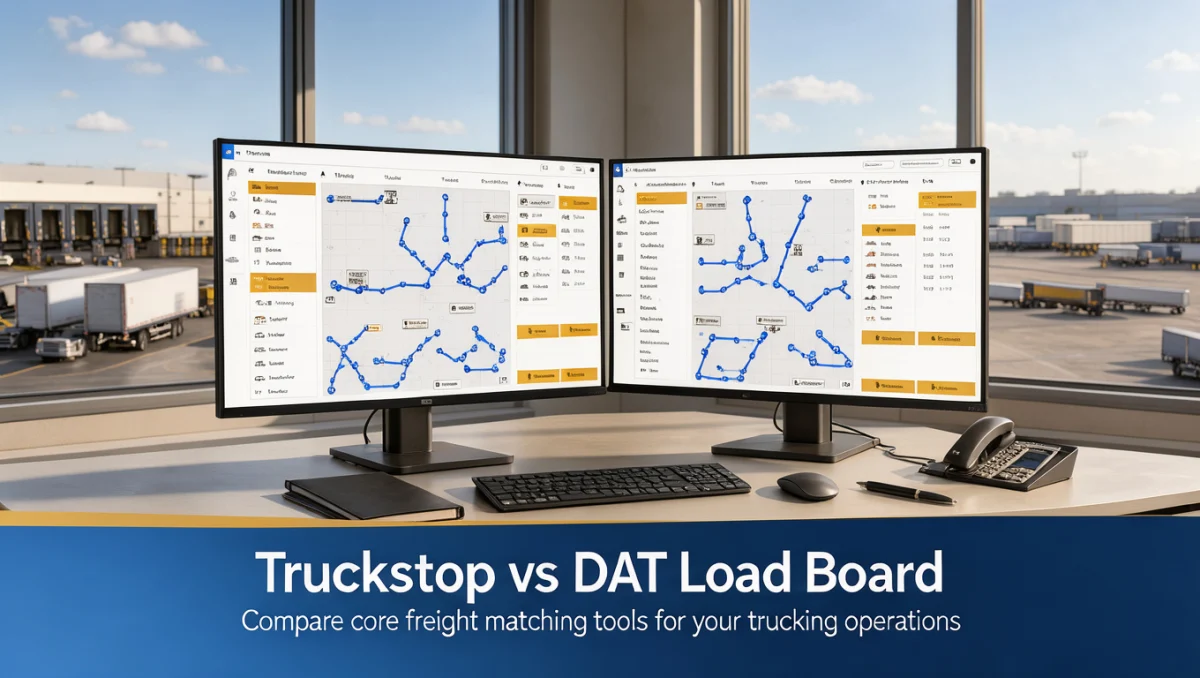
Truckstop load board vs DAT load board comparisons help freight carriers, owner-operators, and transportation intermediaries determine which freight matching network aligns with daily dispatch routines. Freight load boards operate as digital freight marketplaces where freight brokers post shipments and motor carriers search for available capacity to keep equipment moving across commercial lanes. Choosing the correct freight matching service requires examining workflow requirements, operational overhead, search ergonomics, and daily dispatch procedures across your commercial fleet.
Evaluating digital freight marketplaces requires balancing operational workflows against overhead costs. At Trustreviewsx, our freight technology analysis focuses on helping logistics teams choose software that matches practical operational habits without adding unnecessary administrative friction to dispatch desks.
Quick verdict: The overall evaluation yields an average Trustreviewsx score of 8.4/10. Truckstop fits freight operators who prioritize lane negotiation clarity and rate verification, while DAT serves operations focused on broad load discovery and extensive spot market postings. Operations needing free standalone boards should consider broker-specific portals instead.
| Evaluation Dimension | Summary Findings |
|---|---|
| Trustreviewsx score | 8.4/10 |
| Best for | Motor carriers, owner-operators, and freight brokers seeking commercial freight matching networks |
| Not ideal for | Private fleets running dedicated round-trip contracts without any spot market exposure |
| Key strengths | Commercial freight discovery, rate evaluation tools, load posting networks, lane matching infrastructure |
| What to check before buying | Official subscription levels, search query caps, package add-ons, and account seat costs |
1. How Trustreviewsx Reviewed Truckstop Load Board vs DAT Load Board
This review looks at what Truckstop and DAT are built to do, who it serves, and how it compares with similar tools, using the seven Trustreviewsx criteria: features, ease of use, pricing and value, integrations, audience fit, support and competitive position. Plans, prices and limits change often, so we point out what to confirm on the official website before you buy. This article was researched and drafted with the help of AI tools, then reviewed and edited by the Trustreviewsx Editorial Team.
2. Short Answer: Choosing Between Truckstop and DAT

Choosing between Truckstop and DAT depends on whether your daily priority centers on detailed negotiation data or maximum freight availability across diverse geographic regions. Both platforms function as centralized freight marketplaces connecting commercial motor carriers with licensed freight brokers seeking tractor-trailer equipment. Freight professionals select these services to identify backhauls, verify credit standing of logistics intermediaries, and negotiate competitive spot market contracts.
When comparing tools within modern transport management and digital Collaboration & Productivity workflows, dispatchers should identify which specific information views minimize decision fatigue during active load booking windows. Reviewing both platforms against your standard freight lanes will clarify which network provides optimal lane depth for your primary equipment classifications.
3. Positioning Overview
Both load boards occupy prominent positions within the commercial transportation sector, yet each platform emphasizes specific operational philosophies within carrier and brokerage offices.
| Tool | Best for | Core strength | Consider if |
|---|---|---|---|
| Truckstop | Carriers and intermediaries valuing lane negotiation metrics and credit insights | Freight matching and rate evaluation infrastructure | Your workflow requires disciplined credit checking and backhaul planning |
| DAT | Carriers and dispatchers needing broad spot freight volume across nationwide lanes | Expansive freight posting directory and search filtering | Your operations depend on continuous spot market freight availability |
4. Comparison Across Trustreviewsx Evaluation Criteria
4.1. Core Freight Matching Features
Core freight matching capabilities define how efficiently dispatch personnel source available equipment or match shipments with vetted motor carriers. Load board platforms provide search filters allowing dispatchers to isolate loads by trailer configuration, deadhead distance, geographic origin, destination radius, and weight parameters. Freight platforms also supply credit reporting tools that display average payment turnaround days and risk indicators for freight brokerages.
Carriers should evaluate how each platform structures freight refresh intervals, alert mechanisms, and load booking inquiries. Confirm on the official Truckstop and DAT websites how specific notification preferences and lane alert automations are configured across account tiers.
4.2. Ease of Use and Dispatch Ergonomics
Ease of use in dispatch environments directly impacts how rapidly a carrier can secure high-paying loads before competing fleets claim available freight. Interface organization determines whether a dispatcher can view load details, verify broker credentials, and contact dispatch desks without toggling between multiple disconnected screens. Load board platforms aim to streamline search inputs and reduce manual data entry for recurring lane searches.
Dispatchers handling dozens of inquiries each morning require responsive filtering and clean typography to avoid costly lane errors. Review interactive product demonstrations on the official websites to judge which search interface suits your dispatch desk ergonomics.
4.3. Pricing Structure and Overall Value
Pricing models across commercial load board services follow monthly recurring subscription arrangements, with vendors establishing multiple functional tiers based on operational scale. Additional capabilities such as real-time market rate analytics, multi-user access seats, credit verification tools, and historical lane data frequently govern the transition between package levels.
Before subscribing to any service, buyers should perform a thorough operational review:
- Confirm the exact monthly subscription fees for both single-user and multi-seat office deployments on the official vendor websites.
- Examine whether historical lane rate benchmarking requires an upgraded subscription tier or standalone add-on billing.
- Verify contract renewal conditions, payment terms, and notice periods required for subscription changes.
4.4. Dispatch and Management Integrations
Integration capabilities allow load board data to flow into transportation management software, accounting applications, and fleet telematics systems. When load boards share operational data with back-office software, logistics personnel eliminate duplicate entry of shipment identifiers, bill of lading references, and carrier compliance documentation. Standardizing data flow accelerates invoicing cycles and supports accurate fleet accounting.
Carrier management systems vary widely across fleet sizes, so prospective users must check compatibility beforehand. Confirm on the official Truckstop and DAT support resources whether direct software connections match the exact transportation management system active in your office.
4.5. Target Audience Fit
Audience fit analysis examines whether a digital freight network accommodates the specific operating constraints of single-truck owner-operators, expanding mid-sized fleets, or enterprise freight brokerage desks. Small carrier setups need straightforward search functions and rapid credit verification, whereas larger brokerage environments demand multi-user posting management, automated carrier vetting checks, and lane rate tracking across nationwide logistics operations.
Buyers should assess whether the platform interface matches the technical competence of daily users. Confirm on the official platform websites what organizational management controls are supplied for growing freight offices.
4.6. Support and Learning Resources
Support accessibility represents an operational safety net for carriers working under strict delivery appointments and tight loading schedules. Freight matching services offer varying combinations of self-service knowledge archives, help documentation, onboarding tutorials, and direct contact options for account troubleshooting. Access to prompt guidance prevents dispatch interruptions when technical or account access difficulties arise.
Dispatch desks frequently operate during non-standard commercial business hours, including early mornings and weekends. Confirm on the official provider portals what communication channels and service availability windows apply to each customer tier.
4.7. Competitive Position in the Freight Sector
The competitive environment for digital freight services includes both longstanding independent load networks and modern digital freight platforms operated directly by freight management firms. Independent marketplaces like Truckstop and DAT maintain neutral ground where thousands of independent motor carriers and freight intermediaries negotiate commercial agreements. Their longstanding role across North American logistics ensures consistent posting volume across standard van, refrigerated, and flatbed equipment categories.
When reviewing software options through independent research at Trust Reviews X, fleet managers can compare software characteristics without industry hype. Assessing both platforms against your regular shipping corridors ensures you select software built for your long-term transport routes.
5. How to Decide Between Truckstop and DAT

Selecting between these two transportation software platforms requires a systematic approach grounded in your business model and operational capacity. Freight operations should avoid purchasing tools based solely on reputation and instead evaluate operational alignment through a structured process.
- Map your primary hauling lanes and primary trailer types, noting whether your routes require specialized open-deck configurations or standard dry van freight.
- Calculate your total technology budget, factoring in potential fees for supplementary user seats, factoring connections, and rate analytics tools.
- Audit your daily dispatch workflow to discover whether fast credit validation or extensive spot freight discovery consumes the bulk of dispatch time.
- Visit the official Truckstop and DAT websites to verify current plan features, active feature distinctions, and account requirements.
- Test search responsiveness and lane posting depth during peak dispatch hours using current trial or demonstration opportunities where available.
6. Frequently Asked Questions
What operational factors should a carrier evaluate before choosing a load board?
Carriers should evaluate daily equipment types, geographic coverage across primary shipping lanes, the speed of broker credit checks, and total subscription costs including extra dispatch user seats. Aligning software search filters with your core tractor-trailer fleet ensures efficient dispatch operations without paying for unnecessary lane data.
Why do load board subscription packages vary in monthly price?
Load board vendors separate their offerings into subscription levels based on advanced rate analysis tools, multi-user account access, credit monitoring capabilities, and automated lane notifications. Higher operational tiers typically address the complex needs of growing fleets and freight brokerages requiring advanced commercial intelligence.
How should dispatchers verify freight broker reliability on these platforms?
Dispatchers should examine credit scores, historical payment days, authority statuses, and verified commercial reviews provided within the platform credit lookup tools. Verifying these financial indicators before booking shipments minimizes unpaid freight claims and helps maintain predictable operational cash flows.
What additional expenses should fleets budget for alongside a load board subscription?
Fleets should budget for supplementary dispatch seats, transportation management software connectivity, mobile telematics links, factoring verification fees, and premium rate benchmarking tools. Reviewing complete software infrastructure costs prevents unexpected operational overhead as administrative dispatch teams expand.
7. Final Verdict: Truckstop Load Board vs DAT Load Board
Both Truckstop and DAT remain standard operational components for commercial freight dispatchers, owner-operators, and freight intermediaries. Choosing the optimal platform rests on matching software ergonomics, rate intelligence tools, and administrative requirements with your daily hauling lanes.
| Criterion | Score /10 | Reason |
|---|---|---|
| Features | 8.8/10 | Both platforms supply comprehensive lane search filters, broker credit tools, and freight posting networks. |
| Ease of Use | 8.3/10 | Dispatch search screens are functional, though handling complex multi-leg searches requires initial user familiarization. |
| Pricing and Value | 8.0/10 | Multi-tier pricing structures require buyers to confirm exact feature allotments to ensure software investments match dispatch scale. |
| Integrations | 8.1/10 | Both solutions connect across varied transportation management systems, though specific connections must be verified prior to purchase. |
| Audience Fit | 8.9/10 | Both tools effectively serve diverse freight audiences ranging from single-unit operators to large logistics intermediaries. |
| Support | 8.2/10 | Self-guided learning libraries and customer service channels exist, with availability parameters needing direct verification. |
| Competitive Position | 8.5/10 | Both platforms maintain resilient market positions as neutral, comprehensive freight matching marketplaces. |
Overall score: 8.4/10
For solo owner-operators and small carrier fleets focusing on steady regional lanes and rate negotiation discipline, Truckstop provides structured workflow visibility. For expanding logistics teams and cross-country spot freight haulers requiring extensive shipment options across all regions, DAT delivers broad search utility. Review your primary freight corridors, verify user license terms, and confirm current package parameters on each provider's official portal before establishing long-term software subscriptions.
Have questions about freight software or dispatch tools? Send your questions through the official contact portal at https://trustreviewsx.com/contact/ or follow Trustreviewsx on LinkedIn at https://www.linkedin.com/company/trustreviewsx/ for continuous updates on business software evaluations.