
Some links on this page may earn Trust Reviews X a commission when you buy through them, at no extra cost to you. Commissions never influence our ratings.
Deciding between activecampaign vs hubspot usually comes down to how your team nurtures leads and keeps customer conversations aligned. The better fit depends on whether you need detailed workflow automation for message sequences or an all-in-one suite that connects customer records with wider business operations. Seen through the Trust Reviews X lens, each platform supports a different way of working across sales and marketing teams.
Your technical comfort and daily priorities will decide which tool keeps delivering value. Teams running direct email programs often weigh the options differently than teams that need support tickets, content and pipeline tracking in one place.
Quick verdict: ActiveCampaign vs HubSpot earns an overall score of 8.0 out of 10. ActiveCampaign suits teams that put granular email journeys first, while HubSpot suits businesses that want a single customer database linking marketing pipelines with the rest of the organization. Neither is a strong match for organizations that only send simple, static announcements without automation logic.
| Metric | Details |
|---|---|
| Trustreviewsx score | 8.0 / 10 |
| Best for | Teams balancing dedicated marketing automation with structured pipeline management |
| Not ideal for | Solo operators who only need simple static newsletters without tracking contact interactions |
| Key strengths | Visual campaign builders, contact tracking, pipeline management, and contact segmentation |
| What to check before buying | Official plan comparison pages for user seat structures, contact thresholds, and onboarding requirements |
1. How Trustreviewsx Reviewed ActiveCampaign and HubSpot

This review looks at what ActiveCampaign and HubSpot are built to do, who they serve, and how they stack up against similar tools. We assessed both against the seven Trustreviewsx criteria: features, ease of use, pricing and value, integrations, audience fit, support and competitive position. Plans, prices and limits change often, so we flag what to confirm on each vendor's official website before buying. This article was researched and drafted with AI assistance, then reviewed and edited by the Trustreviewsx Editorial Team.
2. Short Answer and Core Platform Differences
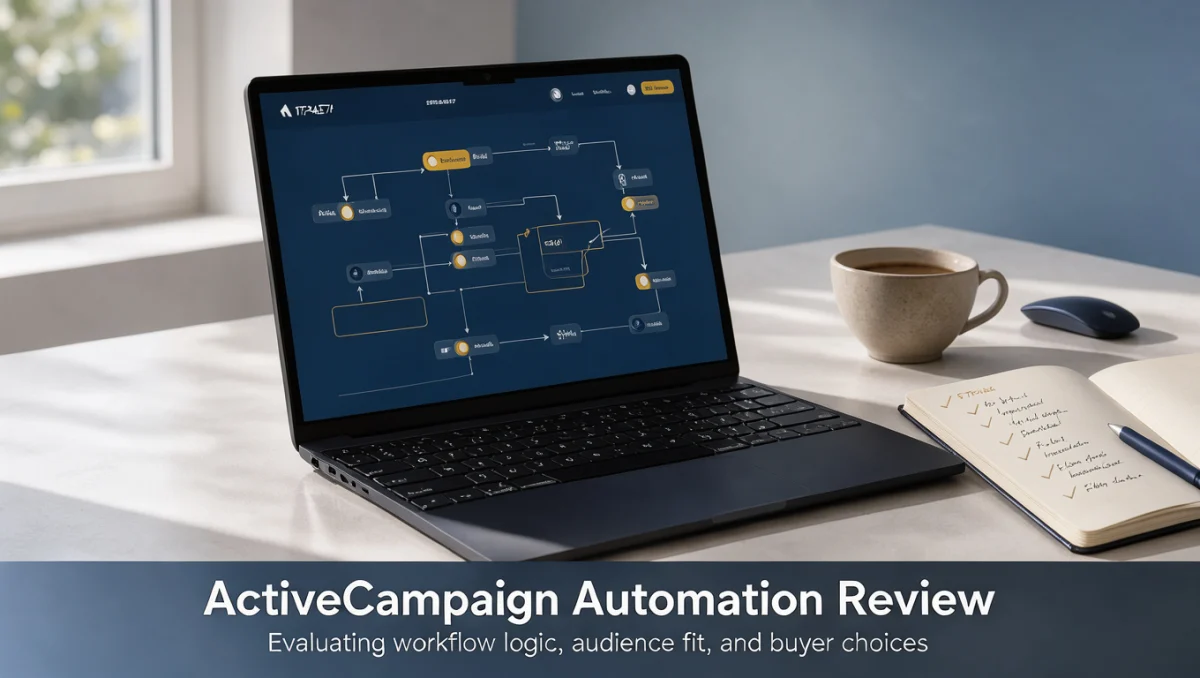
ActiveCampaign is built around deep automation logic, message sequencing and targeted subscriber communication. It works mainly as a customer experience automation platform, where conditional branching, contact tagging and segmented follow-ups drive daily work.
HubSpot is built around a centralized customer relationship database that brings many business activities together. It serves teams that want inbound lead capture, deal pipeline tracking, support ticketing and content delivery aligned inside one ecosystem.
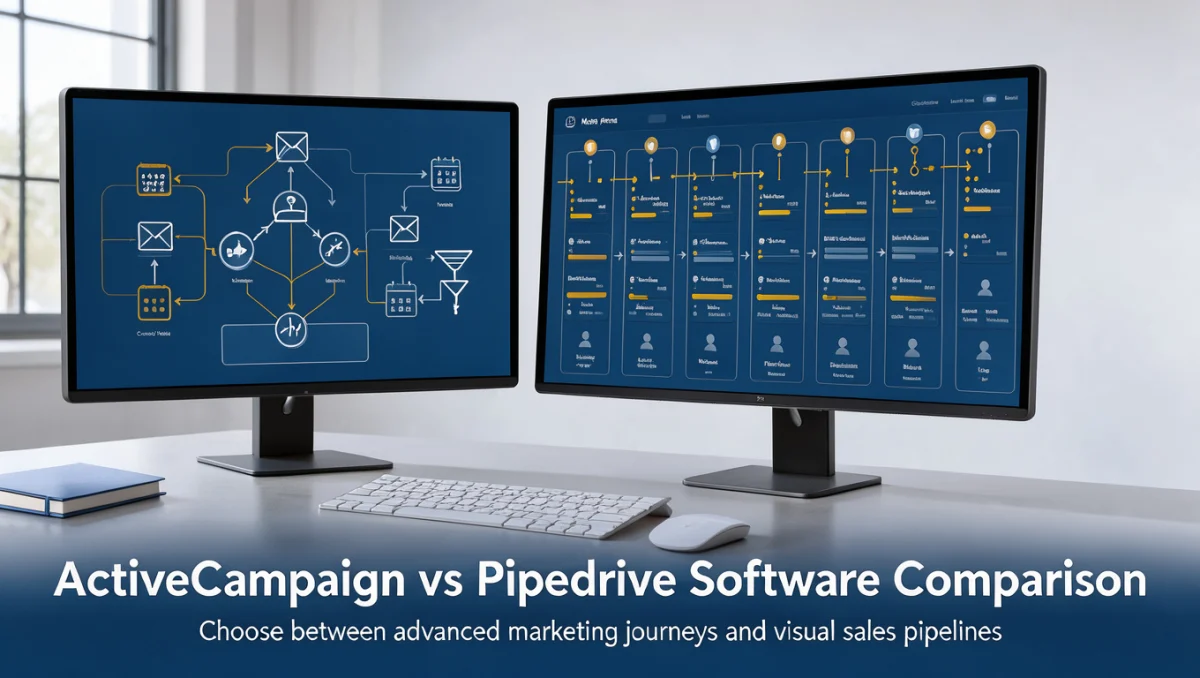
Evaluating software in the wider Marketing category means assessing team workflows before committing resources. If your main goal is sophisticated messaging paths triggered by web behavior, ActiveCampaign handles that model directly. If you want marketing pipelines aligned with sales tracking and service tickets, HubSpot reflects that multi-department design.
3. Positioning Comparison
Both platforms support business growth but approach operational coordination from different starting points. The table below outlines how each positions its primary value.
| Tool | Best for | Core strength | Consider if |
|---|---|---|---|
| ActiveCampaign | Teams focused on detailed email sequences and contact interaction triggers | Multi-step visual workflow builders and granular customer segmentation | Your business model relies on automated subscriber nurture paths |
| HubSpot | Organizations wanting centralized contact records across sales and service | Unified customer database connecting lead generation with deal tracking | Your team prioritizes shared visibility across distinct company roles |
4. Trustreviewsx Criteria Comparison
4.1. Features
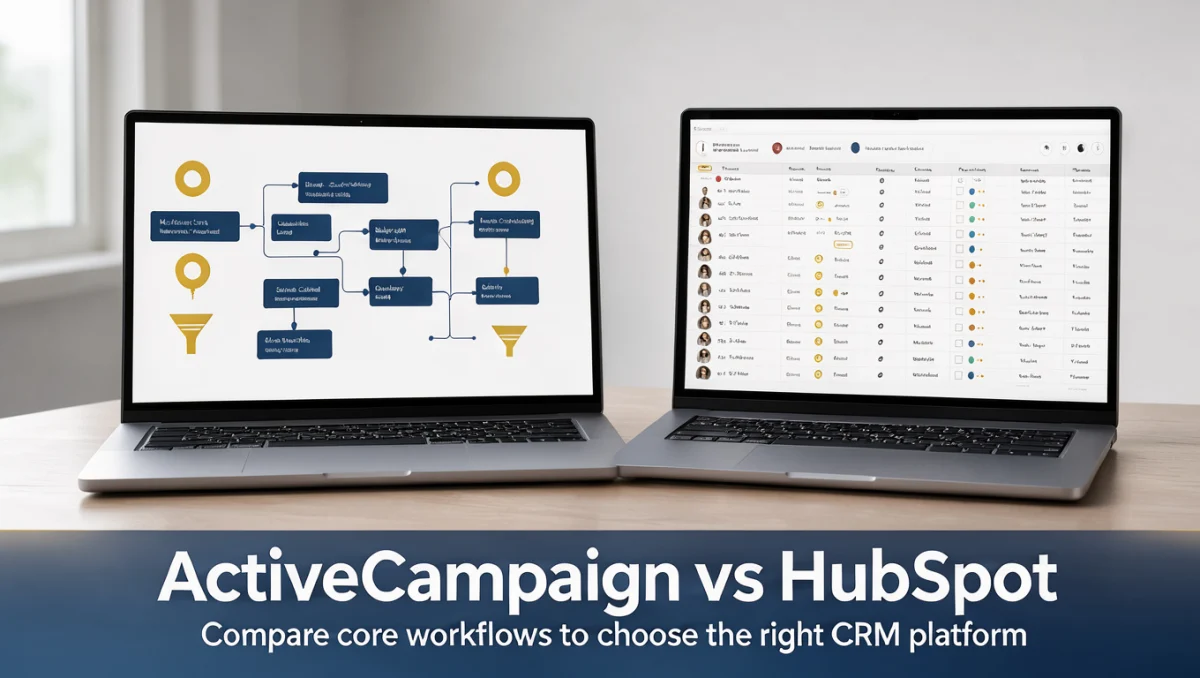
ActiveCampaign provides tools for building complex automation trees. Users construct multi-path branching logic based on contact behavior, site visits and interaction metrics. Its deal management system connects directly to these automations, moving prospects through stages based on automated triggers.
HubSpot offers a broad suite that links lead generation forms, email delivery, deal pipelines and customer ticket queues into unified contact timelines. Its timeline shows every page view, form submission and communication record in a single chronological feed that teams can access together.
Buyers should examine how deeply their staff will use visual journey builders compared with holistic contact databases before deciding.
4.2. Ease of Use
ActiveCampaign takes time to master, particularly tag structures, custom field relationships and event triggers. Users comfortable with logic flowcharts adapt smoothly, while newcomers may find the depth of configuration options demanding during early campaign builds.
HubSpot emphasizes a unified navigation interface across its hubs. Contact records, reporting dashboards and campaign editors share a consistent layout, which makes routine tasks intuitive for team members who handle several roles.
Platform complexity often tracks functional depth. Organizations should assess the administrative comfort of their team when evaluating daily interfaces.
4.3. Pricing and Value
Subscription software in the automation space usually scales with contact list size, administrative seats or feature tiers. Total cost changes as subscriber lists grow or additional team members need logins.
ActiveCampaign structures its tiers around contact volume and automation capability. Buyers should check the official ActiveCampaign pricing page to see how contact bands affect total monthly billing as databases grow.
HubSpot structures its model across distinct hubs with varying tiers and seat types. Buyers should consult the official HubSpot pricing page to determine whether onboarding fees or user license minimums apply to their intended tier.
4.4. Integrations
Marketing platforms rely heavily on exchanging data with payment processors, form providers, e-commerce stores and webinar software. Both platforms maintain extensive ecosystems that synchronize data with third-party tools.
ActiveCampaign depends on bi-directional data sync to ingest purchase activity and event data that trigger automated messages. Buyers should review official integration catalogs to confirm whether specific connectors require third-party sync utilities.
HubSpot acts as a central data hub for external software, syncing contact attributes into centralized records. Buyers should verify in official documentation whether particular connectors require specific subscription tiers.
4.5. Audience Fit
ActiveCampaign serves content creators, digital commerce operators and agencies that want automated messaging workflows without adopting an enterprise-wide operations suite. It fits workflows where precise email automation drives conversion goals.
HubSpot serves growing commercial teams, business-to-business organizations and enterprises that need collaborative visibility across marketing staff, sales agents and customer success teams within one repository.
Choosing between them means identifying whether your primary unit is a specialized marketing campaign or a cross-functional business team.
4.6. Support
Reliable vendor support protects business continuity during campaign launches and system migrations. Support across the software industry typically varies by subscription level, from knowledge bases and community forums to direct chat or phone assistance.
ActiveCampaign outlines its available contact methods in its support directory. Buyers should confirm on the official ActiveCampaign website which channels, such as live chat or scheduled consultations, match their plan.
HubSpot provides multiple support tiers linked to account level, supplemented by structured educational academies and user communities. Prospective buyers should confirm on the official HubSpot website which direct assistance channels come with their intended package.
4.7. Competitive Position
ActiveCampaign holds a strong position among dedicated automation platforms and competes directly with alternatives focused on advanced subscriber messaging. Its reputation rests on giving operators detailed control over branching communication rules.
HubSpot holds a strong presence among comprehensive inbound software suites and competes with enterprise customer relationship platforms. Its reputation rests on an organized system of record spanning the full customer journey.
Both platforms are mature market standards within their focus areas, giving buyers reliable stability whichever they choose.
5. How to Decide Between ActiveCampaign and HubSpot

Choosing between ActiveCampaign and HubSpot requires a structured look at your team's capabilities, immediate messaging goals and administrative budget.
5.1. Assess Your Core Workflow Requirement
Determine whether your business needs advanced subscriber journey logic or unified cross-department records. If automated email nurturing with conditional triggers is central to your growth strategy, ActiveCampaign fits that goal. If coordinating marketing leads with sales reps and support agents is your main bottleneck, HubSpot addresses that friction.
5.2. Evaluate Data Migration and Setup Commitment
Moving to any new CRM involves transferring contact records, cleaning subscription statuses and rebuilding automated funnels. Many vendors require substantial administrative setup before a platform is fully operational.
- Review existing contact tags, custom fields and email templates before migration.
- Confirm internal ownership for building automation logic and managing integrations.
- Check whether historical interaction data must be preserved during the transition.
5.3. Audit Total Operational Expenditure
Software costs rarely stop at the base monthly rate. Business buyers should verify potential secondary costs on official vendor channels before signing an agreement.
- Confirm seat pricing rules for administrative, view-only and active team members.
- Verify contact list expansion pricing bands to avoid unexpected renewal increases.
- Check whether onboarding packages or technical setup consultations are mandatory for your tier.
6. Frequently Asked Questions
How should a business decide between dedicated email automation and a full CRM platform?
Teams should evaluate whether their main challenge is messaging complexity or inter-departmental visibility. If staff spend most of their time designing conditional email sequences, a specialized automation tool meets that need. If sales representatives and support agents need immediate access to contact interactions, a centralized customer relationship platform provides better organizational cohesion.
What factors cause software subscription costs to rise over time?
Subscription costs typically climb when businesses grow their stored contacts or add team seats. Many platforms tie pricing to database volume or reserve advanced automation features for higher tiers. Reviewing projected contact growth on official pricing pages helps keep budgets predictable over longer deployment cycles.
What steps ensure a smooth contact database transition?
Clean the existing database by removing inactive subscribers and consolidating redundant tags before exporting records. Mapping custom properties accurately between the old and new platforms prevents data loss during import. Testing small subscriber segments through newly built workflows confirms that tracking triggers fire correctly before full production campaigns run.
When should an organization seek professional software consultation?
Businesses managing complex sales pipelines, multi-channel attribution or specialized regulatory requirements benefit from certified implementation specialists. Outside guidance helps configure custom API data flows, set secure user permissions and align the software structure with team procedures, avoiding costly reconfiguration later.
7. Final Verdict
Both ActiveCampaign and HubSpot offer robust capabilities for modern business communication, but they solve operational challenges through different frameworks. Your organizational structure determines which is the better choice.
| Criterion | Score / 10 | Reason |
|---|---|---|
| Features | 8.5 | Deep visual automation workflows balanced against comprehensive customer database management |
| Ease of Use | 7.5 | Visual builders require a structured learning curve, while unified navigation simplifies multi-tool coordination |
| Pricing and Value | 7.0 | Verify official pricing tiers for user license minimums and database expansion costs |
| Integrations | 8.0 | Extensive third-party ecosystems require checking tier-specific connector availability |
| Audience Fit | 9.0 | Distinct alignment serving either automation specialists or collaborative sales and marketing teams |
| Support | 7.5 | Confirm available assistance channels and response times across official tier listings |
| Competitive Position | 8.5 | Established market positioning within dedicated email automation and full customer management suites |
Overall score: 8.0 / 10
ActiveCampaign is recommended for organizations that want sophisticated automated communication driven by contact behavior. HubSpot is recommended for companies that prioritize cross-team alignment, where marketing, sales and service share a single system of record.
If you have questions about selecting software for your specific workflow, contact our team through Trust Reviews X or follow our industry updates on Trustreviewsx LinkedIn.