
Trustreviewsx may earn a commission when you buy through links on this page, at no extra cost to you. This does not affect our ratings.
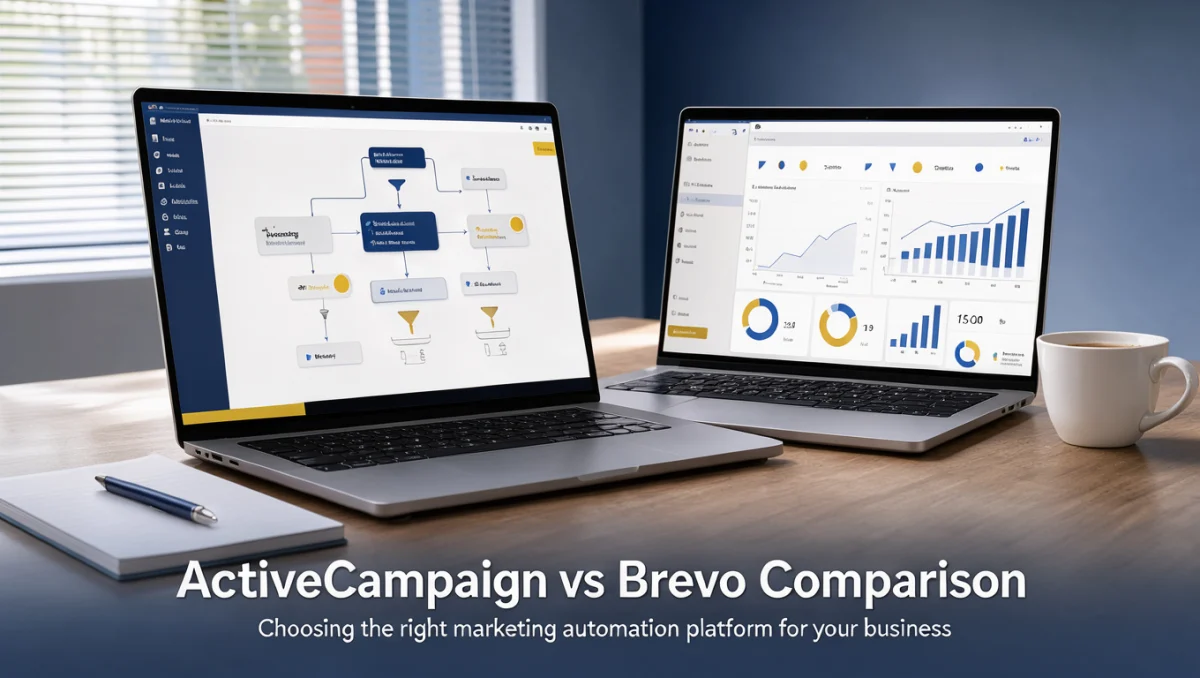
When weighing activecampaign vs brevo, the real question is structural: do you need intricate automation logic, or a single place to manage contacts and messages across channels? At Trustreviewsx, we align software architecture with operational realities rather than ranking tools by generic feature checklists. Your answer depends on whether complex customer journey logic or consolidated multi-channel contact management matters more to your daily work.
Both products have expanded to serve many business types, yet each manages contact records, event tracking, and engagement in its own way. Organizations that require granular automation paths and conditional branching usually gravitate toward ActiveCampaign, whereas teams seeking a workable balance between campaign delivery and relationship management often favor Brevo. Documenting your internal workflows before committing will prevent wasted effort later.
Quick verdict: Rated 8.4 / 10, this comparison concludes that ActiveCampaign suits businesses needing sophisticated behavioral automation, while Brevo fits teams centered on centralized multi-channel messaging. Neither tool is a strong match if you only need a basic newsletter sender without segmentation.
| Metric | Details |
|---|---|
| Trustreviewsx score | 8.4 / 10 |
| Best for | Organizations balancing behavioral automation pipelines against centralized multi-channel communication requirements. |
| Not ideal for | Operators seeking bare-bones email blasts without audience segmentation or lifecycle tracking. |
| Key strengths | Advanced customer journey logic, multi-channel message coordination, contact timeline visibility, and structured audience segmentation. |
| What to check before buying | Review list volume thresholds, sending allowances, add-on costs, and user seat policies on each official vendor website. |
1. How Trustreviewsx Reviewed ActiveCampaign vs Brevo
This review examines what ActiveCampaign and Brevo are built to do, which audiences they serve, and how they compare with similar tools. We evaluated both against seven Trustreviewsx criteria: features, ease of use, pricing and value, integrations, audience fit, support, and competitive position. Plans, prices, and limits change often, so we flag what to verify on official websites before purchasing. This article was researched and drafted with AI assistance, then reviewed and edited by the Trustreviewsx Editorial Team.
2. Short Answer: Choosing Between the Two Platforms
Selecting between ActiveCampaign and Brevo depends mainly on your primary marketing objective. If revenue relies on automated lifecycle journeys triggered by detailed web events, custom fields, and lead status changes, ActiveCampaign provides the specialized environment those workflows require. The platform centers on tracking individual user actions and responding with targeted message sequences.
If your strategy focuses on transactional notifications, multi-channel outreach across common customer touchpoints, and integrated relationship records within one interface, Brevo is a strong contender. Buyers reviewing modern Marketing solutions should consider whether contact database size or sending frequency will drive long-term planning.
3. Positioning Comparison
Understanding where each platform places its core value helps teams avoid software that doesn't match daily operations. The overview below shows how each solution approaches audience engagement.
| Platform | Best for | Core strength | Consider if |
|---|---|---|---|
| ActiveCampaign | Teams running complex lead nurturing sequences and behavioral triggers | Multi-step automated workflows with conditional paths | Your sales and marketing cycles rely heavily on tracking contact actions |
| Brevo | Businesses managing shared inboxes, campaign dispatches, and transactional delivery | Centralized communication across campaigns and direct messages | Your team values unified communication handling from a single dashboard |
4. Trustreviewsx Criteria Comparison

4.1. Features
ActiveCampaign builds its feature set around automation builders, conditional logic, split testing inside workflows, and granular lead scoring. Users can design decision trees that branch based on website visits, email interaction, deal stages, and custom contact tags. This depth supports precise journey mapping across different customer lifecycles.
Brevo organizes its capabilities around multi-channel execution, combining marketing campaigns, transactional sends, and conversation management. It includes automated sequences, but its main emphasis is straightforward campaign creation and dependable distribution across several formats. Teams should decide whether their campaigns require branching logic or simple, reliable execution.
4.2. Ease of Use
Brevo offers a clean navigation model that is quick to learn. Setting up a campaign, importing a subscriber list, and configuring standard autoresponders takes little initial effort. The interface organizes contacts and outgoing messages intuitively, which lowers onboarding friction for non-technical team members.
ActiveCampaign has a denser interface that reflects its functional depth. Because automations can connect to contact fields, pipeline stages, and external triggers simultaneously, planning and configuring journeys calls for methodical thinking. Teams adopting it should allow an onboarding period to organize tags, custom fields, and workflow dependencies.
4.3. Pricing and Value
Subscription models in this category calculate usage differently. Many marketing platforms base tiers on total contact database size, so costs rise as your list grows whether or not you message those contacts often. Other vendors charge mainly by monthly sending volume, allowing unlimited stored contacts while billing for output.
Before committing, review the official ActiveCampaign and Brevo pricing pages carefully. Confirm how each platform handles inactive subscribers, contact overages, and dedicated IP options. Estimating your list growth alongside monthly sending volume helps you avoid unexpected costs.
4.4. Integrations
Connecting your email and automation platform to the wider digital ecosystem keeps data flowing between e-commerce storefronts, payment gateways, and content management systems. ActiveCampaign has an established integration network designed to sync behavioral data, order values, and engagement events directly into contact timelines.
Brevo connects with widely used web platforms, e-commerce stores, and productivity apps to synchronize customer details and trigger transactional sends. When comparing the two, list every essential tool in your current stack and verify connection requirements in each provider's official directory.
4.5. Audience Fit
ActiveCampaign suits growing companies, dedicated digital marketers, and agencies managing sophisticated conversion funnels. If your business involves long consideration cycles, segmented product offerings, or coordinated sales pipeline handoffs, the platform offers the precision you need.
Brevo works well for retail outlets, growing utility services, content publishers, and lean operations that want reliable delivery without elaborate setup. It suits organizations that need unified messaging without running separate tools for marketing broadcasts and transactional receipts.
4.6. Support
Support structures vary widely across subscription tiers and providers. Common options include searchable documentation, community forums, ticket-based help, and real-time chat. Higher tiers often add faster response targets or assigned onboarding specialists.
Check the official support documentation for both tools to confirm available channels, language options, and support hours. Knowing what level of troubleshooting your team needs ensures workflow interruptions can be resolved quickly.
4.7. Competitive Position
Within the broader marketing technology landscape, ActiveCampaign is positioned as an advanced automation and lifecycle management solution. It competes with dedicated marketing automation suites by prioritizing granular behavioral targeting over simple broadcast utility.
Brevo positions itself as a versatile suite that combines marketing outreach with everyday transactional sends. By bridging regular newsletters and direct customer messaging, it appeals to businesses that want to avoid running multiple point solutions for external communication.
5. Platform Pros and Cons
5.1. ActiveCampaign Pros and Cons
- Pro: Sophisticated visual journey builder capable of managing multi-branch automated workflows.
- Pro: Detailed contact activity timelines capturing custom field changes and interaction history.
- Pro: Flexible segmentation tools that allow precise audience filtering based on historical behavior.
- Con: Steeper initial learning curve that requires dedicated time for setup and data planning.
- Con: Contact-based pricing requires routine list cleaning to avoid paying for dormant subscribers.
5.2. Brevo Pros and Cons
- Pro: Clean interface that simplifies day-to-day campaign composition and scheduling.
- Pro: Centralized management of marketing broadcasts alongside transactional notification delivery.
- Pro: Volume-based sending models offer flexibility for businesses with large, occasionally contacted audiences.
- Con: Automation workflows lack the advanced branching logic found in specialized journey builders.
- Con: Contact record customization is comparatively streamlined rather than deeply layered.
6. Who Should Choose Which Platform
6.1. Freelancers and Solo Consultants
Independent professionals with small contact lists often find Brevo practical for quarterly updates, service announcements, and client check-ins. The straightforward dashboard keeps maintenance time low. Consultants selling specialized courses or multi-stage coaching packages, however, may prefer ActiveCampaign to deliver automated educational sequences triggered by download activity.
6.2. Small Business Owners
Local businesses, retail shops, and boutique service firms often benefit from Brevo because it combines routine promotional broadcasts with transactional confirmations. Teams spend less time managing complex trigger conditions. If a small business runs a formal sales pipeline with tracked deal stages, ActiveCampaign is the stronger candidate thanks to its integrated relationship tracking.
6.3. Dedicated Marketing Teams
Marketing departments focused on conversion rate optimization, lead scoring, and segmented lifecycle campaigns usually get the most from ActiveCampaign. The ability to split-test within automation paths and trigger tailored messages based on content engagement gives specialists refined control over audience touchpoints.
6.4. Operations and E-commerce Teams
E-commerce operations handling order confirmations, shipping updates, and general announcements often appreciate Brevo for managing operational notifications alongside sales promotions. Stores running sophisticated abandoned cart sequences with dynamic cross-sell recommendations may lean toward ActiveCampaign for its detailed journey branching.
6.5. Teams That Should Look Elsewhere
Organizations that only need an internal announcement distributor, a simple team notification system, or a basic contact address book should consider simpler newsletter tools or internal collaboration software. Neither ActiveCampaign nor Brevo is designed to replace a document repository or a static spreadsheet.
7. How to Decide

Making a final choice between these platforms means weighing your internal resources, data cleanliness, and communication frequency. Work through these steps before subscribing:
- Map your main customer journeys on paper to see whether you need multi-branch automation or simple linear follow-ups.
- Audit your subscriber database to compare total contact records against your estimated monthly sending volume.
- List every external business application that must share data with your email platform.
- Review the official ActiveCampaign and Brevo feature matrices to confirm where your must-have capabilities sit.
- Calculate the total expected cost over twelve months, factoring in projected list growth.
8. Frequently Asked Questions
What drives the cost difference between these two systems?
Pricing depends on whether the vendor bills mainly by total stored contacts or by monthly sending volume. Compare your list growth rate against your planned send frequency to see which model offers better value.
How should a team prepare its contact data before migrating?
Clean your contact records, remove inactive subscribers, consolidate tags, and standardize custom fields before moving to any new system. Clean data ensures accurate segmentation and reduces unnecessary billing on platforms that charge per contact.
Which platform takes more technical setup time?
Platforms with deep conditional branching and multi-stage lifecycle funnels generally need more planning and configuration. Simpler broadcast tools with linear automation templates deploy faster for teams with limited technical resources.
Where should buyers confirm current feature availability?
Always check the official vendor plan pages directly. Features, add-on structures, sending limits, and user seat policies are updated regularly across the industry.
9. Final Verdict
Choosing between ActiveCampaign and Brevo is an operational decision that depends on your marketing sophistication and infrastructure needs. Independent research published on Trust Reviews X helps professionals select software that fits their real operations rather than speculative claims.
| Criterion | Score /10 | Reason |
|---|---|---|
| Features | 9.0 / 10 | Both platforms deliver strong core capabilities, with deep automation paths balanced against multi-channel messaging options. |
| Ease of Use | 8.5 / 10 | Clean navigation across standard campaign builders offsets the learning curve of complex journey creation. |
| Pricing and Value | 7.5 / 10 | Buyers must compare contact-based billing against volume-based limits to judge true value for their organization. |
| Integrations | 8.5 / 10 | Broad connectivity with major content management systems and e-commerce platforms supports unified data flow. |
| Audience Fit | 9.0 / 10 | Each tool addresses clear organizational profiles, from advanced marketing setups to unified communication teams. |
| Support | 7.5 / 10 | Support availability depends heavily on tier, so independent verification on official sites is necessary. |
| Competitive Position | 9.0 / 10 | Both solutions hold clear, distinctive positions within the broader digital marketing technology sector. |
Overall Score: 8.4 / 10
For teams prioritizing automated lifecycle funnels, behavioral triggers, and deep segmentation, ActiveCampaign is the strategic choice. For organizations that want an accessible platform combining campaign broadcasts, transactional messaging, and contact management, Brevo offers a balanced operational hub. Review your list metrics and verify all requirements on the official vendor websites before making your final decision.