Trustreviewsx may earn a commission when you buy through links on this page, at no extra cost to you. This does not affect our ratings.
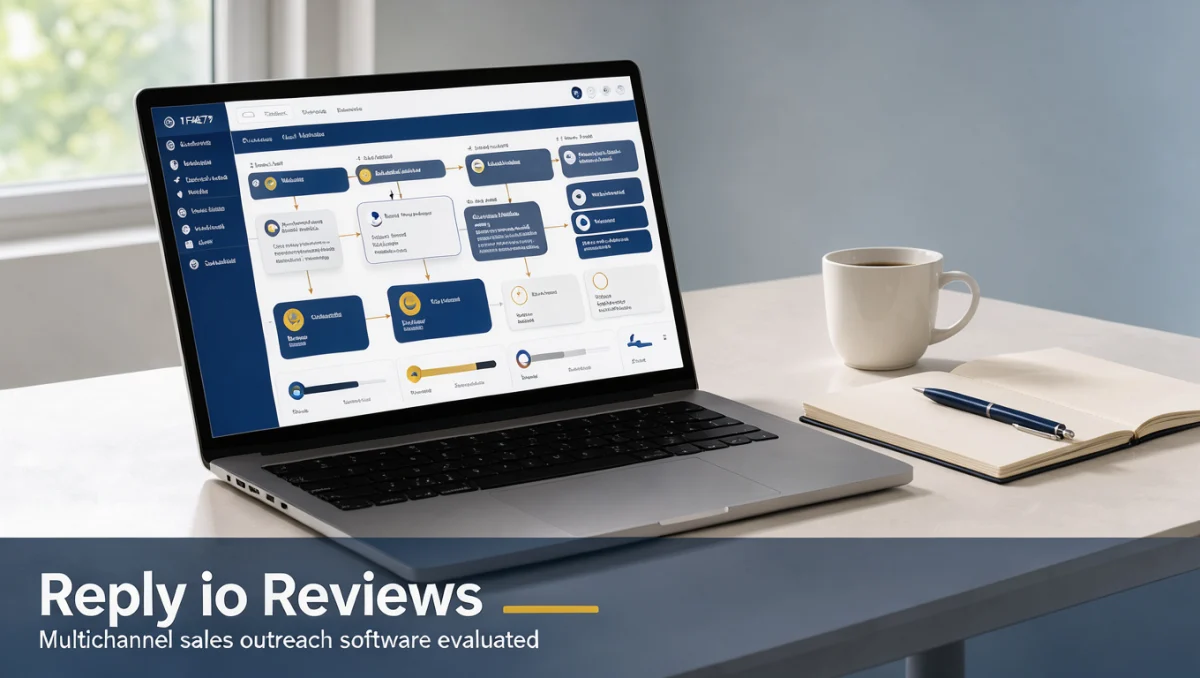
Searching for reply io reviews is a smart first step for outbound sales leaders weighing automated prospecting software. Rather than accepting vendor promises at face value, this guide examines sequence management, inbox protection, task coordination and cross-channel messaging so you can judge workflow fit clearly. Readers rely on Trust Reviews X for balanced assessments built around practical buying decisions.
Outbound prospecting has grown more demanding as buyers expect relevant contact across several channels. Picking a platform means weighing flexible multichannel cadences against the ongoing effort required to protect sender reputation and manage campaigns across a whole team.
Quick verdict: Scoring 7.7/10 overall, Reply.io fits business development groups and agencies that want organized multichannel prospecting. Solo users who only need occasional email tracking and prefer lightweight inbox add-ons will likely find it more than they need.
| Metric | Summary |
|---|---|
| Trustreviewsx score | 7.7/10 |
| Best for | Sales teams and outbound agencies running coordinated multichannel sequences across prospect lists |
| Not ideal for | Individuals who only want simple one-off email tracking without sequence automation |
| Key strengths | Automated email sequences, multichannel task management, and prospect reply tracking |
| What to check before buying | Confirm seat pricing, email sending limits and available channels directly on the official website |
1. How Trustreviewsx Reviewed Reply.io
This evaluation considers what Reply.io is designed to accomplish, the users it serves and how it stacks up against comparable tools. We applied seven Trustreviewsx criteria: features, ease of use, pricing and value, integrations, audience fit, support and competitive position. Plans, prices and usage limits shift regularly, so treat the points flagged here as items to confirm on the vendor's site before purchasing. This article was researched and drafted with AI assistance, then reviewed and edited by the Trustreviewsx Editorial Team.
2. What Is Reply.io and Who Is It For?
Reply.io is a sales engagement and outreach automation platform that helps revenue teams plan, run and measure outbound campaigns. It tackles the practical difficulty of reaching prospects at volume by arranging outreach into automated multi-step sequences that bundle emails, phone follow-ups, social actions and administrative tasks into one coordinated timeline.
Maintaining consistent follow-up by hand is hard for sales teams. When reps rely on standard email clients and spreadsheets, replies slip through the cracks, follow-ups go out late and managers lack insight into results. The platform addresses this by consolidating contact lists, scheduling follow-up steps automatically and logging prospect responses in a single dashboard.
Typical users include outbound business development reps, account executives working target accounts, recruiters sourcing candidates and marketing agencies generating leads for several clients. Shared campaign templates and standard follow-up rules help prospects receive timely contact regardless of how busy any single rep becomes.
Sales leaders who want to scale communication while keeping personal context for each customer segment will also find it useful to understand how Artificial Intelligence is being built into outreach software.
3. Core Features of Sales Engagement Platforms
Sales outreach platforms revolve around a handful of operational components that let business development professionals build repeatable communication routines. Looking closely at these capabilities shows how Reply.io supports everyday outbound work.
3.1. Multichannel Sequence Automation
Sequence builders let reps assemble structured campaigns with timed touchpoints across several channels. Users set delays between automated emails, schedule social profile reviews, add reminders for manual calls and assign general tasks, so each prospect gets organized outreach over several weeks.
This fixed cadence keeps leads from going cold when reps are busy with demos or admin work. Conditional logic can pause automated steps as soon as a prospect replies or books a meeting, which stops awkward follow-ups from landing with engaged contacts.
3.2. Contact Management and List Segmentation
Contact tools allow teams to import prospect records, map custom fields and group contacts by industry, company size or lead source. Custom field variables enable dynamic personalization in templates, inserting names, company details and tailored observations across sequence steps.
Segmenting the prospect database helps messaging reach the right buyer personas. Clean list management also lets teams remove invalid addresses before a campaign launches, which protects sender reputation across outbound mailboxes.
3.3. Deliverability Safeguards and Inbox Health Controls
Deliverability tools help senders keep mailbox reputation healthy by spreading outgoing volume across time instead of sending large batches at once. Platforms of this type typically provide sending schedule controls, domain warm-up scheduling and interval pacing that mirrors natural human sending patterns.
Healthy sending domains are essential for cold email success. Teams that skip warm-up routines or push excessive volume risk having messages routed to spam folders, which makes the campaign ineffective.
3.4. Team Collaboration and Campaign Analytics
Centralized tracking gives managers reporting on open rates, reply rates, meeting conversions and task completion. Shared template libraries let top performers pass proven message drafts to colleagues, helping newer reps adopt effective outbound language quickly.
Permission controls and workspace management let agencies keep prospect databases for different clients separate while retaining oversight from one administrative login.
4. Ease of Use and Learning Curve

Starting with a dedicated sales engagement platform takes time to understand sequence logic, mailbox connection settings and contact field mapping. Reps comfortable with basic CRM systems will find building initial templates and step intervals straightforward, although advanced conditional branching calls for careful testing.
The steeper part of the learning curve usually concerns domain configuration rather than navigating the interface. Connecting business mailboxes, validating domain authentication records and choosing sensible daily sending limits all need attention before the first message goes out. Organizations should allow enough onboarding time so reps understand deliverability rules before running live campaigns.
Teams moving from manual inboxes often need time to adjust to automated reply detection. Since sequences pause based on how incoming responses are classified, reps must learn to review flagged replies and update prospect status accurately.
5. Pros and Cons of Reply.io
Every platform involves trade-offs depending on team maturity, technical readiness and campaign goals. Weighing these strengths and limitations helps buyers make a sound decision.
5.1. Platform Strengths
- Structured multichannel sequencing brings automated emails, social tasks and phone steps together in one place.
- Dynamic personalization tags let users tailor messages with custom database variables.
- Automated reply detection pauses sequence steps as soon as a prospect engages.
- Centralized template management helps sales teams share and standardize high-performing copy.
5.2. Platform Limitations and Considerations
- Initial setup requires careful attention to mailbox connections and domain authentication before outreach begins.
- Complex multichannel workflows need ongoing oversight so tasks do not pile up unattended.
- Teams must watch sending volumes closely, since aggressive cold messaging can damage corporate domain reputation if pacing is poorly configured.
6. Reply.io Compared With Similar Sales Tools

The sales engagement market includes several options aimed at different company sizes and approaches. Comparing positioning shows where Reply.io sits among alternatives.
| Platform | Core Target Audience | Primary Operational Focus |
|---|---|---|
| Reply.io | Outbound sales teams and agencies needing multichannel sequence orchestration | Coordinated email, social and manual outreach cadences with reply tracking |
| Lemlist | Early-stage teams and boutique agencies prioritizing creative visual personalization | Cold email campaigns with image and landing page personalization |
| Woodpecker | Small outbound teams focused strictly on automated cold email delivery | Streamlined email sequence automation with deliverability controls |
| Salesloft | Mid-market and enterprise revenue organizations with dedicated sales operations | Enterprise pipeline governance, revenue intelligence and call coaching |
| Outreach | Large enterprise sales teams requiring extensive workflow automation | Comprehensive enterprise revenue execution, forecasting and buyer engagement |
Lemlist focuses on creative personalization for cold email specialists who want visual elements in early touchpoints. Woodpecker concentrates on straightforward cold email deliverability for smaller sales groups that do not need complex social touches or phone dialer workflows.
At the enterprise end, Outreach and Salesloft serve large revenue departments with deep pipeline governance, layered permissions and dedicated sales operations staff. Reply.io sits between simple email-only senders and heavy enterprise systems, delivering robust multichannel coordination without needing enterprise implementation consultants.
7. Who Should Use Reply.io?
Checking whether your organization matches the intended operational profile helps avoid early churn and wasted subscription spend.
7.1. Business Development Representatives and Inside Sales Teams
Dedicated outbound prospecting teams gain a lot from unified sequence cadences. Reps handling large numbers of target accounts can organize daily work systematically, making sure calls, connection requests and follow-up emails happen on schedule rather than from memory.
7.2. Outbound Lead Generation Agencies
Agencies running cold prospecting for external clients need workspace separation, reusable sequence structures and clear reporting dashboards. The ability to roll out standard campaign frameworks across separate prospect accounts makes the platform practical for client-service models.
7.3. Small Businesses and Bootstrapped Startups
Founders and small sales units building their first outbound process benefit from structured follow-up routines. Smaller operators should have verified prospect lists ready before subscribing, because automation cannot make up for weak targeting or unverified contact data.
7.4. Profiles That Should Consider Alternative Solutions
Solo professionals, executive consultants and customer success representatives who mainly communicate through relationships should skip dedicated cold outreach software. Standard email productivity tools or lightweight CRM add-ons that track individual messages without sequence automation will serve them better.
8. How to Choose the Right Plan on Reply.io
Picking the right subscription tier means analyzing user seat counts, required channels and monthly outreach volume. Reading independent reviews provides useful context on how other sales teams organize their workflows before you commit.
| What to Check on the Official Pricing Page | Why It Matters | Recommended Buyer Action |
|---|---|---|
| Included communication channels per tier | Some tiers focus on email while others add multichannel social steps and phone calling | List the channels you need to confirm which tier supports your strategy |
| Sending limits and connected mailbox allowances | Outbound volume scales with how many sender mailboxes can connect to one account | Calculate your daily target volume and verify mailbox allowances |
| User seat licensing model | Adding reps raises total monthly software costs | Determine seat requirements and check whether admin accounts need paid seats |
| Contact database storage thresholds | Large prospect databases may trigger add-on costs or tier upgrades | Estimate your active list size and check storage caps |
| CRM synchronization capabilities | Two-way contact syncing keeps lead status updates flowing to your main database | Confirm your primary CRM is supported at your target subscription level |
Review plan structures directly on the vendor's official website before subscribing. Checking feature allocations across tiers prevents surprise upgrade requirements once onboarding is underway.
9. Frequently Asked Questions
9.1. How should a team prepare its domain before launching automated sequences?
Set up security records including SPF, DKIM and DMARC on dedicated secondary domains before starting outbound outreach. Raising daily sending volume gradually over several weeks protects domain reputation and reduces the risk of spam filtering.
9.2. What should buyers budget for besides the base software subscription?
Plan for verified prospect data subscriptions, secondary sending domain registrations, mailbox hosting and data validation tools. An effective outbound program depends on accurate contact information and clean infrastructure as much as on the sequencer itself.
9.3. How do sales managers determine whether multichannel outreach is necessary?
Leaders should study how their target buyers prefer to communicate. If prospects regularly respond through professional networks or phone calls, multichannel sequences improve engagement. If buyers only conduct business by email, a simpler email-only tool may be enough.
9.4. How can businesses avoid common deliverability issues when automating outreach?
Verify every email address before sending, keep conservative daily limits per mailbox, personalize copy and honor opt-out requests promptly. Avoid sending identical blasts to hundreds of recipients at the same moment.
10. Final Verdict
Reply.io provides a capable, well-organized sales engagement environment for outbound revenue teams that want structured multichannel sequences. By pairing automated email follow-ups with manual task reminders, it helps business development teams keep a disciplined prospecting routine across target segments.
| Criterion | Score /10 | Reason |
|---|---|---|
| Features | 8.5/10 | Strong multichannel sequencing, task automation and dynamic message personalization. |
| Ease of Use | 7.5/10 | Intuitive sequence builder, though domain authentication and deliverability settings need careful setup. |
| Pricing and Value | 7.0/10 | Buyers should review seat costs and feature distribution on the official pricing page to confirm return on investment. |
| Integrations | 7.5/10 | Connects with major CRM environments, though users should verify two-way sync rules before deploying. |
| Audience Fit | 8.5/10 | Well aligned with outbound business development teams, inside sales reps and lead generation agencies. |
| Support | 7.0/10 | Check available assistance tiers and onboarding resources on the official website to confirm coverage. |
| Competitive Position | 8.0/10 | Holds a balanced middle ground between simple cold email tools and complex enterprise revenue suites. |
Overall Score: 7.7/10
For sales development reps and outbound lead generation agencies that need dependable sequence automation, Reply.io offers a solid operational foundation. Smaller teams or solo professionals with low-volume, relationship-driven communication should look at simpler inbox extensions to avoid paying for features they will not use.
Readers with questions about choosing sales engagement software or designing outbound workflows are welcome to reach our editorial team through the contact page or follow Trustreviewsx on LinkedIn for ongoing software evaluation updates.
See More Review Craft X