Trustreviewsx may earn a commission when you buy through links on this page, at no extra cost to you. This does not affect our ratings.
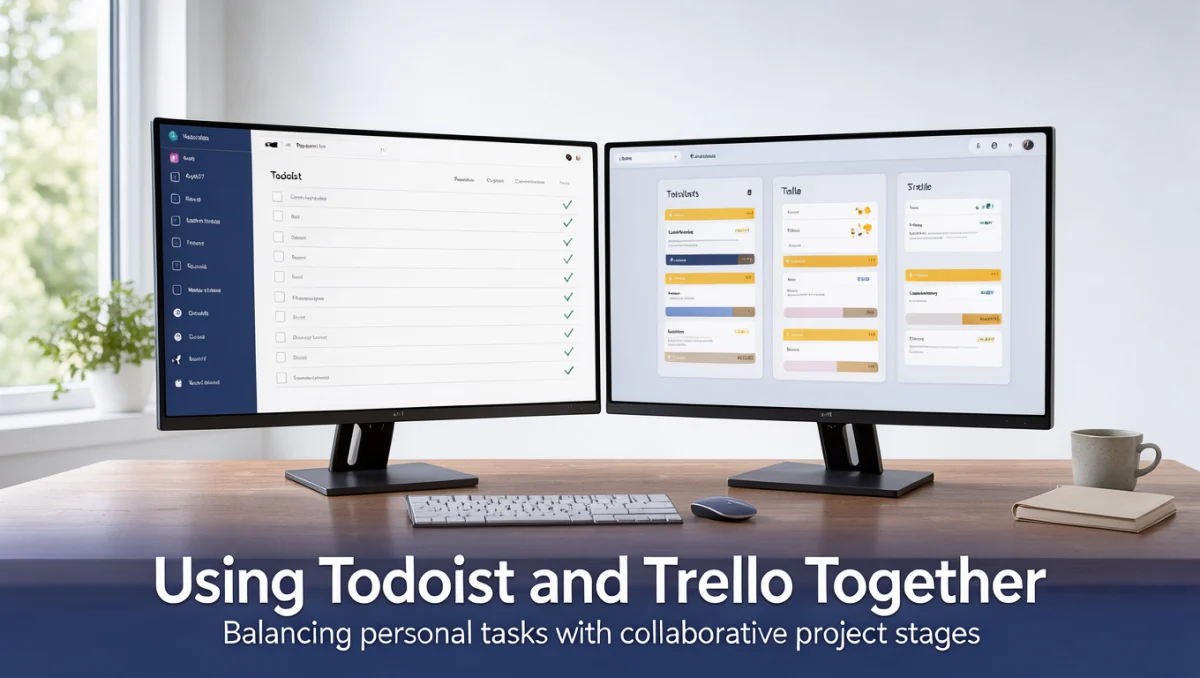
Using Todoist and Trello together represents a dual-system productivity method that combines structured personal checklist organization with visual stage-based project coordination. Professionals often adopt this pairing when individual assignments require detailed daily execution schedules while overarching team milestones demand transparent visual progression across shared boards. At Trustreviewsx, our review examines how these two distinct approaches complement each other across common business workflows.
Organizations frequently debate whether to consolidate work into a single complex workspace or connect separate focused utilities. Teams exploring this setup seek to keep personal task prioritization clean without losing sight of collaborative phase tracking. Understanding how both applications divide responsibilities helps buyers establish sustainable operational habits without paying for unneeded platform bloat.
Quick verdict: Using Todoist and Trello together earns a Trustreviewsx score of 7.8 / 10. This workflow configuration is best for individual contributors handling complex team deliverables who prefer clean personal task lists alongside visual team boards. It is not ideal for large enterprise departments seeking an all-in-one database system with unified native administrative controls.
| Metric | Details |
|---|---|
| Trustreviewsx score | 7.8 / 10 |
| Best for | Professionals managing granular personal tasks while coordinating multi-stage project milestones with colleagues |
| Not ideal for | Organizations wanting a single centralized database environment to manage every team interaction |
| Key strengths | Separation of personal daily execution from high-level project visibility, combining list-based and board-based structures |
| What to check before buying | Review official plan details for automation limits, external connection quotas, and attachment thresholds on each vendor website |
1. How Trustreviewsx Reviewed Todoist and Trello
This review looks at what Todoist and Trello is built to do, who it serves, and how it compares with similar tools, using the seven Trustreviewsx criteria: features, ease of use, pricing and value, integrations, audience fit, support and competitive position. Plans, prices and limits change often, so we point out what to confirm on the official website before you buy. This article was researched and drafted with the help of AI tools, then reviewed and edited by the Trustreviewsx Editorial Team.
2. What Is Using Todoist and Trello Together and Who Is It For

Adopting both applications concurrently divides execution into micro-level action items and macro-level operational pipelines. Todoist functions primarily as a personal task management system centered on sequential lists, structured schedules, priority tagging, and recurring reminders. In contrast, Trello operates as a collaborative work tracking platform organized around columns and cards that move through distinct production phases.
Professionals in marketing, client services, and administrative roles find that combining a personal checklist tool with a visual board system prevents individual task clutter from overwhelming shared project spaces. Rather than loading dozens of subtasks into a public card, team members maintain granular steps within their private list manager. Meanwhile, broader team status updates stay visible on shared boards for cross-functional partners.
When adopting using todoist and trello together across an office, the primary goal is operational clarity. Team members use boards to observe work handoffs and deliverables while relying on personal agendas to organize their hourly commitments and recurring checklists.
3. Core Features of the Combined Workflow

Examining how these platforms function alongside each other requires reviewing the functional areas that define modern task tracking and visual project coordination.
3.1. Personal Task Capturing and Scheduling
Task management platforms excel at rapid capture, enabling users to enter action items quickly with assigned due dates, priority markers, and organizational tags. Within this dual framework, professionals log daily phone calls, quick follow-ups, and intermediate drafts directly into their personal task inbox. This ensures that minor administrative duties do not clutter high-level project spaces intended for multi-department tracking.
3.2. Visual Pipeline and Stage Management
Board-oriented coordination platforms utilize movable cards positioned across sequential status lists such as intake, review, revisions, and completion. In this system, each card represents a major initiative or deliverable rather than an isolated micro-task. Team leaders gain high-level transparency into project bottlenecks while team members observe where assets sit in the overall production line.
3.3. Information Hand-offs and Workflow Linking
A functional dual-tool methodology connects overarching milestone cards to personal actionable checklists. Users often reference board card links within their personal task descriptions or convert complex board assignments into scheduled personal work blocks. This separation keeps personal focus sharp while maintaining alignment with collaborative schedules.
4. Ease of Use and Learning Curve
Adopting two separate tools requires users to learn two distinct organizational philosophies simultaneously. Individual list applications typically require minimal onboarding, allowing users to begin organizing tasks within minutes of registration. Visual card boards also provide intuitive spatial layouts that represent status changes clearly.
The learning curve in this dual setup stems from process governance rather than software complexity. Users must establish firm boundaries regarding where specific pieces of information reside. If team members begin creating duplicate reminder cards on visual boards while logging identical tasks in their personal lists, operational friction increases. Successful implementation relies on deciding whether a given item represents a team milestone or a personal daily step.
5. Pros and Cons of a Dual-Tool System
Operating complementary productivity applications offers distinct advantages along with structural operational challenges that teams must balance.
5.1. Advantages of Using Both Platforms
- Clear division of focus: Keeps private daily to-do lists distinct from collaborative project timelines.
- Visual milestone clarity: Provides stakeholders with an intuitive view of project progress without administrative micro-detail.
- Flexible personal execution: Allows individual staff members to schedule subtasks according to personal work habits without altering public boards.
- Focused feature sets: Leverages specialized list structuring alongside dedicated board organization rather than relying on a compromised hybrid interface.
5.2. Limitations to Consider
- Two software subscriptions: Managing two separate vendor agreements increases administrative oversight compared to single-platform procurement.
- Potential for data duplication: Without strict team guidelines, users risk updating progress in one tool while forgetting the other.
- Manual cross-referencing: Connecting cards to individual action items requires disciplined maintenance across both platforms.
6. Todoist and Trello vs Similar Tools
Many software platforms attempt to serve both personal task tracking and enterprise project portfolio management within a single environment. Comparing this paired workflow against alternative productivity suites highlights important structural differences.
All-in-one workspace solutions such as Asana, Monday.com, and ClickUp provide customizable views that switch between lists, boards, timelines, and spreadsheets within one database. These unified systems eliminate the need to synchronize separate tools and simplify team-wide administration. However, comprehensive platforms often present greater configuration complexity for individual users who prefer straightforward, distraction-free daily checklists.
For teams focused on specialized Collaboration & Productivity strategies, maintaining two purpose-built tools provides lightweight simplicity on each side. Buyers prioritizing strict enterprise data consolidation generally favor unified workspace suites, whereas individuals seeking focused personal efficiency often favor specialized list applications paired with lightweight boards.
7. Who Should Use This Dual Workflow
Evaluating organizational structure and day-to-day requirements helps determine whether running two separate platforms aligns with operational goals.
7.1. Freelancers and Solo Professionals
Independent operators managing multiple client engagements benefit significantly from this combination. A visual board can track client project stages from contract signature to final invoicing, while a list manager organizes daily research, administrative reminders, and deadline alerts across all active accounts.
7.2. Small Teams and Department Units
Creative agencies, marketing departments, and editorial groups frequently find success with this structure. Visual boards display editorial calendars and design reviews across columns, while individual copywriters and designers organize their drafting milestones inside private task lists to meet project deadlines.
7.3. Who Should Choose an Alternative Setup
Enterprise organizations requiring unified administrative dashboards, centralized user permissions, and strict audit logging are better served by comprehensive project portfolio suites. Similarly, individuals with minimal collaborative obligations rarely need board software, as a standalone list manager satisfies basic personal scheduling needs.
8. How to Choose the Right Plan
Because software vendors adjust service tiers and limits regularly, buyers must evaluate plan tiers across both services systematically. Use the following evaluation framework when reviewing options on each official website.
| What to check | Why it matters |
|---|---|
| User seat requirements | Determine whether collaborative boards mandate paid seats for every viewer or allow guest contributor access without added expense. |
| Workflow automation quotas | Confirm how many automated rule runs or card routing actions are permitted per month before higher subscription tiers are required. |
| File storage and upload limits | Verify maximum file attachment sizes on board cards to ensure creative assets can be shared without external hosting hurdles. |
| Project and board volume thresholds | Check whether baseline tiers restrict the total number of active boards or ongoing project lists available to your team. |
| Cross-platform sync capabilities | Review available connection methods between task lists and external boards to confirm data exchanges meet your routine workflow needs. |
9. Frequently Asked Questions
9.1. How do teams decide which tasks belong on boards versus personal lists?
Teams should establish that shared deliverables, client handoffs, and phase-based milestones live on collaborative visual boards. Granular preparatory steps, personal phone reminders, and private drafting milestones remain inside individual task managers to avoid board clutter.
9.2. What should buyers budget for besides basic tool subscriptions?
Buyers should account for potential third-party connector services that automate data handoffs between separate tools. Teams may also need to budget for auxiliary cloud storage if project attachment sizes exceed standard vendor allowances.
9.3. How can organizations prevent duplicate data entry across two tools?
Establishing clear standard operating procedures minimizes overlap. Designate one platform as the official project status board and treat the personal task manager strictly as an execution checklist that references board cards via simple links.
9.4. How do I know if our business needs a unified project management platform instead?
When team leaders spend excessive administrative time manually verifying progress across disconnected apps, a unified workspace becomes necessary. Growing departments with strict compliance needs typically transition toward single-platform suites for centralized reporting.
10. Final Verdict
Combining personal checklist tracking with stage-oriented visual boards offers a flexible balance between personal execution and collaborative visibility. While maintaining two independent services requires disciplined workflow rules, it preserves simple, focused interfaces for both individual contributors and team coordinators. Comprehensive assessments on Trust Reviews X emphasize matching software architecture directly to team operational habits.
| Criterion | Score / 10 | Reason |
|---|---|---|
| Features | 8.5 / 10 | Provides specialized list management paired with clear stage-based visual pipelines for team deliverables. |
| Ease of Use | 8.0 / 10 | Both interfaces remain straightforward to navigate, though managing two separate apps requires process discipline. |
| Pricing and Value | 7.5 / 10 | Buyers must budget for two independent subscriptions, making it vital to confirm specific tier limits on official vendor sites. |
| Integrations | 7.0 / 10 | Connecting data streams between platforms often requires third-party bridges or manual link maintenance. |
| Audience Fit | 8.5 / 10 | Well suited for independent workers and small teams who prefer separating private daily agendas from public project boards. |
| Support | 7.0 / 10 | Relying on two distinct vendors requires consulting separate customer assistance channels for operational troubleshooting. |
| Competitive Position | 8.0 / 10 | Maintains strong utility against all-in-one workspaces for users who dislike cluttered, all-inclusive database platforms. |
Overall score: 7.8 / 10
For personalized guidance on selecting your productivity stack, send your workflow questions to our team through the Trustreviewsx contact page or follow Trustreviewsx on LinkedIn for regular software analysis updates.