
Trustreviewsx may earn a commission when you buy through links on this page, at no extra cost to you. This does not affect our ratings.
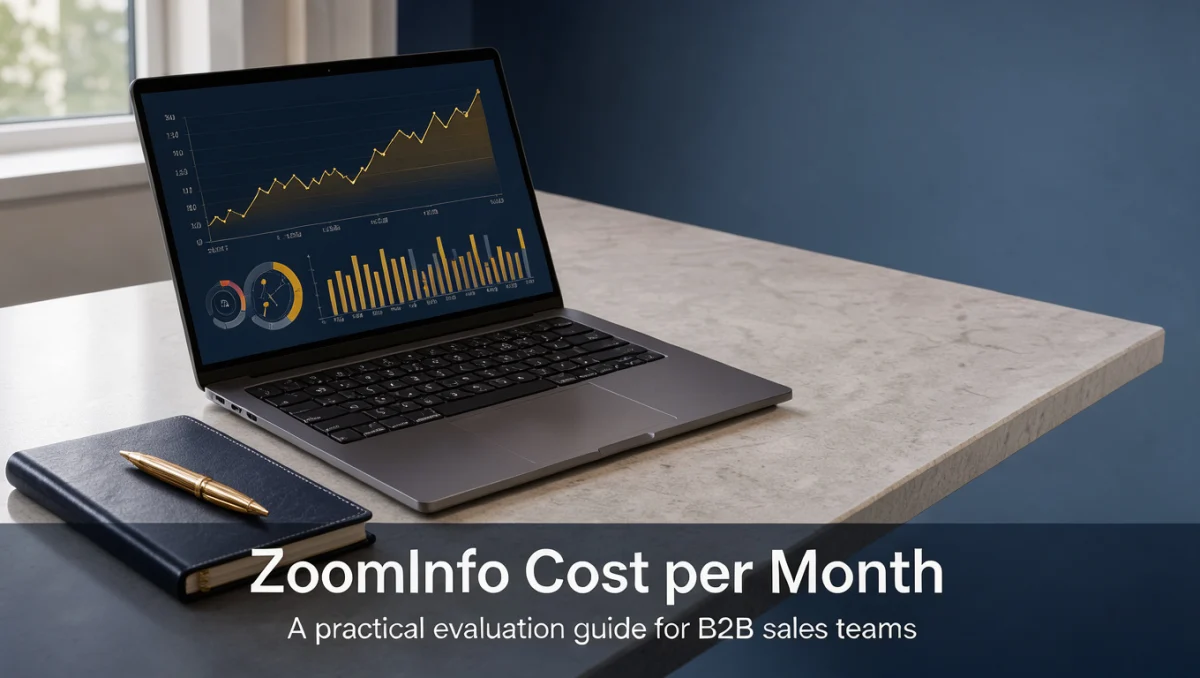
ZoomInfo cost per month depends heavily on your team size, data consumption targets, and the specific B2B intelligence capabilities your organization needs to support daily outreach. Because commercial data providers package subscriptions through custom quotes rather than standard off-the-shelf figures, sales leaders must analyze their pipeline workflows carefully. In this evaluation guide from Trustreviewsx, we break down how business data subscriptions function so you can forecast your software budget with confidence.
ZoomInfo provides go-to-market intelligence software designed to help revenue organizations identify decision-makers, verify direct business contact details, and accelerate prospecting outreach. Determining your overall investment requires looking beyond sticker figures to evaluate platform scope, user seat allocations, and operational onboarding needs across your Sales operations.
Quick verdict: ZoomInfo earns an overall score of 7.5/10. It is best for mid-market and enterprise teams seeking unified prospecting data, contact verification, and direct phone outreach. It is not ideal for solo founders or occasional prospectors who only need sporadic email lookups and simple list building.
| Metric | Summary |
|---|---|
| Trustreviewsx score | 7.5/10 |
| Best for | Outbound sales teams needing structured contact intelligence and organizational mapping |
| Not ideal for | Solopreneurs seeking lightweight, pay-as-you-go directory searches |
| Key strengths | Deep business contact repository, account hierarchy mapping, organizational search filters |
| What to check before buying | Annual contract commitments, credit allocation terms, onboarding requirements, seat minimums |
1. How Trustreviewsx Reviewed ZoomInfo
This review looks at what ZoomInfo is built to do, who it serves, and how it compares with similar tools, using the seven Trustreviewsx criteria: features, ease of use, pricing and value, integrations, audience fit, support and competitive position. Plans, prices and limits change often, so we point out what to confirm on the official website before you buy. This article was researched and drafted with the help of AI tools, then reviewed and edited by the Trustreviewsx Editorial Team.
2. How ZoomInfo Pricing Works

Understanding how data platforms structure pricing is essential before speaking with sales representatives. ZoomInfo operates on an enterprise software subscription model where contracts are finalized on an annual basis rather than true month-to-month billing cycles. While teams frequently calculate their zoominfo cost per month for internal budget forecasting, invoicing is structured through committed multi-month or annual agreements.
Subscription packages in the sales intelligence category generally scale along distinct application tiers. Basic packages center on core company profiles and standard business contact information, whereas advanced tiers introduce real-time purchase intent signals, organizational charts, automated workflow triggers, and website visitor tracking. Each tier bundles specific data attributes, meaning buyers must identify which contact fields their representatives actually use daily.
Another major element involves user licensing and access permissions. In enterprise data platforms, licenses are assigned to specific team members who access search interfaces and export records. Platforms often require minimum user counts or packaged seat thresholds, making direct consultation with the sales representative critical during contract discovery.
3. What Drives Your Total Cost
Software buyers often discover that base subscription agreements represent only a portion of their complete expenditure. Several technical, logistical, and structural drivers dictate the final amount your organization invests over the software lifecycle.
- User Seat Count: Dedicated licenses directly scale subscription costs, as each business development representative, account executive, or marketing specialist requires individual credentials.
- Credit and Export Allowances: B2B platforms ration the retrieval of verified direct dials, mobile numbers, and bulk list downloads through monthly or annual credit pools. Surpassing these pools requires purchasing additional data allocations.
- Feature Add-Ons: Modules such as intent intelligence, conversation analysis, digital advertising audiences, and chat automation are frequently separated from fundamental contact discovery tiers.
- Onboarding and Technical Implementation: Enterprise deployments often mandate onboarding packages covering data hygiene, workflow configuration, and administrator training.
- CRM and Automation Synchronization: Linking contact repositories to central customer relationship management platforms may require specific technical connectors or advanced license tiers.
For revenue teams evaluating multiple platforms, reviewing each cost category prevents unexpected budget overruns later in the fiscal period.
4. Checklist Before You Pay

Before entering formal negotiations or executing a contract, sales operations managers should audit their specific operational needs against platform policies. The following checklist highlights essential verification areas on official software documentation.
| What to check on the official pricing page | Why it matters | Who it matters most for |
|---|---|---|
| Billing cadence and term duration | Many vendors display annualized rates broken down monthly but require upfront payment. | Budget managers managing monthly cash flow |
| Credit rollover policies | Unused export allocations may expire at the end of each billing cycle or contract term. | Teams with seasonal prospecting cycles |
| Seat reassignments and additions | Adding seats mid-contract can alter negotiation terms and renewal timelines. | Rapidly expanding sales development teams |
| Implementation and onboarding fees | Mandatory setup fees increase initial cash outlay during the first quarter of deployment. | Finance controllers tracking return on investment |
| Data export limits | Export ceilings restrict how many accounts or contacts can be pushed to secondary tools. | Marketing teams building large outbound campaigns |
5. Which Type of Plan Fits Which Business
Selecting an appropriate subscription setup depends on organizational size, sales development structure, and outbound volume. Aligning software scope with organizational maturity ensures you avoid paying for surplus tools while ensuring teams have essential data.
Early-Stage Operations
Small teams establishing their initial outbound motions generally need accurate email addresses and verified direct phone lines for core buyer personas. For small organizations, prioritizing fundamental contact accuracy over automated intent triggers keeps operating costs manageable while supporting predictable pipeline development. Check official vendor documentation to confirm whether entry options provide sufficient export credits for daily outreach campaigns.
Scaling Mid-Market Teams
Growing organizations with dedicated sales development representatives, account executives, and demand generation managers require structured workflow coordination. At this level, account hierarchy mapping, technological profile filtering, and CRM synchronization become vital. When evaluating subscription tiers, verify how platform packages handle duplicate records and team-level access governance.
Enterprise Revenue Organizations
Large enterprises with complex territories and dedicated operations teams require advanced signals, automated routing, and deep market segmentation. Advanced buyer intent indicators and multi-department licensing ensure field teams engage active accounts promptly. Confirm how administrative controls, territory management rules, and corporate support agreements function before finalizing agreements.
6. How to Keep Software Costs Down
Managing enterprise software expenditures requires strategic negotiation and active resource monitoring throughout the subscription agreement. By adopting disciplined buying habits, organizations maximize value across their prospecting stack.
- Audit Active Pipeline Needs: Survey your sales representatives to determine whether advanced data attributes like purchase intent or direct mobile lines are actively utilized or simply nice to have.
- Negotiate Seat Minimums: Match purchased seats strictly to active outbound personnel rather than purchasing blanket licenses for passive team members.
- Review Credit Burn Rates: Track monthly data consumption during initial quarters to determine whether existing credit limits match your team prospecting cadence.
- Align Contracts with Renewal Cycles: Coordinate purchase discussions toward quarterly or fiscal year-end periods when enterprise sales divisions often show flexibility regarding onboarding terms.
- Consolidate Point Solutions: Examine whether adopting central data platforms allows your organization to eliminate redundant verification extensions and separate enrichment tools.
7. Is ZoomInfo Worth the Cost
Deciding whether ZoomInfo justifies its investment requires balancing platform data depth against the financial commitments involved. For revenue organizations where closed-deal values are substantial, access to verified decision-maker direct dials and accurate corporate hierarchies can compress outbound sales cycles considerably.
Conversely, businesses operating with modest deal sizes, localized consumer audiences, or strictly inbound customer acquisition motions may find specialized enterprise sales platforms disproportionately expensive. Independent evaluations on Trust Reviews X emphasize that high data coverage delivers economic return only when combined with disciplined, persistent outbound sales execution. If sales teams lack structured calling routines or standardized pipeline follow-up, the resulting value will fail to offset subscription costs.
8. Frequently Asked Questions
What should buyers budget for besides base subscription access?
Organizations should budget for implementation fees, administrative onboarding support, CRM connector fees, and potential credit overages. In addition, account for internal staff hours dedicated to system configuration, territory assignment, and team training during early deployment.
How do team leaders determine appropriate credit volume before signing?
Sales leaders should calculate the average number of unique target accounts and decision-makers each representative contacts weekly. Multiplying that figure by total sales personnel across fifty-two weeks provides an empirical baseline for annual export credit requirements.
When should an organization evaluate alternative sales intelligence vendors?
Teams should consider alternative solutions when outbound motions rely primarily on professional social networks, when budget constraints preclude multi-quarter contracts, or when prospecting is handled entirely by solo founders with low monthly lookup demands.
Why do enterprise data agreements require annual commitments instead of monthly plans?
B2B data providers invest significant resources into proprietary data aggregation, phone verification, and corporate mapping. Annual agreements ensure continuous platform investment while preventing one-time bulk extraction by short-term users.
9. Final Verdict
| Criterion | Score /10 | Reason |
|---|---|---|
| Features | 8.5/10 | Comprehensive corporate directory data, hierarchy mapping, and contact filtering tools. |
| Ease of Use | 7.0/10 | Advanced search filtering and deep interface settings create an initial learning curve for new users. |
| Pricing and Value | 6.8/10 | Annual agreement mandates and packaged add-ons require careful return on investment calculation. |
| Integrations | 7.2/10 | Broad connectivity with major customer relationship management systems and sales engagement suites. |
| Audience Fit | 8.0/10 | Well-aligned for organized outbound business-to-business sales and marketing operations. |
| Support | 7.0/10 | Structured onboarding resources and enterprise account support depending on package scale. |
| Competitive Position | 8.2/10 | Strong recognition among enterprise go-to-market data solutions and corporate contact directories. |
Overall score: 7.5/10
For structured outbound teams requiring high-volume business contact discovery, ZoomInfo represents a capable data asset when backed by consistent pipeline execution. However, solo operators and early startups should review smaller contact tools before committing substantial budgets. If you have questions regarding software selection or want additional buying guidance, submit your inquiries through our contact portal or connect with our editorial team on professional networks.