

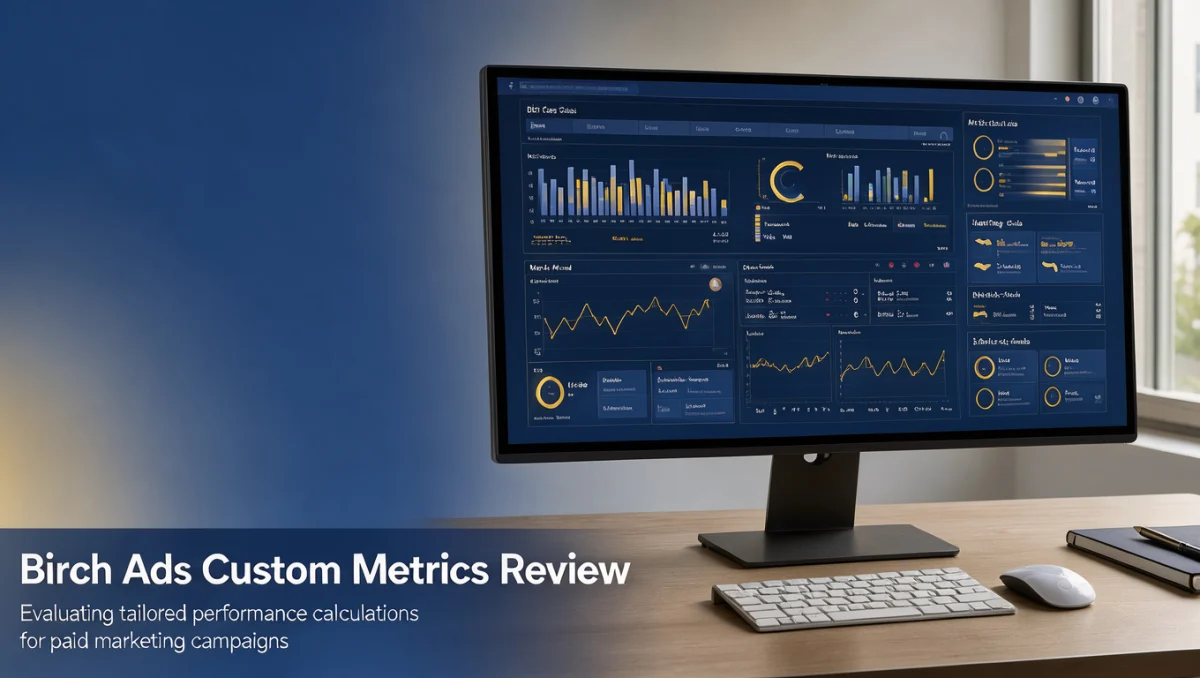
Advertisers often find that the numbers shown inside ad platforms do not match what the business actually earns. Birch Ads custom metrics address that gap by letting teams define their own performance formulas, so reporting reflects real financial outcomes rather than isolated platform statistics.
Why Standard Ad Numbers Fall Short
Each publisher calculates acquisition cost, engagement and conversions using its own attribution logic. When a team runs search, social and programmatic campaigns at once, these figures rarely line up. Configurable metric definitions bring those inconsistent inputs into one consistent view that supports real budget decisions.
Trust Reviews X evaluated the platform against its seven-criterion framework, looking at whether the analytics features solve day-to-day tracking problems for media teams managing several client accounts or brands.
Who Is Birch Ads Designed For?
The product is an ad tracking and campaign analytics tool that pulls performance data from multiple publishers into a single workspace. Agencies, growth consultants and in-house e-commerce teams are its primary users. Each group needs client-ready or executive reporting that ties spend to profit, not just clicks.
Core Capabilities

Formula Builder
The formula builder combines raw platform metrics with standard arithmetic operators. Users can build blended acquisition cost, margin-based return on ad spend, or weighted click values, removing the need to export data to spreadsheets for routine calculations.
Custom Dashboards
Dashboards place calculated figures alongside native publisher data. Teams can arrange widgets to surface unusual spend patterns quickly and organize views by client, brand or regional initiative.
Multi-Channel Aggregation
The aggregation layer standardizes naming and reporting intervals across ad networks. Daily figures are aligned into comparable summaries, giving custom formulas a reliable base to calculate from.
Ease of Use
Navigating existing dashboards is straightforward, but building multi-variable formulas takes time. New users should expect an initial period to confirm that their expressions handle missing values and division by zero correctly. Analysts usually adapt quickly, while junior buyers may need guidance to interpret compound calculations.
Strengths and Limitations
Advantages
- Calculates proprietary advertising metrics across different ad networks.
- Cuts down on manual spreadsheet exports and error-prone formula updates.
- Brings cross-channel paid data into clear, unified reports.
- Allows dashboard layouts tailored to team roles and client accounts.
Considerations
- Accurate formula setup and output checks require upfront time.
- Custom configurations need upkeep when reporting benchmarks change.
- Teams without dedicated data staff may find advanced formulas challenging.
How Birch Ads Compares to Alternatives
Supermetrics and Funnel are the most frequently compared alternatives. Supermetrics suits teams that want raw advertising data piped directly into spreadsheets or business intelligence tools with minimal dashboard overhead. Funnel is built for large enterprises that need extensive data transformation and governance across many departments.
Birch Ads takes a different approach: it focuses on building and viewing custom metrics inside the application itself, so business formulas sit next to day-to-day campaign management rather than in a separate pipeline.
Who Should Buy, and Who Should Look Elsewhere

Performance Agencies
Agencies serving clients with different profitability definitions benefit most. Some clients count agency fees, production costs or offline close rates in their return calculations. Custom metric builders let agencies deliver these client-specific figures without maintaining many separate spreadsheets.
E-Commerce Growth Teams
Online retailers need ad spend reconciled against inventory costs and payment processing fees. Tailored indicators such as contribution margin after advertising help managers confirm that bigger budgets do not erode net profit.
Smaller Advertisers
Small businesses or solo creators spending modest amounts on one platform rarely need a custom metric engine. If default platform reports tell the full story, a more advanced tool adds setup effort without much return.
Subscription Checks Before Buying
Pricing in this category depends on data volume, connected accounts and refresh frequency. Before purchasing, confirm the following on the official pricing page:
| What to Check on the Official Pricing Page | Why It Matters |
|---|---|
| Ad account connection limits | Exceeding allowed profiles can force an unexpected upgrade across your client portfolio. |
| Data refresh frequency | Intraday optimization needs more frequent syncs than once-daily batch updates. |
| User seats and access | Adding buyers, managers or client logins may raise the subscription cost. |
| Formula complexity limits | Check whether multi-variable expressions are capped on certain plan tiers. |
Frequently Asked Questions
What problem do custom advertising metrics solve?
They close the gap between native platform reporting and actual accounting figures. By including merchant fees, agency costs and combined spend across channels, custom calculations reveal genuine financial returns.
How should a team prepare before building custom calculations?
Document every formula definition and agree on them internally before configuring dashboards. Clear rules keep reports consistent and avoid confusion among clients or executives.
What drives the total cost of ad analytics software?
Costs generally depend on connected data sources, account volume, sync frequency and the number of seats. Review the vendor's subscription documentation to see how adding clients or users changes the price.
When is native ad reporting enough?
If a business advertises on one publisher and tracks simple conversions without complex attribution, native dashboards are usually sufficient and third-party tools add little value.
Final Verdict
Birch Ads strikes a practical balance between campaign consolidation and calculation flexibility. By letting media specialists define their own expressions, it connects surface-level ad interactions with true financial returns.
| Evaluation Criterion | Trustreviewsx Score |
|---|---|
| Features | 8.3 / 10 |
| Ease of Use | 7.4 / 10 |
| Pricing and Value | 7.6 / 10 |
| Integrations | 7.8 / 10 |
| Audience Fit | 8.5 / 10 |
| Support | 7.7 / 10 |
| Competitive Position | 8.0 / 10 |
Overall Trustreviewsx score: 7.9 / 10
For performance-focused media buyers, proprietary indicators give essential clarity when scaling spend across competitive channels. Review your current reporting bottlenecks, confirm plan terms on the official Review Craft X resources and the Birch Ads website, then choose the configuration that fits your account portfolio.
For more software evaluations from our editorial team, explore the Marketing section and keep reading our latest comparisons.