
Trustreviewsx may earn a commission when you buy through links on this page, at no extra cost to you. This does not affect our ratings.
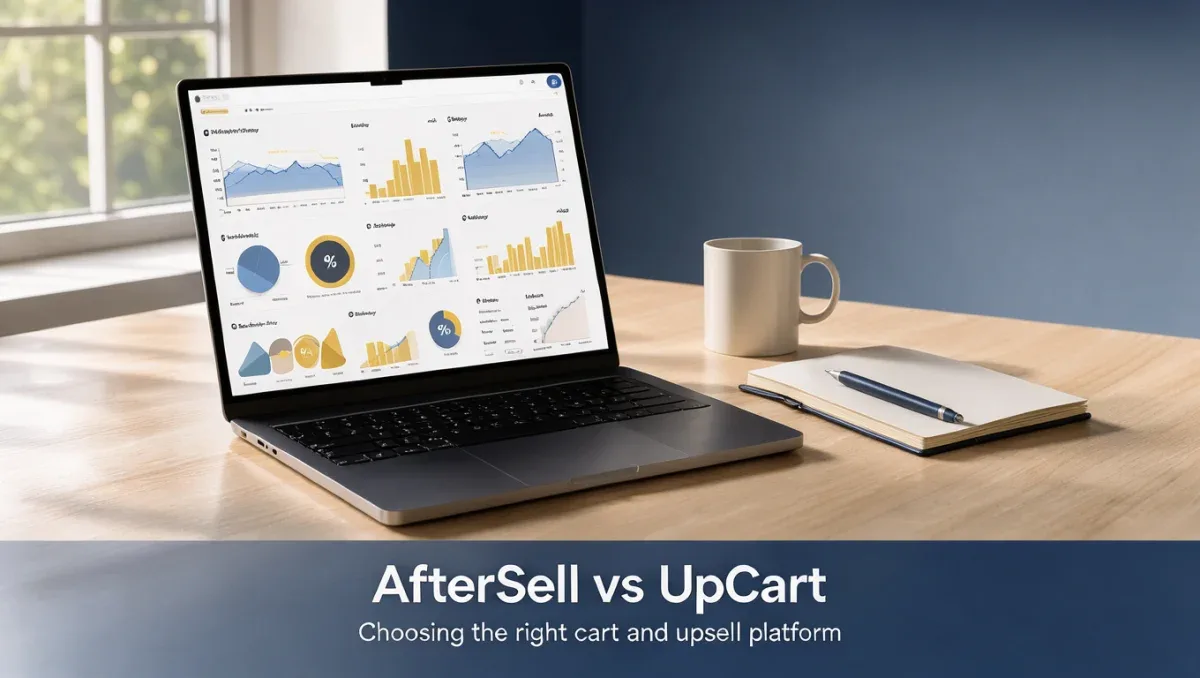
AfterSell vs UpCart is a frequent comparison for ecommerce merchants who want to increase average order value across different stages of the buying journey. Online sellers often debate whether to focus on the slide cart experience before checkout or to prioritize post-purchase offer sequences on thank-you pages. At Trust Reviews X, we analyze commerce software by examining core workflows, ease of management, and operational fit for growing stores.
Both platforms address order value expansion, yet each tool centers on a distinct touchpoint in the conversion funnel. Choosing between them requires identifying whether your current store architecture loses momentum during cart review or leaves revenue on the table after payment processing finishes. In this aftersell vs upcart guide, we evaluate how each application supports commercial goals without relying on unverified claims.
Short answer: Choose AfterSell if your primary objective is presenting post-purchase funnels and thank-you page promotions immediately following transaction completion. Choose UpCart if you want to redesign the slide cart drawer with tiered rewards before shoppers reach checkout. Both platforms achieve an overall score of 8.4 / 10.
| Evaluation Area | AfterSell | UpCart |
|---|---|---|
| Trustreviewsx score | 8.4 / 10 | 8.4 / 10 |
| Best for | Post-purchase offers and order management | Interactive slide cart drawer optimization |
| Core focus | Post-checkout funnels and thank-you pages | Pre-checkout cart drawers and reward bars |
| Consider if | Maximizing revenue after initial payment is the goal | Improving cart engagement before checkout is the goal |
1. How Trustreviewsx Compared AfterSell and UpCart
This comparison looks at what AfterSell and UpCart are built to do, who each one serves, and how to choose between them, using the seven Trustreviewsx criteria: features, ease of use, pricing and value, integrations, audience fit, support and competitive position. Plans, prices and limits change often, so we point out what to confirm on each official website before you buy. This article was researched and drafted with the help of AI tools, then reviewed and edited by the Trustreviewsx Editorial Team.
2. How AfterSell and UpCart differ in focus

AfterSell functions primarily as an order enhancement platform that targets the post-purchase phase of ecommerce transactions. Its core architecture allows online merchants to present single-click product upgrades and cross-sells after customer payment details are submitted, as well as customized recommendations on order status pages. The software serves brands seeking to capitalize on buyer intent without adding friction to the initial checkout sequence.
UpCart approaches conversion enhancement earlier in the shopper pathway by replacing default cart pages with a slide cart drawer. Its design enables store operators to display shipping progress bars, product recommendation add-ons, and bundle promotions while customers browse the catalog. Stores adopting custom Development solutions for ecommerce often rely on this pre-checkout stage to engage buyers before the final payment step.
3. Which one fits your situation
| Situation | Choose AfterSell if | Choose UpCart if |
|---|---|---|
| Shoppers abandon carts during drawer review | You prefer addressing overall revenue after checkout completes | You need reward bars and free shipping progress indicators in the drawer |
| Store traffic converts well through basic checkout | You want post-purchase offers that do not interrupt checkout flow | You prefer keeping promotions visible before the customer reaches checkout |
| Merchandise catalog contains complementary accessories | You plan to offer post-checkout warranties and bundled add-ons | You want product suggestions directly visible inside the active cart drawer |
| Marketing strategy emphasizes thank-you page engagement | You require customized order confirmation pages with repeat offers | You focus your resources exclusively on the cart browsing experience |
| Team prefers minimal frontend theme modifications | You prioritize checkout extension points over visual storefront drawers | You want an interactive cart drawer that matches your brand styling |
4. How to compare them yourself
4.1 Features
Review the exact mechanisms each tool provides to present upsells across different customer stages. Test whether your team needs pre-checkout visual elements or post-purchase trigger sequences, and verify on each official website how catalog rules and promotional logic are configured.
4.2 Ease of use
Examine how quickly staff members can build and modify promotional rules without developer intervention. Check each official documentation portal to understand the administrative setup required for building reward sequences or post-checkout funnels.
4.3 Pricing and value
Ecommerce applications commonly scale subscription rates based on monthly order volumes or store revenue thresholds. Confirm on the official AfterSell and UpCart pricing pages which specific plan tiers fit your current transaction count and whether additional merchant fees apply.
4.4 Integrations
Store owners should ensure each tool communicates smoothly with existing review widgets, inventory tracking platforms, and checkout systems. Confirm on the official app listings which platform versions and third-party tools are formally supported before initiating an integration.
4.5 Audience fit
Assess whether your customer demographic responds better to pre-purchase cart incentives or post-purchase suggestions. Test offer timing during evaluation periods to determine whether cart drawer rewards or post-payment add-ons yield higher completion rates.
4.6 Support
Operating critical ecommerce touchpoints demands responsive technical guidance whenever store layouts update. Review the official contact channels, response commitments, and available help center resources on each provider platform before launching live campaigns.
4.7 Competitive position
Compare the distinct focus of each product against general merchandising tools on the market. Determine whether your store benefits more from an application concentrated on cart drawer utility or one dedicated to post-checkout revenue recovery.
5. Cost checklist for both tools

| Cost item | Ask about AfterSell | Ask about UpCart |
|---|---|---|
| Order volume thresholds | Confirm on the official pricing page how plan tiers change as monthly completed orders grow | Confirm on the official pricing page whether pricing tiers scale by order volume or store tier |
| Usage fees | Verify on the official website if post-purchase revenue share or extra transaction charges apply | Verify on the official website if fixed recurring billing covers all slide cart interactions |
| Development assistance | Check whether third-party developer support is recommended for checkout script installation | Check whether theme custom styling requires in-house design or developer assistance |
| Add-on modules | Ask whether thank-you page customization requires a higher subscription package | Ask whether specific reward modules or announcements require upper plan levels |
6. How to decide
- Map your checkout funnel to pinpoint where customers drop off or where average order value remains flat.
- Assess whether your merchant platform supports native post-purchase funnels or requires specific cart drawer styling.
- Confirm on each official website the exact plan requirements that correspond to your monthly transaction volume.
- Run a trial period on a staging environment to observe administrative ease and catalog rule flexibility.
- Select the software that aligns with the touchpoint where your customer base exhibits the highest purchasing readiness.
7. Frequently asked questions
What is the primary operational difference between these two applications?
AfterSell concentrates on post-purchase upsell funnels and thank-you page promotional modules that appear after checkout submission. UpCart replaces the standard cart view with a slide cart drawer designed to encourage higher item counts through reward bars and add-on suggestions before payment starts.
Can a merchant consider using both tools simultaneously on one storefront?
Ecommerce stores occasionally evaluate using a slide cart drawer alongside a post-checkout offer platform because the tools optimize different conversion points. Operators should confirm theme compatibility and overall checkout performance on the official documentation pages before combining multiple merchandising tools.
Which setup demands more design adjustments during initial store setup?
Slide cart drawers like UpCart generally require styling alignment with your store colors, typography, and button states to appear native to the shopping experience. Post-purchase configurations like AfterSell often rely on standard platform checkout templates, requiring focus on product pairing logic rather than visual storefront customization.
How should growing brands budget for cart optimization software?
Subscription models for ecommerce tools frequently adjust pricing tiers according to processed orders or gross sales volume. Merchants should estimate anticipated holiday sales peaks and review official tier boundaries to avoid unexpected plan transitions during high-traffic quarters.
8. Final verdict
| Criterion | AfterSell score /10 | UpCart score /10 | Reason |
|---|---|---|---|
| Features | 8.8 | 8.0 | AfterSell offers specialized post-purchase flow logic; UpCart provides focused slide cart drawer modules. |
| Ease of Use | 7.8 | 9.0 | UpCart features an accessible setup for visual cart elements; AfterSell involves deeper funnel routing setup. |
| Pricing and Value | Confirm before buying | Confirm before buying | Confirm tier structures and order limits on the official pricing pages because volume changes monthly costs. |
| Integrations | Confirm before buying | Confirm before buying | Confirm compatibility with your current theme and checkout configuration on each official app listing. |
| Audience Fit | 8.6 | 8.5 | AfterSell serves stores targeting post-payment value; UpCart suits stores seeking pre-checkout cart engagement. |
| Support | Confirm before buying | Confirm before buying | Confirm current support policies and communication channels directly on each official provider website. |
| Competitive Position | 8.4 | 8.1 | AfterSell holds a defined role in post-checkout funnels; UpCart holds a clear niche in slide cart utilities. |
| Overall score | 8.4 / 10 | 8.4 / 10 | Average of the four evaluated operational criteria for each commerce platform. |
Merchants seeking to capitalize on customer momentum without disrupting the active checkout flow should lean toward AfterSell. Store owners aiming to modernise their cart drawer and encourage larger cart sizes through interactive progress indicators will find UpCart tailored to their strategy. Review your current store data to decide whether your revenue growth opportunity sits before or after the purchase button.
Have a question about choosing software? Send it to the Trustreviewsx team through our contact page or follow Trustreviewsx on LinkedIn for new reviews and comparisons.