Trustreviewsx may earn a commission when you buy through links on this page, at no extra cost to you. This does not affect our ratings.
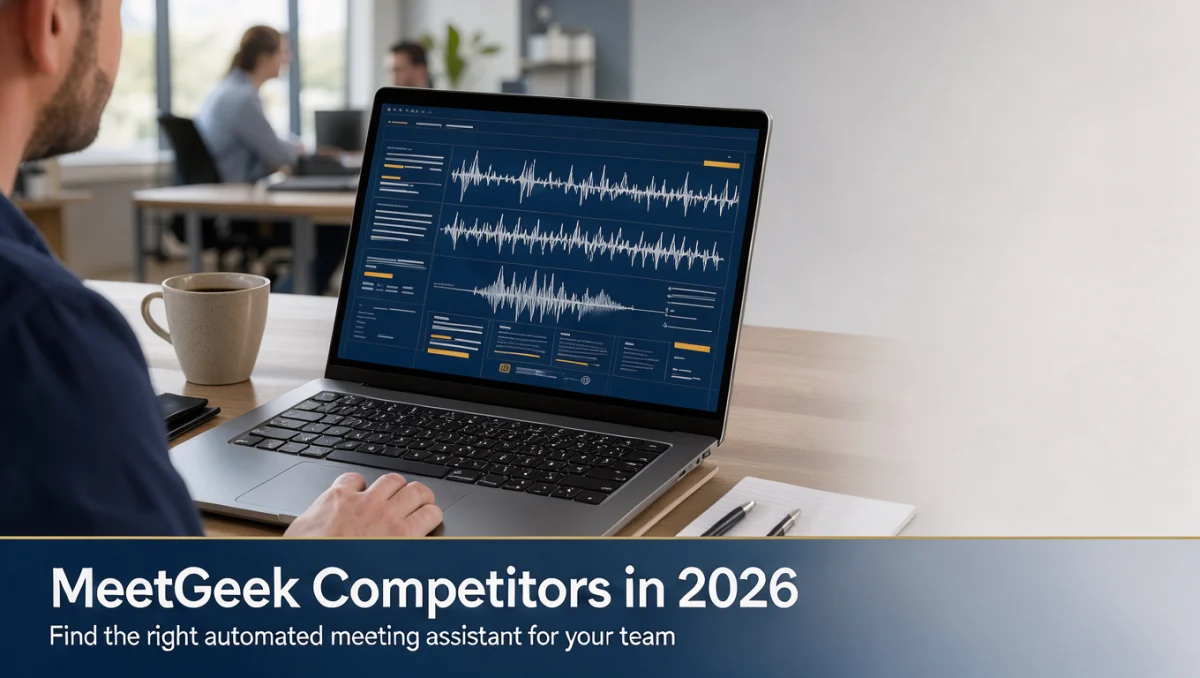
Shoppers comparing meetgeek competitors are usually looking for software that records calls, transcribes speech, and produces useful notes without anyone typing during the discussion. At Trust Reviews X, we assess how these meeting automation platforms suit different team structures and documentation habits.
MeetGeek sits in the meeting assistant category, where tools capture calls, generate automatic summaries, and share key conversation points across a team. Since every organization collaborates differently, reviewing alternatives helps buyers find a platform that matches their meeting routines and review needs.
Quick verdict: MeetGeek earns an overall score of 7.6/10 for its structured recording and automated summary features. It suits teams that want hands-free note capture across routine internal and client calls, but it is less suited to buyers who need enterprise conversation coaching or detailed sales pipeline governance.
| Evaluation Metric | Assessment |
|---|---|
| Trustreviewsx score | 7.6/10 |
| Best for | Teams that want automated call transcription and structured summaries without manual note-taking |
| Not ideal for | Organizations seeking dedicated revenue intelligence coaching or deep pipeline forecasting |
| Key strengths | Automated meeting recording, transcription, and centralized summary sharing |
| What to check before buying | Subscription tiers, recording seat allocations, workspace permissions, and admin controls |
1. How Trustreviewsx Reviewed MeetGeek
This review examines what MeetGeek is designed to do, who it serves, and how it compares with similar tools. We applied seven Trustreviewsx criteria: features, ease of use, pricing and value, integrations, audience fit, support, and competitive position. Plans, prices, and limits change frequently, so confirm current details on the official website before purchasing. This article was researched and drafted with AI assistance, then reviewed and edited by the Trustreviewsx Editorial Team.
2. Why Teams Look Beyond MeetGeek
Teams search for alternative meeting assistants when their documentation habits, meeting volume, or review processes call for a different focus. Recorders capture audio and generate transcripts, but teams value different outcomes from those conversations. Looking at tools built on Artificial Intelligence helps organizations see how transcript generation, action item extraction, and team sharing differ across the market.
Some teams need lightweight personal note-taking that stays out of the way during quick one-on-one calls. Others run extensive customer-facing sales interactions, where conversation analytics, deal inspection, and customer sentiment matter far more than basic transcripts. Buyers should distinguish general team meeting transcription from specialized conversation intelligence.
Budget also drives comparison. Collaboration software often charges per active user or per recording host. Organizations with many occasional attendees should review administrative policies on official vendor websites to understand how observer access differs from host access.
3. Quick Comparison of Alternatives
The table below summarizes alternative platforms in the meeting automation category, highlighting their primary audience and core focus.
| Tool | Best for | Core strength |
|---|---|---|
| Otter.ai | Individual professionals and education teams wanting live transcription and collaborative notes | Real-time speech transcription and shared note editing |
| Fathom | Individual professionals and smaller teams seeking personal meeting summaries and video clips | Personal meeting highlights and straightforward summary workflows |
| Fireflies.ai | Cross-functional teams wanting searchable conversation repositories and automated meeting tracking | Automated meeting capture and conversation search across team archives |
| Gong | Enterprise sales organizations requiring revenue intelligence and pipeline analysis | Sales conversation analytics and commercial pipeline tracking |
4. Otter.ai

Otter.ai is a speech-to-text platform focused on live meeting transcription, collaborative note editing, and shared summaries. It serves individual professionals, students, educators, and cross-functional teams that need immediate access to written conversations as discussions unfold.
4.1. Core Positioning and Capabilities
Otter.ai emphasizes live transcription. Participants can follow the text as it appears, highlight phrases, and comment directly on the transcript during the call. The platform produces searchable transcripts and summaries that help attendees review past conversations without replaying full recordings. Its strength lies in readable text and team collaboration around transcripts.
4.2. Who Should Consider Otter.ai
Consider Otter.ai if your team values real-time access to spoken words, such as during lectures, interviews, or brainstorming sessions where immediate review matters. Solo workers, researchers, and journalists often favor it because it turns discussions into editable text quickly. Confirm seat assignments and transcription allowances on the official Otter.ai website.
5. Fathom
Fathom is a meeting recording and transcription tool built mainly to capture video calls, generate action items, and create short shareable highlights. It serves individual operators, customer success managers, and small team leads who want concise takeaways from daily calls.
5.1. Core Positioning and Capabilities
Fathom is designed for convenience during live calls. Users can bookmark key moments while speaking, and the platform then generates summaries and short clips of decisions or follow-ups. It reduces the administrative effort of writing follow-up emails after client or internal discussions.
5.2. Who Should Consider Fathom
Fathom suits consultants, agency owners, and individual contributors who want clean, shareable video snippets and quick summaries without managing complex team repositories. Teams evaluating it should check the official Fathom pricing page for workspace sharing rules and admin controls as the roster grows.
6. Fireflies.ai
Fireflies.ai is an automated transcription and voice assistant built to record, transcribe, and search team conversations across meeting environments. It targets cross-functional departments, engineering squads, and operations managers who need an organized archive of spoken discussions.
6.1. Core Positioning and Capabilities
Fireflies.ai works as a searchable repository for voice interactions. It joins scheduled calendar events, transcribes spoken content, and organizes discussions with smart search filters and topic trackers. Teams use it to query past conversations and retrieve specific talking points across projects.
6.2. Who Should Consider Fireflies.ai
Choose Fireflies.ai if your priority is a searchable library of company calls that colleagues can review over time. It suits distributed workplaces where absent team members need to locate project updates without watching full recordings. Review the official Fireflies.ai plans to verify how user permissions and privacy settings are configured.
7. Gong

Gong is a revenue intelligence platform built for enterprise sales teams, account executives, and commercial leadership. Rather than acting as a simple note-taker, Gong analyzes customer interactions to show deal risks, coaching opportunities, and market trends.
7.1. Core Positioning and Capabilities
Gong captures customer conversations across calls and emails and applies analytical models to assess pipeline health and buyer intent. It highlights objections, competitors mentioned, and deal momentum, giving sales leaders coaching data for their representatives. The focus is strictly commercial performance and revenue operations.
7.2. Who Should Consider Gong
Consider Gong when your main need is sales pipeline oversight, rep coaching, and revenue forecasting rather than internal note-taking. Because revenue platforms serve enterprise sales operations, buyers should contact the vendor directly to confirm administrative requirements and implementation scope.
8. How to Choose the Right Meeting Assistant Platform
Selecting a meeting automation tool requires evaluating team size, conversation types, and administrative expectations. Follow this process to make sure your investment fits your organization.
8.1. Define Your Primary Meeting Type
Determine whether your calls are mostly internal standups, user research interviews, or commercial sales pitches. Internal alignment calls benefit from fast summaries and action item checklists, while client negotiations and enterprise sales calls often require deal analytics and pipeline tracking.
8.2. Establish Workspace and Permission Requirements
Meeting records contain sensitive personal and commercial information. Examine how each platform separates private notes, team folders, and public workspaces. Review administrative settings on official vendor pages to confirm that team leads can restrict meeting visibility according to departmental rules.
8.3. Evaluation Checklist for Meeting Tools
| Evaluation Criterion | Why It Matters | What to Review |
|---|---|---|
| Recording and bot attendance | Determines how the tool joins calls and notifies participants | Check calendar sync options and participant notification settings on the official site |
| Summary structure | Ensures takeaways match your documentation formats | Examine sample summaries for action item clarity and topic grouping |
| Search and archive navigation | Affects how easily colleagues find past decisions | Test search filters by speaker, topic, and date across recorded archives |
| Administrative seat rules | Impacts subscription costs as teams grow | Confirm how view-only participants and active hosts are billed |
9. Frequently Asked Questions
9.1. How should teams determine whether they need a sales intelligence tool or a meeting recorder?
Teams should assess whether their main goal is recording conversations or analyzing revenue pipeline risk. When sales managers need to track deal progress, objections, and representative coaching patterns, a specialized revenue intelligence platform is appropriate. When the goal is capturing discussions and sending summaries, a standard meeting recorder is sufficient.
9.2. What should buyers verify about team member permissions before purchasing?
Buyers should confirm how the platform separates private recordings from organization-wide workspaces. Because calls often involve confidential HR or financial discussions, administrators need granular control over who can view transcripts, download video files, or share meeting links externally.
9.3. How do host allocations affect the total cost of meeting transcription platforms?
Subscription software in this space often bases fees on the number of people who schedule and host recorded meetings. Review the official pricing page to verify whether team members who only read summaries need paid licenses or qualify for free access.
9.4. What steps help ensure meeting participants are comfortable with automated recorders?
Organizations should set clear internal policies about call recording and note automation. Verify that the chosen platform displays participant notifications when joining calls and lets hosts pause or delete recordings whenever confidential matters arise.
10. Final Verdict on MeetGeek and Its Alternatives
The meeting automation category ranges from lightweight personal transcribers to enterprise revenue intelligence systems. MeetGeek holds a solid position for teams that want automated note capture, reliable transcription, and structured post-meeting sharing.
| Criterion | Score /10 | Reason |
|---|---|---|
| Features | 7.8/10 | Provides dependable recording, transcription, and automated summary distribution for routine team calls |
| Ease of use | 8.0/10 | Simple calendar synchronization and automatic call attendance reduce manual overhead |
| Pricing and value | 7.4/10 | Subscription tiers should be compared against actual recording needs and active host counts on official pages |
| Integrations | 7.5/10 | Buyers should verify compatibility with their calendar systems and team communication tools |
| Audience fit | 7.9/10 | Fits distributed knowledge workers, agencies, and small departments needing automated call records |
| Support | 7.2/10 | Prospective customers should confirm onboarding resources and help documentation before rollout |
| Competitive position | 7.4/10 | Competes effectively in general transcription while leaving deep revenue coaching to enterprise sales platforms |
Overall score: 7.6/10
For teams focused on clean call documentation and automated summaries, MeetGeek remains a capable choice. If your organization prioritizes live interactive transcripts, evaluate Otter.ai. If quick personal highlights are the goal, consider Fathom. For searchable cross-company voice repositories, look into Fireflies.ai, and choose Gong when enterprise sales pipeline management is the main objective.
Have questions about choosing meeting software? Submit your inquiries through our Review Craft X contact page or connect with Trustreviewsx on LinkedIn.