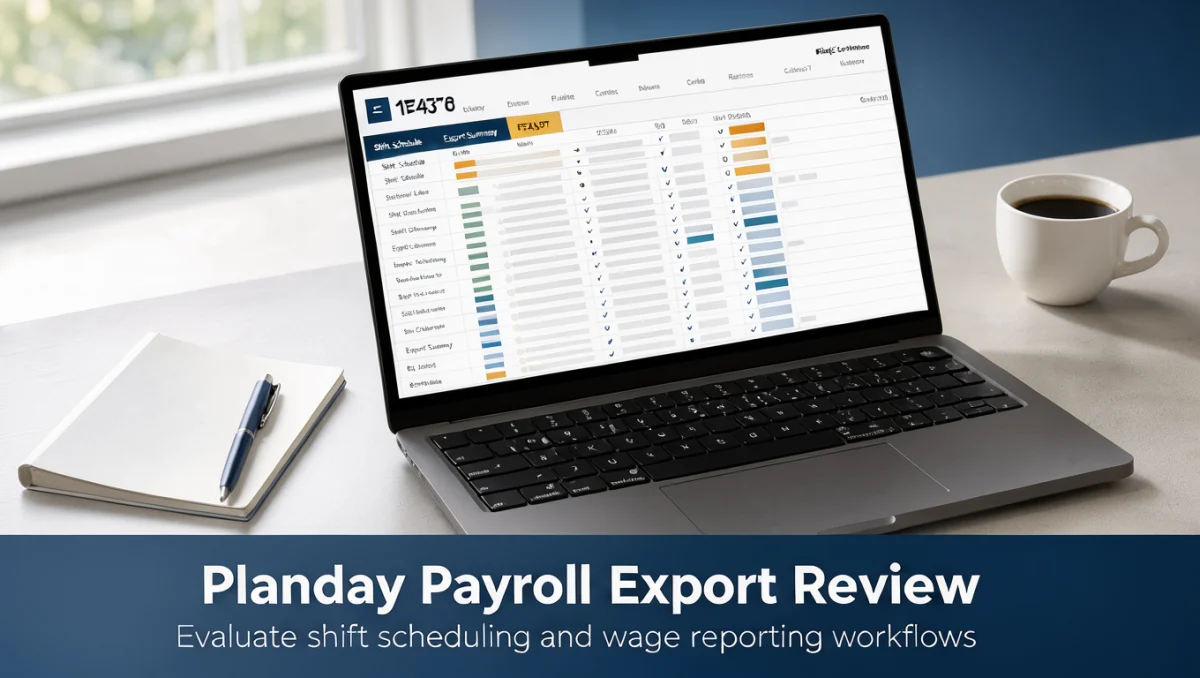
Operations that run hourly rosters need recorded hours to flow into wage calculations without manual re-entry. Planday export payroll reports address that gap by linking scheduled shifts with approved punch data before compensation totals are produced.
At Trust Reviews X, we assess workforce platforms so operations leads can judge whether a dedicated scheduling tool fits their administrative workload. Checking export file layouts and shift compliance rules before rollout helps avoid surprises on payday.
Verdict in brief: Planday earns 7.8/10. It fits shift-heavy workplaces that need disciplined time capture and tidy payroll files. It is less suitable for sole traders or standard office teams with no hourly shift tracking.
| Metric | Evaluation |
|---|---|
| Trustreviewsx score | 7.8/10 |
| Best for | Companies running complex rotas that require consolidated hourly wage records |
| Not ideal for | Salaried office staff without shift patterns or hourly punch needs |
| Key strengths | Roster planning, punch-clock checks, structured wage report exports |
| Check before buying | Confirm payroll format compatibility and seat requirements on the official site |
1. How We Assessed Planday
Our review covers what Planday is designed to do, its target users, and how it stacks up against similar products. We apply seven Trustreviewsx criteria: features, usability, pricing and value, integrations, audience fit, support, and market position. Plans and limits change frequently, so we flag the details to verify on the vendor's website. This article was drafted with AI assistance and then reviewed and edited by the Trustreviewsx Editorial Team.
2. What Planday Does and Who Uses It
Planday is a workforce management platform that helps managers schedule staff, capture working time, and communicate shift changes. It is used in hospitality, healthcare, retail, and security settings where staffing levels shift from day to day.
Supervisors use such systems to replace paper timesheets and static spreadsheets with a single synchronized record. For organizations comparing options in the wider Collaboration & Productivity category, scheduling software connects team communication with labour cost oversight.
3. Core Features for Shift and Payroll Management
3.1. Shift Scheduling and Roster Management
Managers can build shift templates, allocate employees by role, and publish calendar views. Team members receive alerts about open shifts, swap requests, and approved changes through a shared dashboard.
Department leads track labour allocation against expected demand or service levels. The scheduler helps prevent double bookings and highlights unfilled shifts before a period begins.
3.2. Time and Attendance Tracking
Time capture records actual hours through digital clock-in, fixed punch terminals, and supervisor adjustments. Logs store start times, meal breaks, and finish times against the originally planned allocations.
Gaps between the planned roster and recorded attendance require manager approval before timesheets are signed off. This review step lets administrators check unapproved overtime, missed punches, and shift amendments before closing a pay period.
3.3. Payroll Export and Wage Summaries
Payroll files convert approved punch hours and wage premiums into structured documents for accounting staff or external processors. Administrators pull period reports showing standard hours, overtime rates, weekend differentials, and authorized leave.
Because payroll setups vary by tax authority and processor, buyers should review the export file formats on the official Planday website. Aligning pay item names across departments helps files import cleanly into wage software without line-item errors.
4. Usability and Setup Workflow

Operational tools need simple interfaces so both seasonal staff and administrators can use them. Shift workers mainly use mobile check-in screens, schedule calendars, and shift swap requests.
Administrative setup covers shift patterns, pay rules, break policies, and permission levels. Teams adopting new scheduling software should plan a phased rollout so field staff can adjust to digital time tracking.
5. Pros and Cons of Planday

5.1. Strengths
- Structured shift creation makes schedule distribution easier across varied departments.
- Integrated time tracking links punch entries directly to rostered shifts for review.
- Central export generation produces consolidated wage records for accounting teams.
- Communication tools let workers swap shifts and request leave within one platform.
5.2. Limitations
- Initial policy configuration takes careful work before exports can be trusted.
- Export layouts may need manual column changes depending on the external payroll system.
- Complex shift premium rules need administrative checks to confirm calculation accuracy.
6. Planday Compared with Similar Workforce Tools
Buyers often weigh Planday against Deputy, When I Work, and 7shifts. Each product targets different operating environments and levels of complexity.
Deputy concentrates on shift compliance and labour law monitoring in retail and services. When I Work emphasizes flexible scheduling and quick onboarding for hourly crews. 7shifts builds its workflows around restaurant and hospitality operations. Planday leans toward structured, European-style scheduling agreements alongside operational wage summaries.
7. Who Should Pick Planday
7.1. Recommended User Groups
- Hospitality operators coordinating split shifts, seasonal staff, and varied pay rates.
- Healthcare and care providers needing continuous coverage and strict shift handovers.
- Retail managers balancing part-time schedules across several weekly periods.
7.2. Where Other Systems May Fit Better
- Companies with only salaried staff on fixed recurring hours.
- Freelancers and solo operators who manage project deadlines rather than hourly shifts.
- Small teams that need pure task management without time tracking or wage exports.
8. Choosing the Right Plan
Subscription tiers for workforce software usually differ by organizational size, admin permissions, and reporting depth. Clarifying operational needs before buying avoids paying for unused functions.
| What to Check on the Official Website | Why It Matters |
|---|---|
| Included wage export formats | Confirms output files match your external payroll processor. |
| User tier minimums and contract terms | Shows the base monthly commitment as seasonal headcount changes. |
| Shift approval workflow rules | Checks that several department heads can review punches before payroll is locked. |
| Break tracking and compliance settings | Verifies alignment with statutory rest requirements and labour regulations. |
9. Frequently Asked Questions
What should a shift payroll export file contain?
Export files usually include verified employee identifiers, total regular hours, approved overtime, break deductions, and relevant premium codes. Matching every shift category to the external ledger prevents errors during accounting imports.
How can businesses check export accuracy before processing?
Compare exported shift totals with manager-approved timesheets before submitting files for wage calculation. Spot-checking totals across sample departments helps catch missed break deductions or unassigned pay rates early.
Why do column mismatches happen between scheduling and payroll tools?
Mismatches arise when column headers, date formats, or worker identifiers in the scheduling file do not match the payroll processor's import schema. Standardizing custom export templates avoids repeated manual fixes.
Should companies consult an accountant before setting up payroll export rules?
Yes. A certified payroll specialist or accountant can confirm that local labour rules, overtime thresholds, and tax codes match the system's calculations. Setting compliance rules at the start reduces reconciliation problems later.
10. Final Verdict
| Criterion | Score / 10 | Reason |
|---|---|---|
| Features | 8.4 | Thorough roster planning, time tracking, and detailed payroll summaries. |
| Ease of Use | 8.0 | Clear scheduling calendar, though initial rule setup needs admin attention. |
| Pricing and Value | 7.2 | Buyers should check user tier minimums on the official site to judge overall value. |
| Integrations | 7.5 | Export formats cover common needs; confirm alignment with your processor before buying. |
| Audience Fit | 8.5 | Well suited to shift-based businesses running complex rotas and hourly staff. |
| Support | 7.0 | Review support tiers on the official site to match your operational coverage. |
| Competitive Position | 8.1 | Holds a solid position against specialist workforce scheduling alternatives. |
Overall Trustreviewsx Score: 7.8/10
For shift-driven organizations that want daily attendance tied to clear wage records, Planday offers a dependable scheduling foundation. Confirm specific file requirements on the official Planday website before implementation.
Have questions about choosing workforce management software? Send your operational questions to our editors at Review Craft X, or explore more Collaboration & Productivity reviews. You can also read our in-depth planday export payroll reports analysis above before making a decision.