Trustreviewsx may earn a commission when you buy through links on this page, at no extra cost to you. This does not affect our ratings.
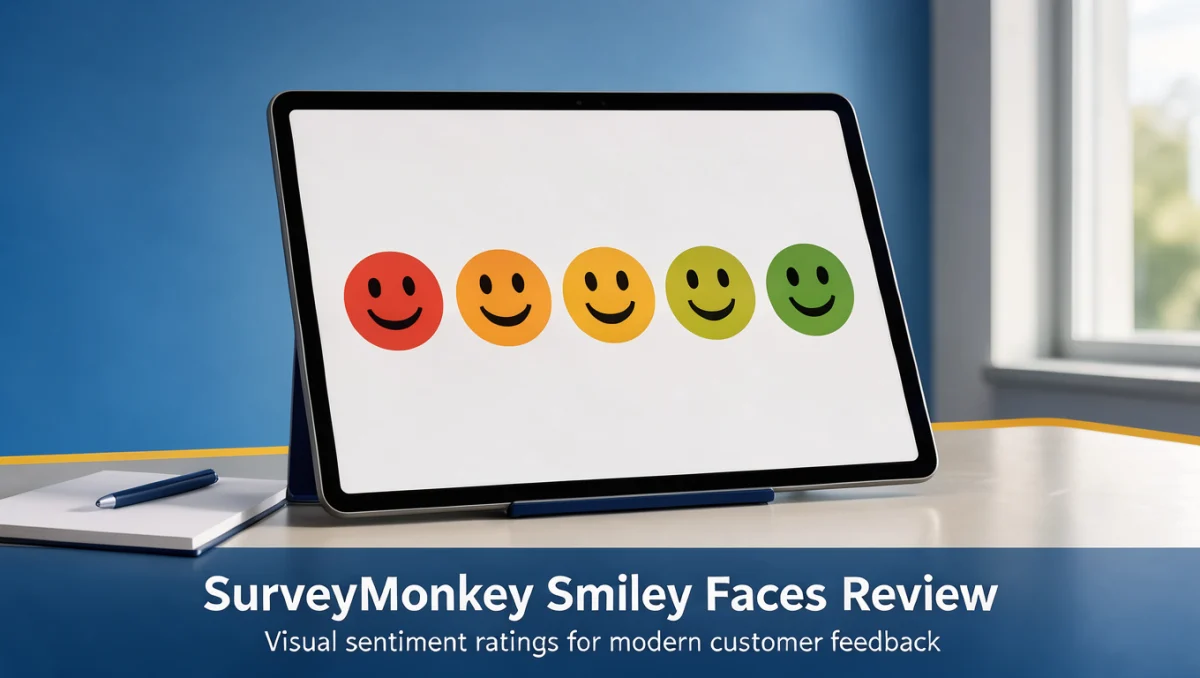
SurveyMonkey smiley faces provide survey creators with an intuitive visual rating scale to capture quick sentiment across customer touchpoints. Online survey platforms design graphical scales like emoji faces to reduce respondent fatigue and increase completion rates during brief feedback requests. At Trust Reviews X, our evaluation centers on whether visual feedback mechanisms fulfill operational goals for organizations seeking fast, actionable sentiment data.
Organizations frequently implement visual scales when surveying broad audiences across diverse language backgrounds. Using recognizable emotion indicators allows teams to gather immediate impressions without requiring respondents to read lengthy descriptive rating labels. When selected appropriately, this visual format simplifies response collection while maintaining clear measurement standards for everyday sentiment tracking.
Quick verdict: Earning an overall score of 7.8/10, the survey monkey smiley faces rating format suits teams needing swift sentiment checks from mobile users and broad customer groups. It remains less suited for research teams requiring deep multi-attribute diagnostic analysis with complex statistical breakdowns.
| Metric | Trustreviewsx Assessment |
|---|---|
| Trustreviewsx score | 7.8/10 |
| Best for | Organizations seeking simple sentiment collection across customer touchpoints |
| Not ideal for | Researchers requiring detailed psychometric validation and multi-dimensional analysis |
| Key strengths | Intuitive visual presentation, accessible scale design, and straightforward response interpretation |
| What to check before buying | Review question customization settings and export limitations on official plan comparison pages |
1. How Trustreviewsx Reviewed SurveyMonkey
This review looks at what SurveyMonkey is built to do, who it serves, and how it compares with similar tools, using the seven Trustreviewsx criteria: features, ease of use, pricing and value, integrations, audience fit, support and competitive position. Plans, prices and limits change often, so we point out what to confirm on the official website before you buy. This article was researched and drafted with the help of AI tools, then reviewed and edited by the Trustreviewsx Editorial Team.
2. What is SurveyMonkey and who is it for
SurveyMonkey operates as a dedicated survey software platform created to help organizations create, distribute, and analyze digital questionnaires. The platform serves small business owners, market researchers, operational managers, and educators needing structured feedback from customers or internal stakeholders. Gathering customer perception through visual rating indicators aligns closely with modern Customer Service management strategies.
By transforming traditional numerical or text-based scales into graphical faces ranging from unhappy to happy expressions, organizations encourage immediate engagement. Survey respondents understand visual cues rapidly, which makes graphical questions valuable for transactional evaluations, event feedback, and website pulse checks. The platform gives administrators tools to embed these visual prompts into various feedback workflows.
3. Core survey creation and rating features

Survey platforms structure visual rating systems around standardized scale configurations that represent satisfaction gradients. Survey creators can configure question prompts, choose scale polarities, and establish whether answers require mandatory completion. Administrators can pair visual prompts with follow-up open text fields to collect qualitative reasons behind low or high scores.
Data collection capabilities in survey platforms summarize sentiment results through automated distribution charts, mean score calculations, and response volume trackers. Administrators can filter visual rating submissions by date ranges, demographic tags, or collector channels. These organizational functions assist teams in spotting service dips and monitoring sentiment trends across operational departments.
4. Ease of use and survey workflow
Designing a visual rating question requires minimal setup time within standard survey construction interfaces. Administrators select the rating question format, insert prompt text, and preview how the graphical faces render across desktop and mobile screens. Because visual options require minimal reading, respondents complete interactions in a matter of seconds.
The administrative learning curve for deploying basic visual questionnaires remains gentle for non-technical team members. Survey builders can deploy pre-arranged templates or add visual questions into longer survey flows with minimal training. The simplicity of visual scales helps teams launch urgent pulse surveys quickly without extensive survey methodology expertise.
5. Pros and cons of smiley face surveys
Visual rating scales offer clear advantages for response collection alongside certain analytical limitations that teams must balance before launching research campaigns.
- High engagement rates: Graphical faces catch respondent attention quickly and reduce survey abandonment during brief interactions.
- Universal accessibility: Visual expressions communicate meaning across diverse language groups and varying reading levels.
- Fast completion speed: Respondents select their emotional reaction instantly, reducing friction on mobile devices.
Teams should also evaluate the constraints inherent to graphical rating formats:
- Limited diagnostic depth: A selected face reveals overall emotion but leaves the specific cause of satisfaction or frustration unexplained unless paired with follow-up prompts.
- Subjective emotional interpretation: Different respondents may perceive subtle differences between smiling and neutral expressions inconsistently.
- Risk of oversimplification: Complex product evaluations often require nuanced multi-point Likert scales rather than simplified visual icons.
6. SurveyMonkey vs similar survey tools
Survey tools across the software market approach visual rating questions through distinct operational philosophies. SurveyMonkey focuses on providing an accessible balance of general survey construction, analytical summaries, and flexible question types for everyday business users. Organizations seeking general feedback solutions regularly evaluate this platform alongside specialized alternatives.
Typeform positions its survey experience around a conversational interface displaying one question at a time, appealing to brand designers prioritizing visual flow. Qualtrics targets sophisticated enterprise research environments that require deep psychometric modeling, advanced statistical logic, and structured academic testing. Comparing these platforms involves matching your team analytical requirements against survey design priorities.
7. Who should use smiley face rating questions
Selecting visual rating mechanisms depends on your target audience, delivery method, and the specific goals of your feedback project.
- Frontline support managers: Teams monitoring ticket resolution sentiment benefit from placing single-click visual scales at the conclusion of customer interactions.
- Retail and event coordinators: Coordinators gathering feedback on physical experiences can deploy quick visual ratings via on-site tablets or kiosk displays.
- Website product managers: Digital teams use brief visual rating widgets to gauge satisfaction with new navigation structures or content updates.
- In-house human resources specialists: Internal teams monitor workplace climate through recurring sentiment pulse checks that take employees seconds to answer.
Conversely, research teams conducting formal clinical trials, academic psychological studies, or detailed vendor request-for-proposal scoring should opt for traditional numerical or verbal rating scales.
8. How to choose the right survey plan

Survey software providers deliver tools across tiered subscription arrangements. Evaluating vendor options requires confirming essential account boundaries on official platform documentation.
| What to check | Why it matters |
|---|---|
| Question type availability | Ensure visual rating mechanics are accessible within the account tier you plan to purchase. |
| Response volume allowances | Determine whether monthly response limits align with your expected respondent traffic. |
| Custom branding controls | Verify whether your team can remove vendor logos and apply corporate color palettes. |
| Data export capabilities | Check if exporting raw response tables requires upgrading to higher administrative tiers. |
| Team collaboration seats | Establish how many team members need access to design surveys and view shared results. |
9. Frequently asked questions
What should buyers evaluate when testing visual rating scales?
Buyers should examine whether survey platforms allow adding required conditional logic after a negative face selection. Confirming whether visual scales render cleanly on mobile browsers helps prevent unintended respondent drop-off. Teams should also verify how aggregate visual ratings appear inside exportable summary reports.
How do visual rating scales differ from standard numerical scales?
Visual rating scales use expressive faces to measure emotional sentiment instantly, making them ideal for quick pulse surveys. Numerical scales provide granular points for rigorous statistical analysis and academic benchmarking. Choosing between them depends on whether your priority is respondent speed or analytical depth.
When should an organization add follow-up questions to smiley faces?
Organizations should introduce follow-up text fields whenever respondents choose negative or neutral options. Asking for specific explanations transforms an emotional indicator into actionable feedback for operational teams. Conditional logic ensures satisfied respondents complete the survey swiftly without unnecessary questions.
What factors influence total survey software ownership costs?
Software budgets must account for subscription commitments, additional user seat fees, and potential add-on charges for advanced logic or branding. Reviewing the official pricing documentation beforehand prevents unexpected expenses when scaling survey deployment across multiple departments.
10. Final verdict on SurveyMonkey smiley faces
| Criterion | Score /10 | Reason |
|---|---|---|
| Features | 8.5/10 | Flexible visual question options, customizable survey flows, and reliable summary reporting. |
| Ease of Use | 8.5/10 | Straightforward questionnaire construction interface suitable for beginners and seasoned creators alike. |
| Pricing and Value | 7.0/10 | Buyers should verify feature inclusions and seat costs on official vendor pricing pages. |
| Integrations | 7.5/10 | Workflow connections depend on account tiers, requiring verification before operational integration. |
| Audience Fit | 8.0/10 | Well suited for business teams seeking fast transactional sentiment across customer touchpoints. |
| Support | 7.0/10 | Support accessibility channels vary by subscription level and warrant confirmation on official pages. |
| Competitive Position | 8.0/10 | Maintains a balanced survey solution positioned between simple conversational tools and complex enterprise suites. |
| Overall score | 7.8/10 | Balanced survey creation platform providing practical visual rating mechanisms for business sentiment tracking. |
SurveyMonkey smiley faces provide a functional method for capturing customer sentiment without introducing response friction. Organizations looking to launch quick feedback loops will find the visual rating format practical and easy for respondents to navigate. For questions regarding software selections, contact the Trustreviewsx team at https://trustreviewsx.com/contact/ or follow Trustreviewsx on LinkedIn at https://www.linkedin.com/company/trustreviewsx/.