
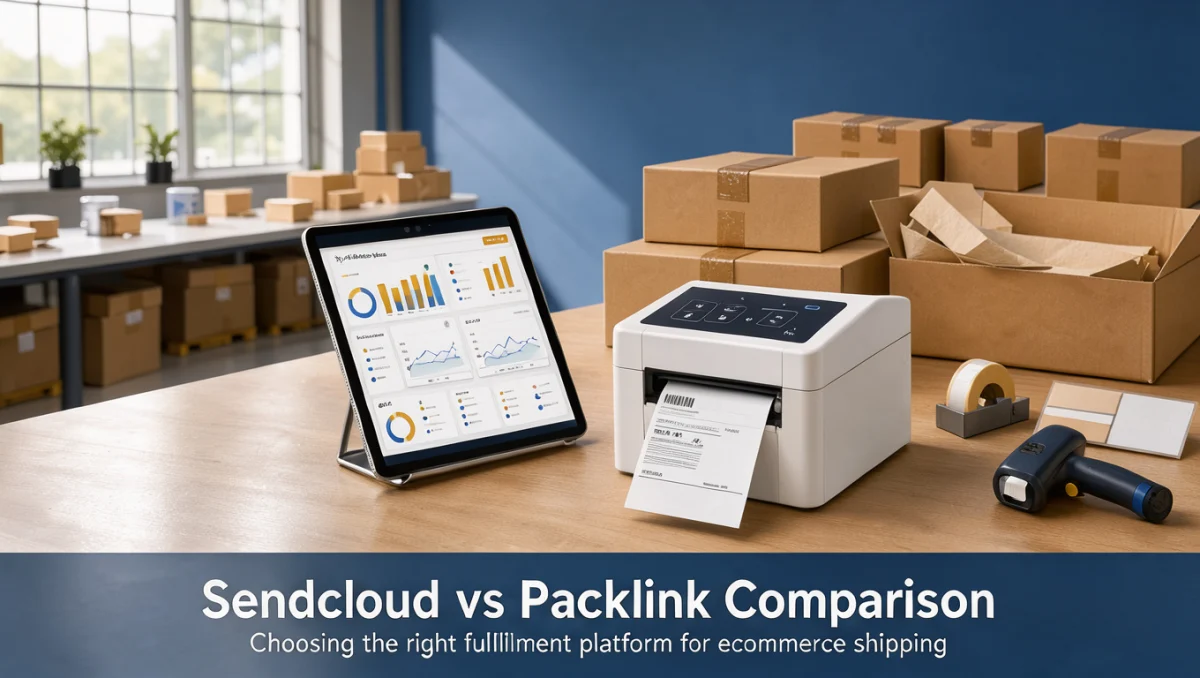
Shipping software choices rarely hinge on popularity alone. For ecommerce merchants, the real question is how a platform handles label creation, carrier accounts and customer-facing tracking. Our sendcloud vs packlink breakdown approaches the decision from the operational side, so you can match a tool to how your orders actually move.
Both platforms bring several carriers into a single dashboard, yet they are built around different priorities. Sellers should look closely at who owns the carrier contract, how labels are printed in batches, and how returns are managed. Getting these boundaries right keeps a growing team from paying for features it does not use or running into carrier restrictions later.
Quick verdict: Trust Reviews X scores this comparison at 7.9/10, and the better pick depends on your carrier relationships. Sendcloud vs Packlink is easiest to judge by asking whether you already hold negotiated courier rates. Sendcloud suits growing stores that want structured fulfillment and their own carrier connections. Packlink suits smaller shops and occasional shippers who value quick setup and pre-set parcel rates.
| Metric | Evaluation |
|---|---|
| Trustreviewsx score | 7.9/10 |
| Best for | Ecommerce merchants managing recurring parcel dispatches across regional carriers. |
| Not ideal for | Operations requiring dedicated on-premise supply chain orchestration systems. |
| Key strengths | Order import consolidation, multi-carrier label printing, and automated tracking notification flows. |
| What to check before buying | Confirm carrier account support policies and subscription rules on official plan pages. |
1. How Trustreviewsx Reviewed Sendcloud vs Packlink
We assessed both platforms against seven criteria: features, ease of use, pricing and value, integrations, audience fit, support and competitive position. Plans, prices and limits change often, so treat our observations as a starting point and confirm current details on each official website. This article was researched and drafted with AI assistance, then reviewed and edited by the Trustreviewsx Editorial Team.
2. Short Answer: Choosing Between Shipping Platforms
The deciding factor is whether your warehouse runs on your own carrier contracts or on rates supplied by the platform. Sendcloud is designed to organize picking, packing and returns in one portal while letting merchants connect their negotiated carrier rates. That setup works well for stores dispatching every day that want consistent branding across tracking pages.
Packlink focuses on comparing and buying parcel services across domestic and international couriers. It gives access to pre-negotiated rates without requiring a separate commercial account with each transport company. That makes it a practical fit for smaller businesses, marketplace sellers and early-stage stores that want simple label generation without monthly volume commitments.
Businesses that also rely on dedicated Customer Service tools often want shipping notifications to flow into the same support process. Assessing both options means checking how well each one fits your dispatch routine, tracking communication needs and return expectations.
3. Positioning Comparison

Logistics software sits in different places within ecommerce infrastructure. Both tools aggregate shipping services, but they are built for different stages of business maturity and scale.
| Tool | Best for | Core strength | Consider if |
|---|---|---|---|
| Sendcloud | Scaling stores with recurring dispatches | Fulfillment workflow automation and custom carrier accounts | Your business maintains direct contracts with parcel delivery couriers |
| Packlink | Marketplace merchants and lean operations | On-demand label purchasing with pre-arranged carrier rates | You prefer pay-as-you-go parcel shipping without handling carrier contracts |
4. Detailed Criteria Comparison
Comparing options against shared criteria makes the trade-offs easier to see. The breakdown below applies the Trustreviewsx evaluation dimensions to both platforms.
4.1. Features
Shipping platforms earn their keep through order import, label generation, tracking updates and return handling. Sendcloud links these steps into one pipeline, so warehouse staff can work through order lists, print compatible labels and trigger status updates from a single console. Its return portal lets end customers generate return labels on their own.
Packlink is centered on booking individual shipments. Its main utility is a price comparison across couriers for a given parcel size and destination. It handles labels and basic tracking well, but its workflow is built around booking rather than running a busy packing line. Merchants who need automated picking lists should check the current feature set on each official website.
4.2. Ease of Use
How complicated the tool feels depends on how much automation you set up. Sendcloud needs an initial configuration period where managers define shipping rules, return preferences and notification branding. Once those rules are in place, daily label printing runs smoothly for teams processing regular batches.
Packlink is quicker to start with because it asks for fewer settings before printing a label. You enter package dimensions, compare quotes and print documents with minimal onboarding. For individual sellers who want fast dispatch over complex automation, that simpler booking flow removes a lot of friction.
4.3. Pricing and Value
Shipping software usually charges through monthly subscriptions, per-label fees, or commission built into carrier rates. Subscription tiers often separate access to automation rules, custom carrier connections and branded tracking pages. Before deciding, check the official Sendcloud pricing page to see how your dispatch volume maps to plan levels and feature access.
Packlink generally works on a transaction basis, where postage reflects pre-negotiated courier rates. Its parent company also offers subscription products for higher-volume integrations. Prospective users should review the fee structure and confirm whether optional services carry extra charges.
4.4. Integrations
Order processing tools depend on reliable sync with shopping carts, marketplaces and warehouse scanners. Both platforms connect with major ecommerce systems to import unfulfilled orders and push tracking numbers back to customer accounts.
Confirm compatibility with your storefront, point-of-sale system and regional marketplaces. Review each platform's official integration directory to check whether your sales channels sync order data in both directions without extra connector tools.
4.5. Audience Fit
Sendcloud is aimed at online retailers with steady order flow who need a structured packing station. It suits brands that want to keep their identity through custom tracking emails and self-service returns. Once a merchant starts negotiating its own courier rates, Sendcloud provides the technical layer to manage those accounts alongside everything else.
Packlink fits small business owners, boutique shops and cross-border sellers who value flexibility over complex automation. If you ship sporadically or to varied regional destinations where direct volume contracts are impractical, Packlink gives quick access to established carrier networks.
4.6. Support
Fulfillment depends on quick help when a dispatch hits a technical problem or a delivery exception. Logistics platforms offer different support routes, such as help center documentation, ticketing and account management on higher tiers.
Many parcel delays come from physical transport issues rather than software faults, so ask how each provider handles courier escalations. Review both official support policies to see whether their teams assist with carrier claims or whether merchants must contact couriers directly.
4.7. Competitive Position
Sendcloud competes with dedicated fulfillment software such as ShipStation and Metapack, emphasizing modular shipping workflows that cover the journey from checkout to return for growing retailers.
Packlink sits alongside shipping brokers and comparison platforms, prioritizing easy entry and multi-carrier choice without contract commitments. Both handle common shipping problems well, but each targets a different segment of merchants.
5. How to Decide for Your Business

Choosing well means assessing your monthly parcel count, existing carrier agreements and longer-term fulfillment plans. Work through these steps:
- Audit current shipping volume: Record weekly parcel counts to see whether subscription automation justifies its cost.
- Check carrier contracts: Find out whether you already have negotiated rates, or whether platform-provided rates give you better margins.
- Map customer touchpoints: Decide whether branded delivery notifications and self-service return portals matter for retention in your category.
- Test order import speed: Confirm how smoothly unfulfilled orders move from your sales channels into the shipping dashboard during normal processing.
- Review total cost components: Compare base subscription fees, per-label charges and insurance terms on each provider's official pricing page.
6. Frequently Asked Questions
What should a merchant evaluate when reviewing shipping software costs?
Add up the monthly subscription, per-label processing fees and actual postage to get your true expenditure. Some platforms require a higher plan to unlock custom carrier integration or automated return portals. Checking each provider's official pricing details gives you full visibility into variable costs before you connect your sales channels.
How do carrier relationships influence the software choice?
If you hold established contracts with logistics providers, you need a platform that accepts your own carrier credentials. Businesses shipping moderate volumes often find it easier to use pre-negotiated platform rates, avoiding minimum parcel commitments across several transport firms.
Why is a self-service return portal important for ecommerce?
A self-service return portal lets customers create their own return labels under rules you define. This cuts manual service requests, speeds restocking and builds buyer confidence. Confirm on the official websites whether return management requires a higher-tier plan.
When should an online store switch to dedicated shipping software?
Consider dedicated tools when copying addresses by hand and printing labels one by one begins to slow dispatch. Centralized software reduces data entry errors by pulling order details straight from your sales channels into batch-printing queues, so warehouse teams can fulfill orders faster.
7. Final Verdict
Choosing between Sendcloud and Packlink means matching the software to your operational setup and fulfillment plan. Use the criteria below to see which profile fits your current goals.
| Criterion | Score /10 | Reason |
|---|---|---|
| Features | 8.5/10 | Comprehensive coverage of label printing, order import, tracking updates, and return portals. |
| Ease of Use | 8.0/10 | Intuitive interfaces for both rapid quote booking and structured packing station operations. |
| Pricing and Value | 7.5/10 | Value depends on order volume and whether merchants use pre-set rates or custom carrier accounts. |
| Integrations | 7.5/10 | Broad connectivity across ecommerce channels, though specific sales channels should be verified. |
| Audience Fit | 8.5/10 | Clear separation between self-serve casual shippers and structured multi-carrier retail merchants. |
| Support | 7.0/10 | Support accessibility varies across subscription tiers and requires reviewing official service terms. |
| Competitive Position | 8.0/10 | Both platforms maintain defined operational roles alongside regional and global shipping competitors. |
Overall score: 7.9/10
For independent retailers and marketplace sellers with irregular dispatches, Packlink offers accessible labels and simple multi-carrier options. For scaling brands handling daily orders that want branded tracking and their own carrier accounts, Sendcloud provides a more structured fulfillment framework. Review your dispatch volume, map the integrations you need and confirm plan details on the official websites before committing.
If you have questions about choosing logistics software or want recommendations for your stack, visit our contact page or reach out to our editorial team through our social channels.
See More Review Craft X